OpenAI’s claimed Navier-Stokes proof raises the ceiling for AI research
OpenAI claims its internal AI solved a $1M Navier-Stokes problem, raising expectations for AI research as proof verification and credit questions remain.
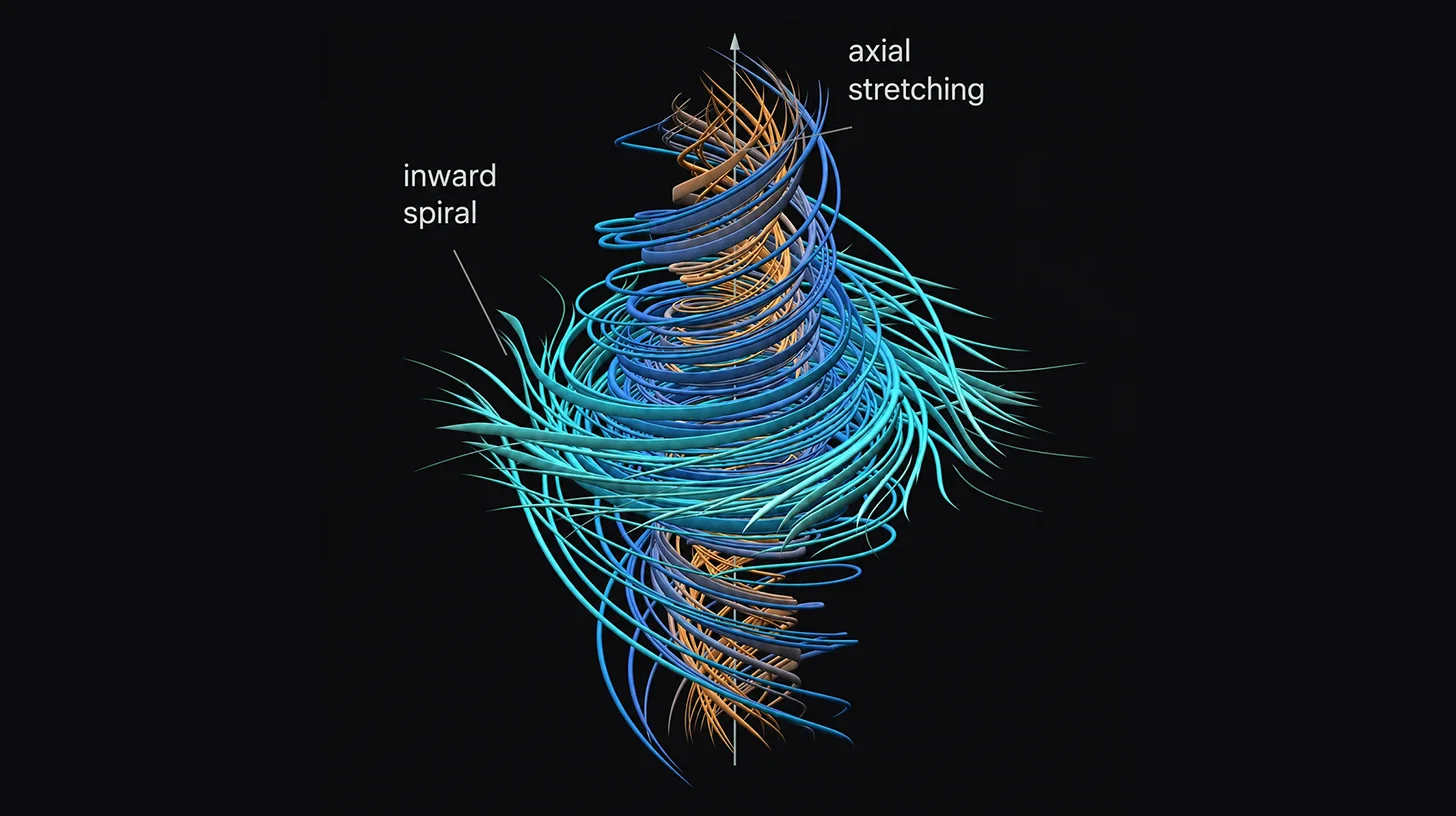
OpenAI says an unreleased internal model has produced a proof resolving the Navier-Stokes problem, one of the seven Millennium Prize problems carrying a $1 million award. The claim puts a potentially landmark mathematical advance alongside a dispute over research credit and the handling of unpublished drafts.
As reported in The Rundown’s September 9 newsletter, OpenAI describes the model as “significantly more capable” than the newly announced GPT-6 Astra. As of that issue’s 10:00 UTC cutoff, independent acceptance of the proof and recognition by the Clay Mathematics Institute had not been established.
What OpenAI says it achieved
In its September 8 announcement, OpenAI says the effort began on September 1 and produced a proposed resolution on September 5, after approximately 88 hours. The successful group ran roughly 10,000 agents concurrently. Researchers redirected resources and consolidated intermediate insights throughout the effort.
OpenAI reports another 17 hours of formalization and verification in Lean with Astra. The company also says it does not intend to claim the prize money.
The 166-page manuscript claims a specific breakdown scenario for three-dimensional incompressible fluid flow. Starting from rest, a flow subjected to a smooth external force can develop unbounded velocity in finite time while its kinetic energy remains bounded. The force acts within a limited region of space and interval of time.
That scope matters. The official problem formulation permits smooth external forcing in two of its four accepted alternatives. OpenAI identifies its construction with those alternatives. Whether the proof satisfies every required condition remains a question for mathematical scrutiny.
OpenAI has also published a repository of Lean 4 formalizations, with build commands and instructions for independent checking. That gives specialists a concrete artifact to examine, including whether the formal statements and assumptions match the prize problem.
The dispute over the route to discovery
NYU mathematician Tristan Buckmaster says he and Levent Alpöge, who works at Anthropic, pursued a related route in a personal collaboration involving several companies’ models. In his public statement, he credits an underlying research program by Diego Córdoba and Luis Martínez-Zoroa.
Buckmaster says drafts entered into Codex may be relevant to the discovery timeline, and that OpenAI did not answer his question about whether those drafts contributed to training. He also says he had not seen OpenAI’s proof and did not know whether the company had drawn on their data.
OpenAI says it “did not see any of their work” and that “no specific user data was accessed.” It leaves open the possibility that de-identified usage data improved its models. That caveat leaves the question of influence unresolved.
Why it matters
The credit fight risks overshadowing the larger scientific possibility. If the proof holds, resolving a Millennium Prize problem would be a landmark in mathematics and a powerful reason to raise expectations for AI research this year. Buckmaster’s own statement welcomes a genuine Navier-Stokes advance, provided its intellectual history is preserved. Scientific excitement and careful attribution can coexist.
The reported gap between the internal model and Astra makes the claim especially consequential. OpenAI’s description suggests its research frontier has already moved beyond its latest announced product. But “significantly more capable” remains a qualitative company assessment, with no controlled comparison establishing the size of that advantage.
The workflow also sets the scale of the inference. OpenAI describes thousands of concurrent agents, several days of computation, and researchers combining intermediate results. For mathematicians and research organizations, the practical possibility is an orchestrated system tackling difficult open questions. Reproducing that performance in an ordinary chat session remains unestablished. Access to substantial computation and people able to steer the work could shape who can pursue similar efforts.
Verification becomes a central part of realizing that promise. The public formalizations create a route for reproducible checks. Specialists still need to inspect the assumptions, confirm the connection to the official problem, and explain the argument in language other mathematicians can follow. A successful result could shift more research effort toward evaluating and understanding ambitious machine-generated proofs.
The immediate mathematical stakes concern what these equations permit under specified conditions. Any benefit for weather forecasting or fluid simulation would require further work connecting the theorem to those applications.
The provenance dispute also carries practical weight for researchers who entrust unpublished work to AI systems. Clearer accounts of data handling and discovery timelines would help them judge that risk. Even if the proof survives scrutiny, questions about intellectual contribution deserve answers. Establishing both the mathematics and its history would give this claimed breakthrough a firmer foundation.
Sources & further reading
This story builds on reporting from The Rundown newsletter on September 9, 2026.