OpenAI raises its own bar with ChatGPT Images 2.5
OpenAI’s ChatGPT Images 2.5 promises faster generation and more precise edits, while early Arena rankings put its two new models ahead of its predecessor.
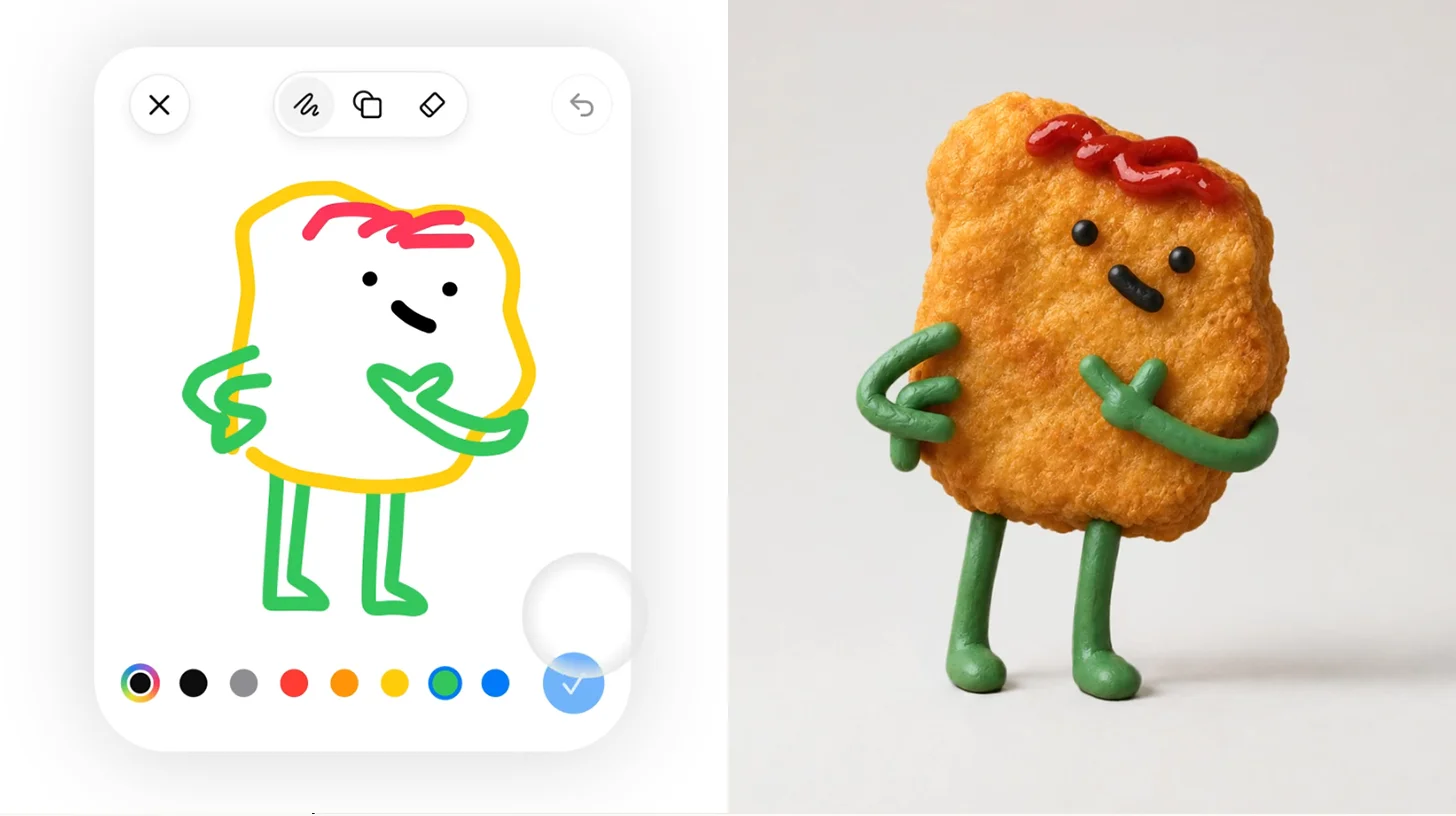
OpenAI announced ChatGPT Images 2.5 on September 8, promising image generation with up to 50% lower latency than Images 2.0, more precise editing, and new ways to sketch, annotate, and share image prompts. The release upgrades a model family already leading the Arena boards examined for generation and editing.
As covered in The Rundown’s September 9 newsletter, the competitive story is OpenAI pushing beyond its own predecessor. Its two new models occupy the top two positions on those boards, with GPT-Image-2 immediately behind them. The new entries remain preliminary.
Faster generation and more controlled edits
OpenAI says Images 2.5 improves its ability to change only the requested parts of an image and preserve other details through successive revisions. Those are company claims, including the maximum 50% latency reduction. They do not establish the improvement someone will see on every image or editing sequence.
The developer announcement identifies two API models. Flare emphasizes speed and quality, while Sunburst emphasizes precision and takes longer to generate images. OpenAI announced rollout across ChatGPT, ChatGPT Work, and Codex on desktop, mobile, and web.
The interface additions give users more ways to describe the result they want. Typing @Sketch lets them start with a drawing. Image comments support edits to specific details, and templates provide starting points. Sharing an image with its reusable prompt gives another person a basis for remixing it.
An early lead on two Arena boards
The Arena image generation board, retrieved September 9, lists Sunburst first, Flare second, and GPT-Image-2 (medium) third. The highest competing entry, MAI-Image-2.6, sits fourth.
The single-image editing board shows the same OpenAI ordering, ahead of Grok Imagine Image 2.0 (low), the highest competing entry there.
There is an important qualification to the new models’ positions. Sunburst and Flare are preliminary entries. On the generation board, they have 3,149 and 2,856 votes respectively, compared with 78,731 for GPT-Image-2. Arena gives both newcomers a possible rank range of first to second, so their ordering remains unsettled.
Why it matters
OpenAI is raising the competitive hurdle in a domain where its previous model still leads the competing entries on both examined boards. That supports the writer’s enthusiasm about its momentum. Rival image models now face an OpenAI predecessor in third place, with two newer variants above it. These early results suggest a widening advantage in image generation and editing, while leaving broader claims about AI leadership unproven.
The release also arrived alongside a substantial research announcement. On September 8, OpenAI announced what it describes as a solution to the Navier–Stokes existence-and-smoothness problem, supported by a writeup and Lean formalization. It said the work involved an internal model. Mathematical acceptance remains unestablished by that announcement alone, but the pairing illustrates the pace behind the newsletter’s assessment, with research claims and a public product release arriving on the same date.
For people making and revising visual assets, the editing claims could carry substantial practical value. An unwanted change to an approved background or product detail can force another revision. If Images 2.5 preserves those details more reliably, users could reach an acceptable image with fewer discarded attempts. Faster generation could compound that benefit across a sequence of edits. No measured reduction in total working time has been established.
The two models also create different reasons to upgrade. Teams satisfied with Images 2.0’s output can test whether Flare’s speed suits their workflow. Work that demands greater precision may justify Sunburst’s longer generation time. A first-place ranking alone cannot determine which tradeoff makes sense for a particular application.
Sketches, comments, and templates extend that product argument. They could make it easier to communicate placement, identify a specific change, or start from a useful structure. Whether they reduce retries will depend on how reliably the model follows those instructions. OpenAI’s opportunity is to turn its early leaderboard advantage into a shorter, more predictable path from an initial idea to an image someone can approve.
Sources & further reading
This story builds on reporting from The Rundown newsletter on September 9, 2026.