NATO taps OpenAI as AI helps uncover a serious Java flaw
NATO is using OpenAI for cyber defense as Calif discloses a Java flaw found with AI, raising concerns about how quickly defenders can deploy fixes.
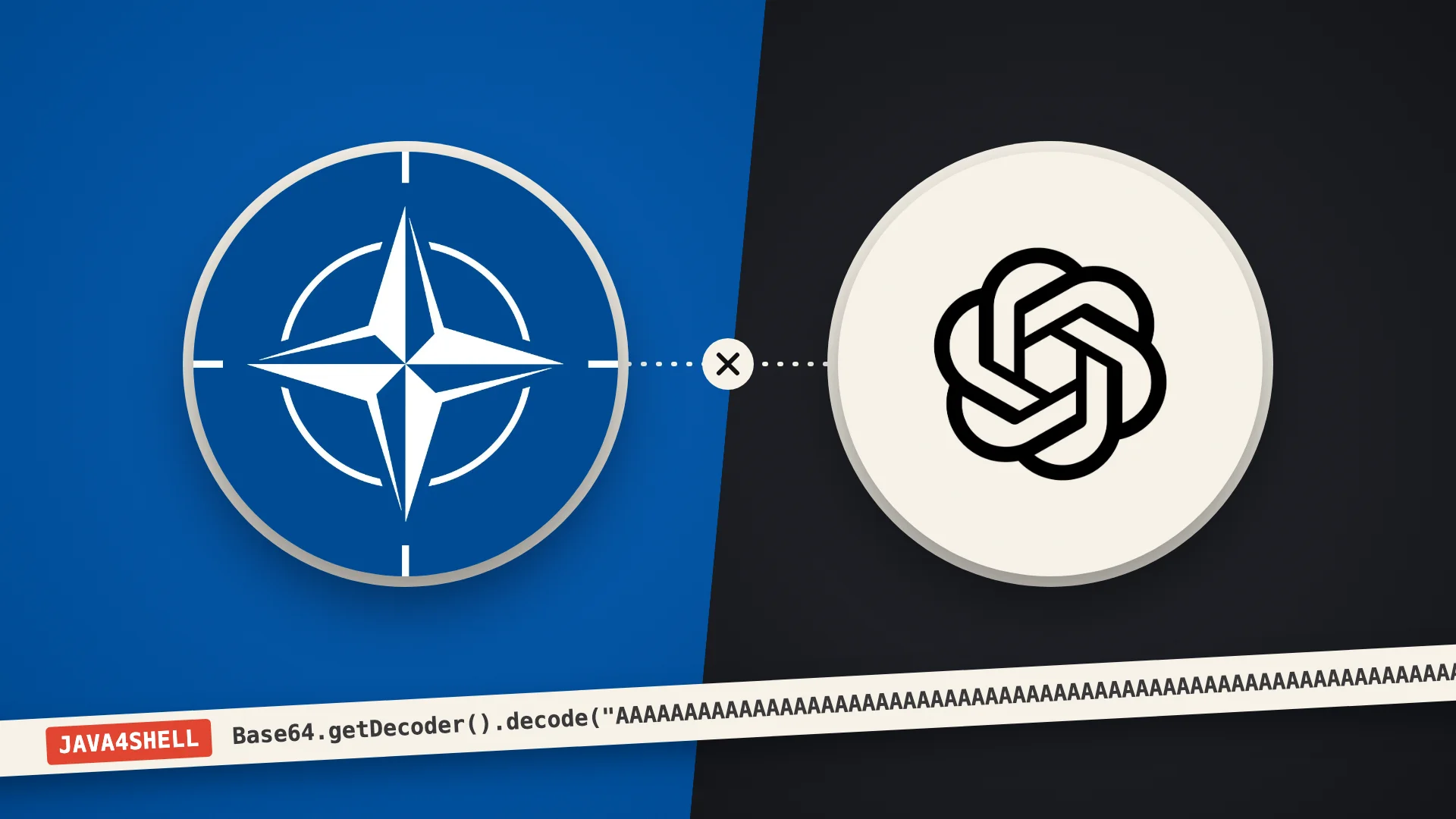
OpenAI said on November 17 that NATO’s technology and cyber agency is using its Daybreak security models to help protect allied networks. The announcement arrived the same day startup Calif disclosed a Java flaw it says it found with AI, as The Rundown reported.
What OpenAI disclosed
OpenAI’s announcement names NATO’s Communications and Information Agency and says the work provides NATO’s core institutions with cybersecurity models through Daybreak. NATO has used up to 300 billion raw input and output tokens monthly, the company says. OpenAI did not disclose the models, pricing or when the work began.
The company also said ENISA, Europe’s cybersecurity agency, used its models to find four software flaws, with fixes published for all four.
What Calif found
Calif’s disclosure names the flaw Java4Shell and identifies it as CVE-2026-114938. It affects how OpenJDK’s optimized Base64 decoder handles memory. Calif says it demonstrated attacks against applications including Keycloak, Jira, Confluence and Jenkins that allowed code to run remotely without a login.
Researcher Quang Luong found the flaw in an hour and developed an initial exploit in two more, Calif says, spending under $200 on model tokens.
Oracle released a fix on Tuesday, November 17. Its advisory lists affected Java SE and GraalVM versions, gives the flaw a severity score of 8.1 and rates attack complexity as high.
The hardware matters, too. Calif says the vulnerable code requires x86-64 processors with AVX-512 VBMI support. ARM64 systems are unaffected.
Why it matters
Both developments are timely amid a month of seemingly constant attacks and outages. Even with these defensive gains, it feels like the “defender’s window” is closing. The risk is that AI speeds up discovery while organizations still need time to test and deploy fixes.
AP reported an FAA ground stop on November 13, disruptions at JPMorgan Chase and United Airlines on November 16, and outages at the NSA and Apple on November 17. Officials found no indication those events were connected or caused by hostile activity.
A more direct warning comes from Amazon’s October security report. Its decoy systems recorded a PHP2Shell exploitation attempt on October 17, four days before public disclosure, and further attempts on October 21. Amazon also reported that example exploits appeared within hours of disclosure. It was unclear whether the observed attempts would have succeeded against real systems, Amazon said. The timeline shows how defenders can face attempts before a public advisory tells them to act.
OpenAI’s Greg Brockman described the defender’s window as open on August 17 and argued that AI could give defenders an advantage over time. His proposed path included shortening the time from discovery to safe deployment, with humans responsible for consequential decisions.
For teams running Java applications, the practical work starts with identifying each deployment’s Java distribution, version and hardware. They then need to test and deploy updates. Rushing could cause another disruption, while delays can leave vulnerable systems exposed. Finding a flaw in hours is valuable, but the protection depends on completing those steps.
For NATO and ENISA, one useful measure is the time from confirming a flaw to fixing the systems exposed to it. Token consumption gives no measure of attacks prevented or how long patching took. OpenAI’s report that fixes were published also leaves open how quickly institutions installed them.
Sources & further reading
- 01therundown.ai ↗
- 02Strengthening NATO and allied cyber defenses with AI | OpenAI ↗
- 03Java4Shell: Write once, RCE everywhere ↗
- 04Oracle Critical Security Patch Update Advisory - November 2026 ↗
- 05NSA communications network goes down during maintenance | AP News ↗
- 06Amazon Threat Intelligence identifies PHP2Shell exploitation prior to public disclosure in MadPot | AWS Security Blog ↗
- 07The Defender’s Window | OpenAI ↗
This story builds on reporting from The Rundown newsletter on November 18, 2026.