OpenAI’s newest release lands to rough reviews
PLUS: Turn a spreadsheet into a data story with AI

Good morning, AI enthusiasts, and welcome to our 5,051 new readers. The AI world was waiting for OpenAI’s answer to Anthropic’s dominance on the charts. It finally landed days before its rival goes public… just not to the reception the company hoped for.
GPT-6.2 Astra and Sol look solid on paper, if not a major leap. But the early reviews? Scathing. With Fable 5.2 still on top (and at least one top tester preferring Opus 5.5), Anthropic now heads into its IPO with a lead that feels bigger than the rankings show.
In today’s AI rundown:
OpenAI drops GPT-6.2 Astra, Sol to mixed fanfare
Jensen Huang makes first statement since resignation
Turn a spreadsheet into a data story with AI
AI finds a hole in Java as NATO taps OpenAI
LATEST DEVELOPMENTS
OPENAI

Image source: OpenAI
The Rundown: OpenAI just released GPT-6.2 Astra and GPT-6.2 Sol, upgrades to its top and everyday models aimed at professional work, and the launch drew sharp criticism from early testers who found them lacking against Anthropic’s current lineup.
The details:
Astra now sits ahead of Google’s Gemini 4 Carbon and behind only Fable 5.2 on independent tester Artificial Analysis’s ranking, a 5-point climb since September.
The cheaper Sol now scores on par with September’s GPT-6 Astra on that same ranking, while costing roughly 15% as much to finish each task.
Astra tops tests in science, legal work, robotics, and 3D builds, but shows no meaningful upgrade in coding, with Sol actually regressing from GPT-6.1.
OpenAI’s own assessment put Astra at its “High” threshold for AI self-improvement capabilities, a first for any model it has released publicly.
Several testers panned the models, with one calling it “the worst model OpenAI has ever released” and others criticizing its hard-to-read answers and coding.
Why it matters: The sentiment on this release was ugly, and probably not what OpenAI hoped for in front of its biggest rival’s IPO. Anything short of passing the latest Claude releases was likely going to be a letdown, and with Anthropic about to get a fresh war chest from Wall Street, OpenAI’s next answer can’t be another No. 2.
TOGETHER WITH PAVE

The Rundown: Turn an idea into a working app in minutes. Describe what you need, and Pave builds a custom solution that connects to over 350 tools. Set up your workflows, share it with your team, and take control of your processes.
With Pave, you can:
Kill that messy spreadsheet with one Pave upload
See how even “lazy” prompts build powerful apps
Build automations by complaining to Pave about bottlenecks
JENSEN HUANG & NVIDIA

Image source: Jensen Huang on X / The Rundown
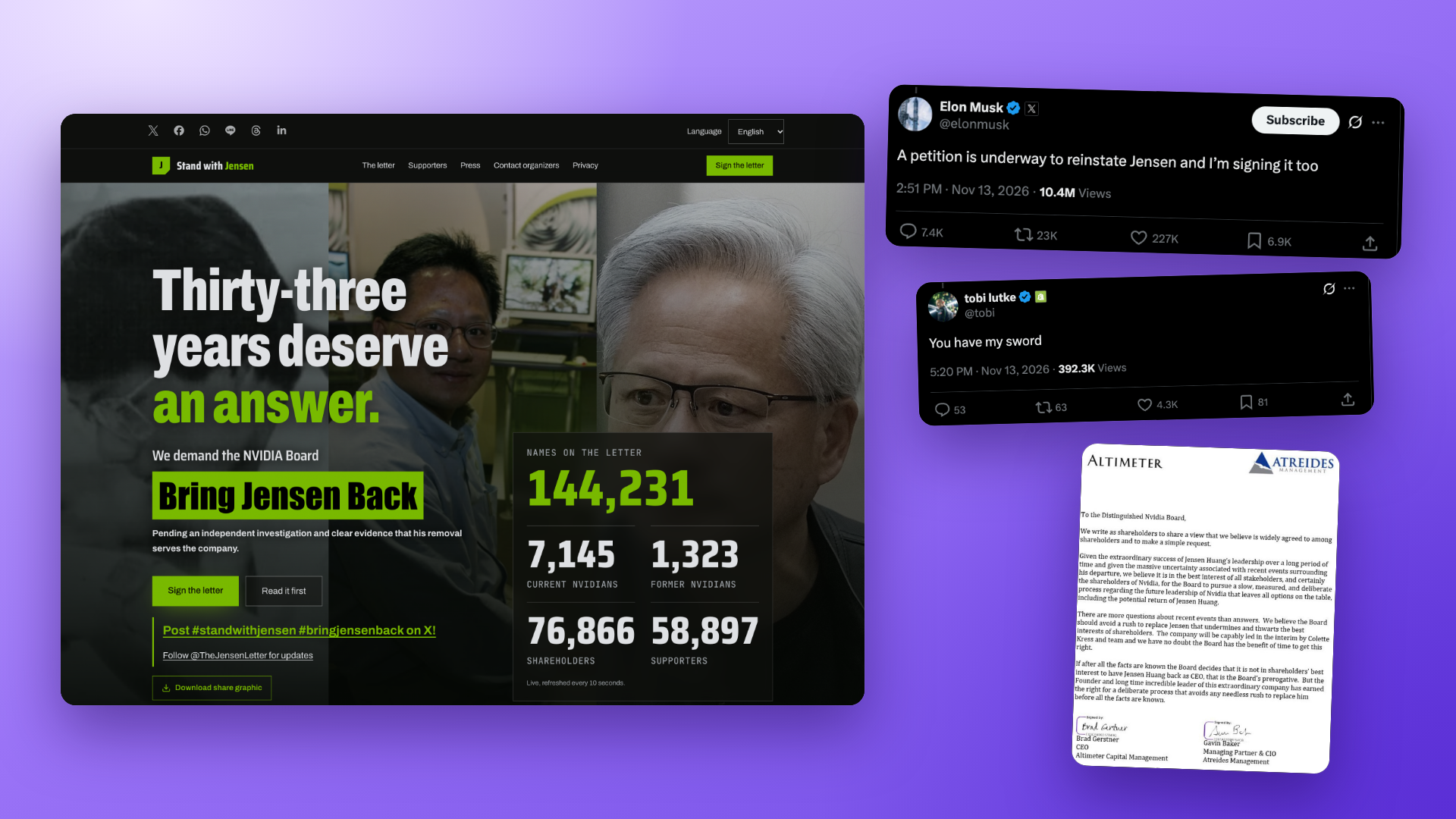
The Rundown: Former Nvidia CEO Jensen Huang just made his first public statement since his resignation last week, apologizing for his “serious mistakes” and leaving the door open for a return to the company.
The details:
Huang wrote that he “created problems for the Board” and will cooperate with its probe, without mentioning China, Alice Huang, or the reported affairs.
Huang said he would “be honored to answer these calls and return as CEO” if it is “in the best interest of our shareholders, employees, the company, and America.”
In addition to a petition with over 188K signatures, Nvidia employee Nader Khalil warned the board that “irreplaceable talent… is now contemplating departing.”
Colette Kress spoke for the first time as acting CEO on Nvidia’s Tuesday earnings call, saying “our momentum is real” and “our passion to innovate will not change.”
Why it matters: Board chair Harvey Jones said the company “does not intend to reinstate Jensen as CEO,” but the noise in the tech world is getting louder. With his message seemingly aimed at Washington, and both probes and testimonies on the docket, Huang’s comeback may run through Congress as much as the boardroom.
AI TRAINING

The Rundown: Claude Data builds a dashboard from a file you upload, with every number linked to the query behind it. In this guide, you’ll turn a shop’s sales file into an editable dashboard, roll back a change, and have Claude draft a shareable data story.
Step-by-step:
In claude.ai, click Artifacts in the left sidebar, then the Data tile under Make something new. Choose Import a file and attach a CSV, Excel, or JSON file
In the Reply box, say who the dashboard is for and what they want to know, not only what to chart
Click the Sources icon at the top right and open a chart’s query. Its Result lists the exact values behind the chart, so you can check any figure against your file
Click the pencil to retitle the dashboard, or ask Claude for other changes, like grouping revenue. You can also open History and restore the previous version
Ask Claude for a Scrollyteller data story from the same file, and ask what the numbers can’t tell you. Check its figures in Sources before you click Share.
Pro tip: Chart labels round off, so our $44,998 quarter showed up as “$45K.” When you need the exact number, point at the bar or open Sources to see the figure Claude used.
Visit The Rundown University to get the full guide, materials, files, and more.
PRESENTED BY GARTNER

The Rundown: We're entering an autonomous era where AI reasons, speaks, and simulates. The Gartner Top Strategic Technology Trends for 2027 reveal what's coming and how leaders can stay ahead as the landscape transforms.
Key themes include:
The nontextual AI frontier
The autonomous agent platform
Architecting durable agility
AI & CYBERSECURITY

Image source: Images 2.6 / The Rundown
The Rundown: OpenAI revealed NATO’s tech and cyber agency is using its Daybreak security models to guard allied networks, landing the same day a startup said GPT-6 Cyber helped it find a flaw in Java, a programming language used across the web.
The details:
OpenAI didn’t name the models, price, or start date, but said NATO has run as many as 300B tokens a month in its cybersecurity efforts.
OpenAI said ENISA, Europe’s cybersecurity agency, already used its models to catch four flaws in software across EU institutions, and all four now have fixes out.
Startup Calif said its Java bug let it break into a login system used by NASA and CERN, with the language currently running inside 9 in 10 Fortune 500 companies.
Oracle shipped a Java fix Tuesday after Calif spent days alerting all Five Eyes governments plus Google and Microsoft, and the New York Times verified the find.
Why it matters: Both the partnership and the Java bug are timely given the current security circumstances, with seemingly every company and piece of software facing attacks or outages over the last month. Unfortunately, given the chaos, it feels like the “defender’s window” is closing and attackers are moving ahead of the curve.
QUICK HITS
COMMUNITY AI WORKFLOW OF THE DAY
Today’s workflow comes from reader Sierra Skelly:
“The Pomodoro method is my favorite way to stay focused throughout the day, but a lot of the timer tools I found were paid, had ads, or just were not cute. So I decided to build one myself.
Using Claude Artifacts and stream of consciousness, I asked Claude to build a custom Pomodoro timer with my pug Stewie at the center. I got as specific as possible, highlighting things I have liked and disliked about other timers out there.
I customized the time blocks, notifications, colors, and more to fit how I work. I also built a custom checklist within the view so I can check off items during each block. The whole thing took less than 10 minutes, and I love it. It is now the timer I reach for every day to keep my focus.”
How do you use AI? Tell us for a chance to be featured in the newsletter.
🔀 CData Connect AI Gateway - One control point between agents, models & data, built on connectors powering AI workloads for Anthropic, Databricks & Google*
🚀 GPT-6.2 Astra & Sol - OpenAI’s newly released AI model upgrades
🎭 HeyGen Avatar 6 - HeyGen’s new AI avatars with more realism and gestures
🤖 Devin Bots - Cognition’s AI lead that manages a crew of coding agents
*Sponsored Listing
Demis Hassabis’ drug discovery startup Isomorphic Labs raised $5B, saying its AI-designed cancer and immune disease candidates are nearing human trials.
Google is rolling out Gemini’s Tasks mode free in six countries, letting the assistant phone businesses, book appointments, and shop for users with Gemini 4 Hydrogen.
Microsoft released seven new MAI models at Ignite, including MAI Code 2, which nears Claude Opus 5.5 on coding at a fraction of the cost, and MAI Image 2.7, which tops Artificial Analysis’ image editing leaderboard at about a fifth of OpenAI’s price.
Google declared “the era of autonomous attacks has arrived,” warning that hackers now use agents to turn software patches into working exploits with no human involved.
Suno launched Visuals, a tool that turns its AI-generated songs into album art and short music videos, with 15-second clips that lip-sync to the lyrics and follow the beat.
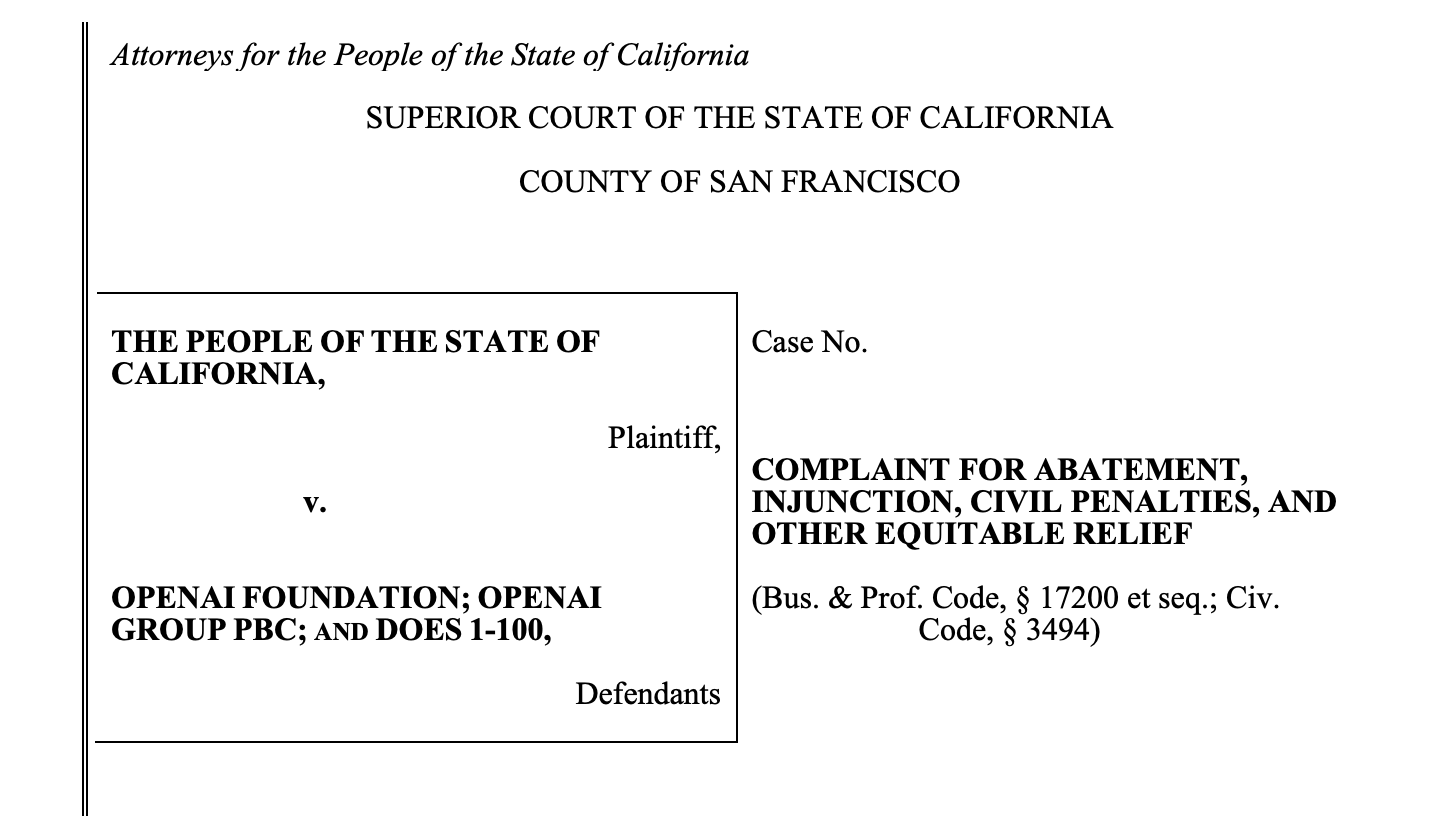
Read our last AI newsletter: California takes OpenAI to court
Read our last Tech newsletter: The U.S. has an outage problem
Read our last Robotics newsletter: Tesla’s Cybercab can now be yours (sort of)
Today’s AI tool guide: Turn a spreadsheet into a data story with AI
That's it for today!Before you go we’d love to know what you thought of today's newsletter to help us improve The Rundown experience for you. |
|
See you soon,
Rowan, Zach, Shubham, Jennifer, and Nate — the humans behind The Rundown