Meta introduces Muse as personal AI agents face growing competition
Meta’s Muse brings a personal AI agent to WhatsApp and its own app, raising questions about separate agents as OpenAI and Anthropic expand their tools.
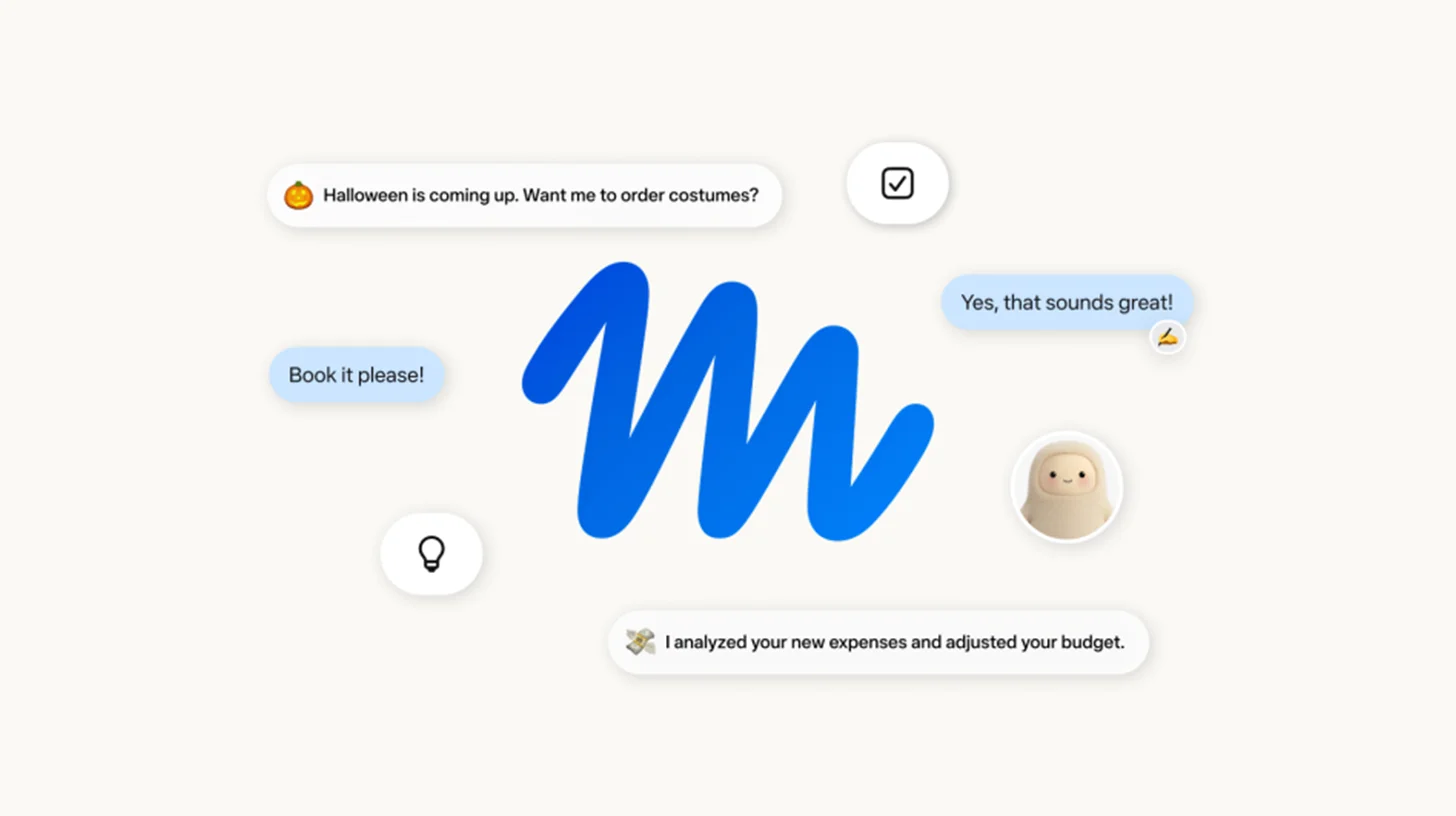
Meta has introduced Muse, a personal AI agent that works through a messaging interface and carries out tasks on its own cloud computer. Announced on September 8, Muse can navigate websites, fill out forms, and continue working after a user closes the app, according to Meta’s launch announcement.
The launch, covered in The Rundown’s September 9 newsletter, adds another option for people who want to delegate tasks such as booking tables, sending emails, and shopping. It also sharpens a competitive question. As OpenAI and Anthropic bring more agent capabilities into their own assistants, how much room remains for a separate personal agent product?
How Muse works
Meta says users can talk to Muse in its own app or through WhatsApp. Its dedicated cloud computer and browser give it a place to act on requests and keep working in the background. The initial rollout covers U.S. users on iOS, Android, and the web, with free access and paid subscription options, according to the announcement.
Muse can also write custom connectors for services that provide an API or command line interface, Meta says. That could expand the services it can reach, although a service still needs to expose a usable interface. Meta’s technical documentation discusses Gmail access and describes how the system handles credentials and permissions.
For tasks involving purchases or sensitive information, Meta says Muse requests approval before sensitive actions. Its architecture separates the working agent from credential storage and a permission authority called Sentinel. Stripe Link payments rely on restricted card credentials that can be used once, alongside purchase approvals, according to Meta’s security explanation.
Those safeguards come with qualifications. Meta says it can access data when necessary to operate, secure, or support the service. Sanitized interaction records can be used for training unless users opt out. A stronger Confidential VM protection is planned for later in 2026. Meta also acknowledges that prompt injection remains unsolved, so its security design should be understood as a set of protections with limits.
Why it matters
Muse enters a crowded field of personal agents. The writer’s underlying question is becoming more concrete as frontier providers add tools for browser navigation and agent delegation. If people can assign tasks inside an assistant they already turn to, a separate agent subscription may need a stronger reason to earn their attention and money.
OpenAI supplies a direct precedent. On July 17, 2025, it announced ChatGPT agent with its own virtual computer, visual and text browsers, a terminal, API access, and connectors. It combined Operator’s website interaction with deep research inside ChatGPT and supported scheduling completed tasks to recur. That announcement shows how a frontier provider can absorb functions that might otherwise justify another product.
Anthropic has demonstrated a related direction in research. Its June 13, 2025 engineering account describes a lead agent creating parallel subagents and combining their findings. The scope matters here. Delegating research supports the broader case that frontier assistants can coordinate agents, while leaving open how effectively those systems can handle shopping or personal administration. Anthropic also describes coordination problems and substantial production engineering, which suggest that stronger models alone do not settle the product challenge.
For users, this could turn the choice into a practical comparison of convenience, persistence, and successful execution. Muse’s WhatsApp access and background work could be reasons to choose it. A competing assistant that handles the same task within an existing conversation could reduce the appeal of opening another app or paying for another service. The available announcements do not establish which product completes those tasks more reliably.
Specialized agents also have room to distinguish themselves. Hermes’s documentation, accessed September 9, describes persistent memory, reusable skills, scheduled automation, and support for different model providers and deployment environments. Those features could matter to someone who wants continuity across tasks or control over where an agent runs. Meta itself says Muse uses its own Muse Spark model, so the competitive question extends beyond independent developers building on someone else’s model.
Trust could be another deciding factor. An agent handling email or purchases needs careful credential management and approvals that give the user meaningful control. Muse’s stated safeguards address that work, while its data access and training policies give prospective users concrete terms to weigh. OpenAI and Anthropic may narrow the opening for separate agents as their assistants expand, but the timing and extent of that shift remain uncertain. Muse’s case will depend on whether its everyday convenience and execution justify choosing it alongside those assistants.
Sources & further reading
- 01therundown.ai ↗
- 02Introducing Muse: The World’s First Personal AI Agent Built for Everyone ↗
- 03How We Built Safety Into Muse | Meta AI Research ↗
- 04Introducing ChatGPT agent: bridging research and action | OpenAI ↗
- 05How we built our multi-agent research system \ Anthropic ↗
- 06Hermes Agent Documentation | Hermes Agent ↗
This story builds on reporting from The Rundown newsletter on September 9, 2026.