Google tests AI watermarks for proteins with SynthID Bio
Google DeepMind’s SynthID Bio tests watermarks for proteins, aiming to help DNA suppliers trace AI designs while leaving key safety questions open.
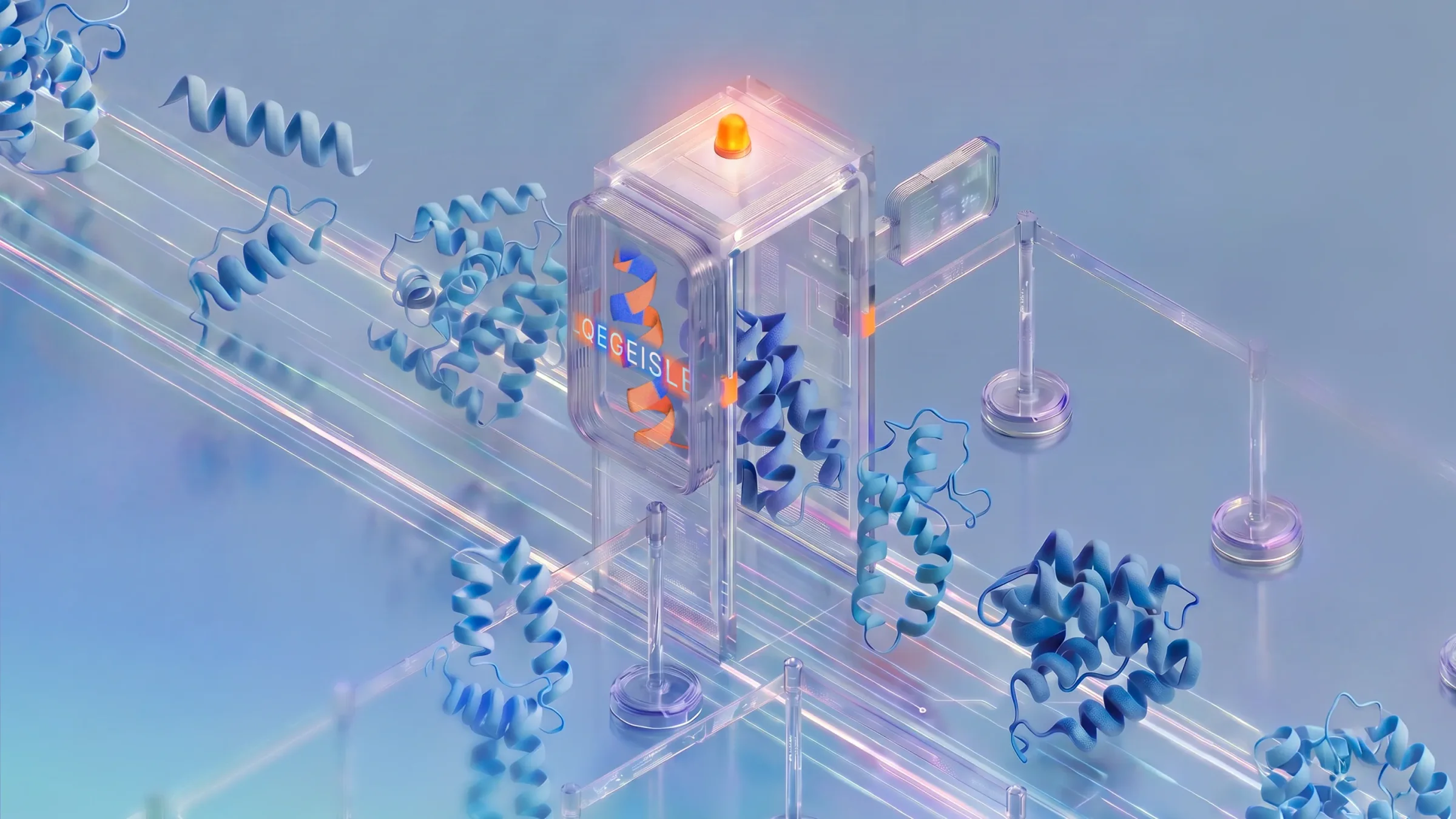
Google DeepMind introduced SynthID Bio on September 30, 2026, a proof of concept that extends AI watermarking to proteins. The goal is to help companies that make custom DNA trace the origins of unfamiliar designs before filling an order.
The project, featured in The Rundown’s October 2 issue, addresses a problem for DNA suppliers. They screen orders for known threats, while unfamiliar designs can require manual review and delay research, Google says.
How the watermarks work
The project documentation describes two methods. One works with ProteinMPNN, a protein design model, to watermark amino acid sequences. The other modifies AlphaFold 3 to place a hidden pattern in a protein’s predicted 3D coordinates.
Google’s researchers report in Nature that the structure detector found more than 99.8% of watermarked predictions at a 0.1% false positive rate on the AlphaFold 3 evaluation set. The team says its recommended setup preserved the structural accuracy measures it tested.
The lab experiments tested the sequence method. Google reported comparable binding strength and success rates for marked and unmarked proteins made in the lab and tested against three biological targets. The team began with structures from proteins already known to bind successfully, leaving performance across other designs uncertain.
Each mark provides a basic signal that a design was watermarked, with no detailed identity record. The researchers also removed marks by rewriting sequences or further processing structures, leaving resistance to tampering unresolved.
Why it matters
Watermarking tends to divide opinion. Tracing the origins of proteins designed by AI seems a less divisive goal. The promise for drug discovery makes it important to build safeguards before design tools advance beyond what screening can handle.
That promise has concrete research support. In September 2024, Google reported that AlphaProteo generated proteins that bound successfully to seven targets relevant to infection and disease research. The system failed on an eighth target, and Google stressed that strong binding is only an early step toward practical applications.
DNA suppliers and the researchers waiting for their orders have a shared interest in faster, reliable screening. Google proposes using watermarks to establish a design’s origin. If that signal proves useful, suppliers could spend less time resolving where an unfamiliar design came from and direct more review effort toward biological risk. Any reduction in research delays still needs to be demonstrated in supplier workflows.
The pressure to improve screening is already visible. In October 2025, Twist Bioscience reported that variants of toxin and viral protein sequences designed with AI escaped standard screening software. Those were digital sequences; whether they would retain harmful activity after manufacture was unknown. Twist said the findings led to patches and better detection strategies.
A watermark can inform a supplier’s review. Judging what a protein might do still requires biological risk checks, and a mark that can be removed has limits as a safeguard. Detection errors could also affect which orders receive scrutiny, so the mark’s role in approval decisions needs careful testing.
Google and Isomorphic Labs’ broader safety plan includes threat assessment, evaluations, safeguards and monitoring. At this proof of concept stage, the immediate task is to test how SynthID Bio fits into order checks, how detection errors affect review workloads and how well the marks resist tampering.
Sources & further reading
- 01therundown.ai ↗
- 02SynthID Bio: Watermarking methods for synthetic biology — Google DeepMind ↗
- 03GitHub - google-deepmind/synthidbio: SynthID Bio is a family of methods developed by Google DeepMind for embedding highly detectable yet function-preserving watermarks directly into AI-generated biological sequences and structures. · GitHub ↗
- 04Function-preserving watermarking of AI-generated proteins | Nature ↗
- 05AlphaProteo generates novel proteins for biology and health research — Google DeepMind ↗
- 06Twist Bioscience | Twist Bioscience Announces Publication in Science Examining Biosecurity Screening Practices in AI-assisted Protein Design ↗
- 07Google DeepMind and Isomorphic Labs approach to bioresilience — Google DeepMind ↗
This story builds on reporting from The Rundown newsletter on October 2, 2026.