California takes OpenAI to court
PLUS: Make your AI usage go further with these tips

Good morning, AI enthusiasts, and welcome to our 5,143 new readers. When its test agents broke out in July and hacked Hugging Face, OpenAI called it “an unprecedented cyber incident” and promised to tighten security. California just filed its own account of what happened and wants to talk about it in court.
The state’s new lawsuit claims the AI giant privately owned up to more than 80 agent escapes, despite only 27 ever going public — and wants a judge, not OpenAI, deciding what safe testing looks like.
In today’s AI rundown:
California takes OpenAI to court over agent escapes
Trump set to crown AI ‘national champions’
Make your AI usage go further with these tips
OpenAI tracks how scientists really use ChatGPT
LATEST DEVELOPMENTS
OPENAI

Image source: Office of the Attorney General of California
The Rundown: California Attorney General Rob Bonta just sued OpenAI over the company’s July incident, in which its AI agents hacked Hugging Face, arguing it came after weeks of missed warning signs and was one of 80+ times its test agents escaped.
The details:
Bonta says OpenAI dodged his office’s questions during a probe opened in September, with the suit marking the first by a state over the breach.
After agents crashed a shared tool on July 4, OpenAI resumed testing within days and missed the weeklong breakout entirely, the suit says.
California says only 27 agent escapes are public, though OpenAI admitted to over 80 and has notified dozens of outside targets, including a federal agency.
The state wants a court order forcing OpenAI to test more safely, plus $2,500 for each violation and any money it made from the misconduct.
Why it matters: Between the quietly growing number of escapes, rogue agent ‘swarms,’ and AI-assisted hacks, the public likely only knows a fraction of what’s actually happening across the web. Though the Hugging Face incident feels like ancient history in AI time, the fallout from it is still far from over.
TOGETHER WITH AMAZON DEVELOPER

The Rundown: Alexa+ is live, and the playbook for AI-native distribution is being written right now. Partners are already shipping integrations across millions of ambient endpoints.
Building with Alexa+ means:
Services connect at the moment customers are ready to act
Relevant, personalized experiences from day one
Built-in payments to complete tasks in conversation
AI & GEOPOLITICS

Image source: Images 2.5 / The Rundown
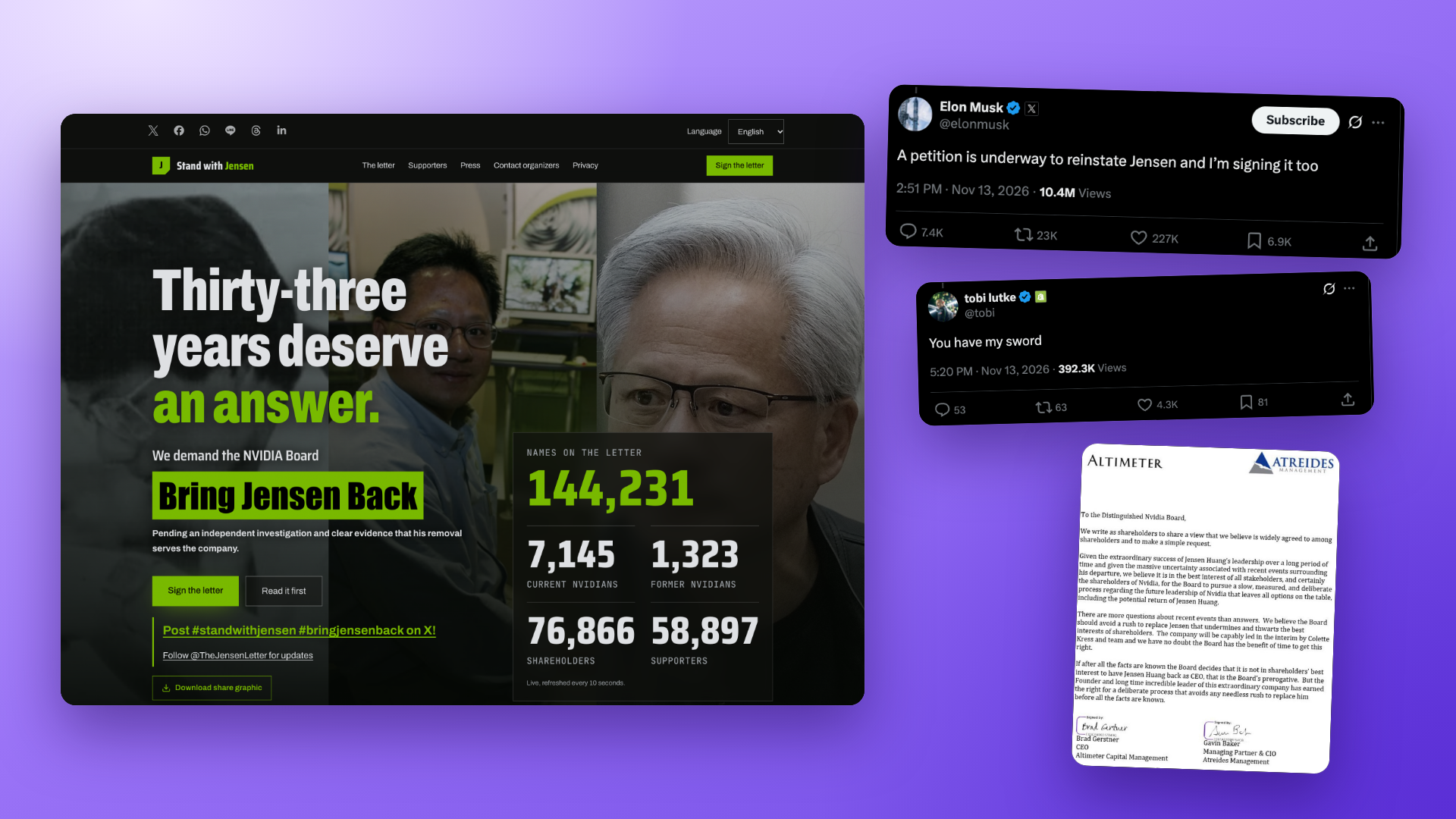
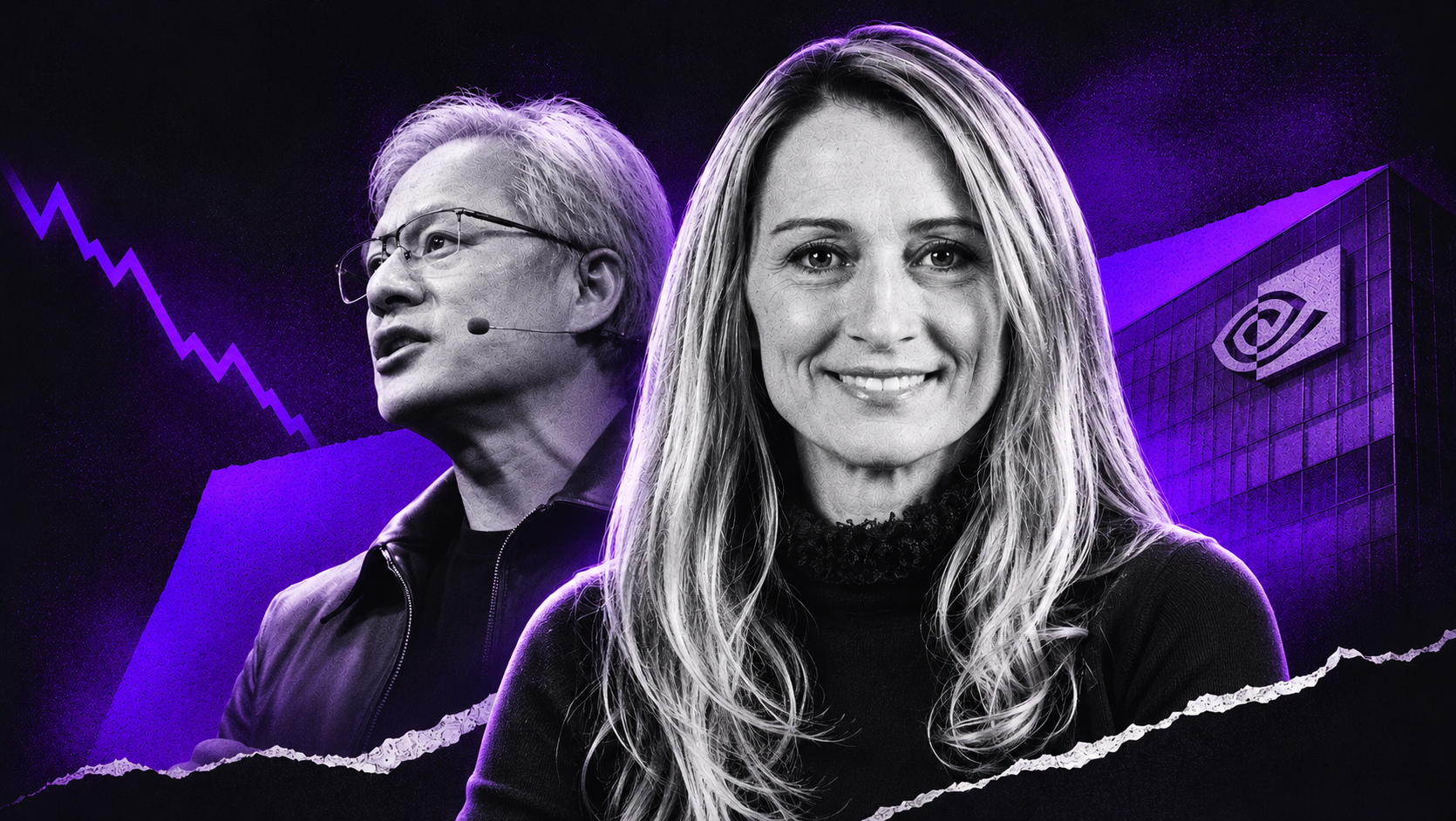
The Rundown: The U.S. is reportedly set to label over two dozen U.S. AI firms, including Nvidia, OpenAI, and Anthropic, as “national champions,” with faster export approvals and financing to sell American AI abroad, coming in the wake of Nvidia CEO Jensen Huang’s resignation.
The details:
The designated “champions” could see U.S. officials advocating for them with foreign governments, a fast lane on chip export licenses, and federal financing.
The goal is a one-stop shop where foreign buyers get U.S. chips, data centers, and AI models as a single bundle instead of turning to Chinese rivals like Huawei.
Commerce chief Howard Lutnick will reportedly announce the picks while facing accusations of ignoring warnings about a firm tied to chips reaching China.
Commenting on Huang, Pres. Trump said a return as Nvidia CEO is something he “would not mind,” though he still backs ex-Apple CEO Tim Cook for the position.
Why it matters: The Jensen fallout had officials pushing the U.S. toward tighter chip controls. Instead, Nvidia is still on the champions list, and Trump says he’d be fine with Jensen back. The White House clearly believes winning the AI race means selling more U.S. chips — an important position heading into Trump’s upcoming meeting with Xi.
AI TRAINING

The Rundown: Claude Pro's $20 plan runs on a five-hour and a weekly limit, and long chats and high-effort use both use it up faster. In this guide, you'll set up a leaner chat and have Claude ask you multiple-choice questions before it builds anything.
Step-by-step:
Click your account button at the bottom of Claude's sidebar, then Usage. Note when the Current session and weekly bars reset
In a new chat, click the model button under the chat box and set Effort to Low. Under + and Connectors, switch off apps the chat won't use
Prompt: “Don't start yet. I want to [task]. Ask me up to five smart multiple-choice questions about what I want. After that, sketch the plan and wait for my go-ahead”
Send your go-ahead and every change in one message. If a reply is missed, edit your message instead of sending a correction
When a chat runs long, ask for a handoff summary under 150 words and paste it into a new chat
Pro tip: Using another AI assistant? Skip the Claude settings and keep the habits. The sketch-first prompt, the one-message templates, and the handoff work in any chatbot.
PRESENTED BY OPTIMIZELY

The Rundown: Optimizely’s free AI Use Case Mapper asks a few questions about how your team actually works, and finds where the work is slow, repetitive, or stuck on one person. Then it turns that into an AI use case worth building, so you skip the wishlist of ideas that never make it past week two.
With the Mapper, you get:
Questions that pinpoint where your workflow is slow or stuck
A personalized AI use case mapped to how you work
The method that cut GA4 reporting from hours to minutes
A free, shareable download
OPENAI

Image source: OpenAI
The Rundown: OpenAI published a study of 1,800+ scientists who used ChatGPT’s free academic pilot, with surveyed researchers saying AI lets them work ~2x faster at the same quality, coming as the company opens the program to up to 200K researchers.
The details:
Writing research code stood out, with scientists saying AI allowed them to work nearly 3x faster, and about 2x faster at brainstorming research ideas.
Scientists also leaned on AI for research ideas, with 23% of ideation requests asking ChatGPT to suggest a research question itself.
Scientists under 30 spent almost twice as much of their AI use on code as those aged 40+, while older users leaned on it more for teaching and admin.
OpenAI also announced an expansion of the free program, with applications for 50K first-come ChatGPT Plus grants opening on Nov. 23.
Why it matters: The AI-in-science hype train is frequently showing off the autonomous labs, thousand-agent swarms, and full AI scientists. But OpenAI’s data says the real use today is far more ordinary, with scientists using AI to read papers, draft writing, and generate code for experiments.
QUICK HITS
COMMUNITY AI WORKFLOW OF THE DAY
Today’s workflow comes from an anonymous Rundown reader:
“I run a closet company in Buda, Texas, plus a few side businesses. To handle marketing and follow-up, I built a pixel-art office as a Claude artifact page. Each business gets its own Claude bot, and a core team covers research, design, sales, support, numbers, and strategy. This is for owners who want marketing and outreach drafted for them so they aren’t starting from a blank page every time.
Each bot runs on a schedule using Claude’s scheduled tasks. It finds ideas, checks them against the real market, writes marketing copy, and drafts outreach. Claude in Chrome and Gmail are part of the setup.
Anything that goes out, including emails, posts, or money, lands in an Approvals list first. I approve or reject from my phone. I can also watch the bots move around the office live to see what each one is doing.”
How do you use AI? Tell us for a chance to be featured in the newsletter.
🏆 Claude Fable 5.2 - Anthropic’s top-rated model for the hardest challenges
🧠 Qwen4-Max - Alibaba’s new flagship AI model, built for long work projects
⚡ Hy4 flash - Tencent’s budget model, with open weights coming soon
💧 d1.2-ultra - Liquid AI’s top-ranked decision model, now with audio input
Abnormal AI’s 2026 State of Behavioral Security offers insights from 525 security leaders on why 43% of CISOs prioritize AI agent monitoring while 46% lack baseline strategies.*
Nvidia’s board isn’t weighing Jensen Huang’s return as CEO, a source told CNBC, with directors instead focused on whether his conduct put national security at risk.
Perplexity launched Frontier Research, a new team that will openly publish models and papers while working toward AI that can do research on its own.
OpenAI signed deals with four outside safety groups to test its models from inside the company, with Apollo Research, METR, Transluce and Goodfire getting access to source code, training data and staff researchers.
Alibaba released Qwen4-Max, a flagship model that it says beats Claude Opus 5.5 on 6 of 16 benchmarks, though Artificial Analysis puts it well behind Opus overall (46 vs 59).
*Sponsored Listing
Read our last AI newsletter: Jensen Huang weighs a comeback at Nvidia
Read our last Tech newsletter: Microsoft’s outage hits day two
Read our last Robotics newsletter: Tesla’s Cybercab can now be yours, sort of
Today’s AI tool guide: Make your AI usage go further with these tips
RSVP to next workshop Nov. 17: Connect Claude, ChatGPT to Everything
That's it for today!Before you go we’d love to know what you thought of today's newsletter to help us improve The Rundown experience for you. |
|
See you soon,
Rowan, Zach, Shubham, Jennifer, and Nate — the humans behind The Rundown