SpaceXAI, Cursor release the strongest Grok yet
PLUS: Add CGI to any video with Higgsfield

Good morning, AI enthusiasts. With its last few versions lagging behind, Cursor coming on board with its own models, and Elon Musk renting out compute to frontier rivals, Grok's place in the AI world seemed up in the air.
The release of Grok 4.5, the first model SpaceXAI and Cursor trained together, just cleared things up fast — with powerful performance, flash speed, efficiency, and prices tuned for a moment when everyone is suddenly counting tokens.
In today’s AI rundown:
SpaceXAI and Cursor release the strongest Grok yet
ChatGPT’s voice gets a major upgrade with GPT-Live
Add CGI to any video with ChatGPT and Higgsfield
ByteDance targets design work with Seedream 5.0
4 new AI tools, community workflows, and more
LATEST DEVELOPMENTS
SPACEXAI

Image source: Cursor
The Rundown: SpaceXAI just launched Grok 4.5, the first model it built jointly with Cursor after its $60B acquisition, featuring strong benchmarks, speed, and efficiency gains that undercut frontier pricing and vault Grok back into the AI conversation.
The details:
4.5 features strong performance on coding, agentic, and knowledge work tasks, with benchmarks in similar ranges to Claude Opus 4.8 and GPT 5.5.
The model runs at 80 tokens per second, a speed that rivals flash models, while claiming a 4x efficiency gain over models like Opus 4.8.
Pricing lands at $2/$6 per million input/output tokens, versus $5/$25 for Opus 4.8, with usage temporarily free inside Cursor and Grok Build.
Elon Musk pitched the release on X as "an Opus-class model, but faster, more token-efficient and lower cost”, with an even bigger model coming next month.
Why it matters: Grok has historically been somewhat of a punchline compared to the frontier, but 4.5 came to play — with very impressive performance at this speed, price, and efficiency. With Cursor’s Composer models also continuing to move up the coding ladder, the gains from the $60B acquisition look to be flowing in both directions.
TOGETHER WITH VANTA

The Rundown: GRC's reputation is shifting, and GRC Engineering is at the forefront. Ayoub Fandi, GRC Engineer at Lovable, and Justin Pagano, Sr. Director of GRC Engineering at Vanta, have a lot to say about Legacy GRC and what comes next. Consider this your front row seat to the official mic drop moment.
Join this virtual event to learn:
GRC Engineering vs Legacy GRC
Why GRC Engineering goes beyond compliance automation
Practical ways to start automating, with lessons from Lovable and Vanta
Register to save your spot! Can't make the time? Register anyway, and receive a link to the recording.
OPENAI

Image source: OpenAI
The Rundown: OpenAI just rolled out GPT-Live, its next-gen voice model that makes talking to AI "feel much more like having a real conversation", featuring an architecture that removes the clunky nature of previous experiences.
The details:
Live is a "full-duplex" architecture, processing inputs continuously instead of old systems that strung together models and used turn-based conversation.
When a question needs more reasoning, Live can delegate to a stronger model for the background work, and also surface visual cards alongside answers.
The ability to listen, process, and output simultaneously leads to less clunky, awkward pauses, while enabling abilities like real-time translation.
In OAI's tests, users picked GPT-Live over the old Advanced Voice Mode in around 3 of 4 head-to-head chats, with expert science scores nearly doubling.
Why it matters: Sam Altman has often talked about his voice vision from the movie ‘Her’, but previous models hit snags that removed the natural feel. Live’s ability to talk, reason, and listen at the same time gives Voice the futuristic feel it deserves, especially at a time when more users than ever are leaning towards speaking over typing.
AI TRAINING

The Rundown: In this guide, you will learn how to add an AI VFX element to a short video clip with Higgsfield. You will pick footage the model can preserve, use ChatGPT to tighten the effect prompt, then generate and review the edit in Gemini Omni Flash.
Step-by-step:
Start with a short video that gives the model room to work. Wide shots with a clear subject, simple motion, and visible background work better
Before opening Higgsfield, draft a strong CGI prompt with ChatGPT, telling it to make the command more specific about what to add and what not to change
Open Gemini Omni Flash in Higgsfield under the video tab. Upload your source clip, paste in the prompt from ChatGPT, and click generate
Review the generated clip against the original. You can make revisions in Higgsfield or start from scratch with a new prompt
Pro tip: Once you get a solid result, use Higgsfield to revise the generated video itself, such as removing unwanted effects.
PRESENTED BY SERKO AI

The Rundown: Serko.ai is a conversational AI travel agent built for modern travellers that handles flights, hotels, and trip disruptions in a single chat — with no forms, tabs, or manual follow-up.
Serko.ai can:
Search, compare, and book in a single conversation
No middle seats. King bed. Set once, remembered every time
Cancel any trip, stress-free, with full refunds
Now open to US travelers — join early and get free cancellation on every booking, exclusively for beta members.
BYTEDANCE

Image source: ByteDance
The Rundown: ByteDance rolled out Seedream 5.0 Pro, a new image model that claims to go beyond generation to "understand design” with powerful editing features, and the first release that looks to near the frontier level held by OpenAI’s Images 2.0.
The details:
5.0 Pro features improvements in text rendering, structure, alignment, and other design areas, resulting in strong infographics and professional work.
The model includes ‘precision editing’ with layer separation for editable designs, plus the option to draw, replace, or combine images.
Seedream 5.0 Pro can also handle multilingual inputs and outputs, able to work natively across over 10 languages.
The release comes ahead of ByteDance’s anticipated Seedance 2.5 video model expected this month, with 2.0 still near the top of leaderboards.
Why it matters: The biggest upgrade in next-gen image models has been the tool layer getting eaten, with more agentic, proactive systems absorbing the back-and-forth process that happens after a first generation. Models like 5.0 are now providing the type of control and creative partnership that really starts to change user workflows.
QUICK HITS
🗣️ GPT-Live - OpenAI’s new SOTA, more natural voice model
🚀 Grok 4.5 - SpaceXAI and Cursor’s powerful, low-cost, efficient new model
🎨 Seedream 5.0 Pro - ByteDance's image AI built for design work
⚙️ SWE-1.7 - Cognition's cheap, near-frontier coding model
OpenAI's chief futurist Joshua Achiam announced he is leaving the company after a nine-year stretch, calling it "a decade where centuries happened."
Cognition released SWE-1.7, an in-house model for its Devin agent built on China's open-source Kimi K2.7, nearing GPT-5.5 and Opus-level scores while costing far less.
MiniMax is reportedly targeting a Q3 release for a 2.7T-parameter model, which would land 6x bigger than the lab's flagship and larger than any current open model.
Prime Intellect secured $130M in Series A funding, with the open-source training startup crossing $100M in annualized sales in its first year.
Udemy co-founder Eren Bali's Monogram emerged from stealth with a $40M seed round, pitching an iOS app that swaps text walls for instantly generated interfaces.
COMMUNITY
Every newsletter, we showcase how a reader is using AI to work smarter, save time, or make life easier.
Today’s workflow comes from reader Michael N. in Vancouver, Canada:
“I used Claude to write a plugin for Unreal Engine I call ViewGen. The premise is simple: integrate ComfyUI into Unreal Engine to leverage 3D viewport and camera data in a familiar 3D development platform. The user can utilize any partner nodes such as Nano Banana 2 or Kling, and use the viewport to generate precise depth and color reference images and movies from UE, and pipe that into Comfy-styled graphs directly in the engine.
It's a passion project to understand and leverage generative tools, and this was a natural step. I've released ViewGen open source on GitHub.”
How do you use AI? Tell us Visit videoask.com.
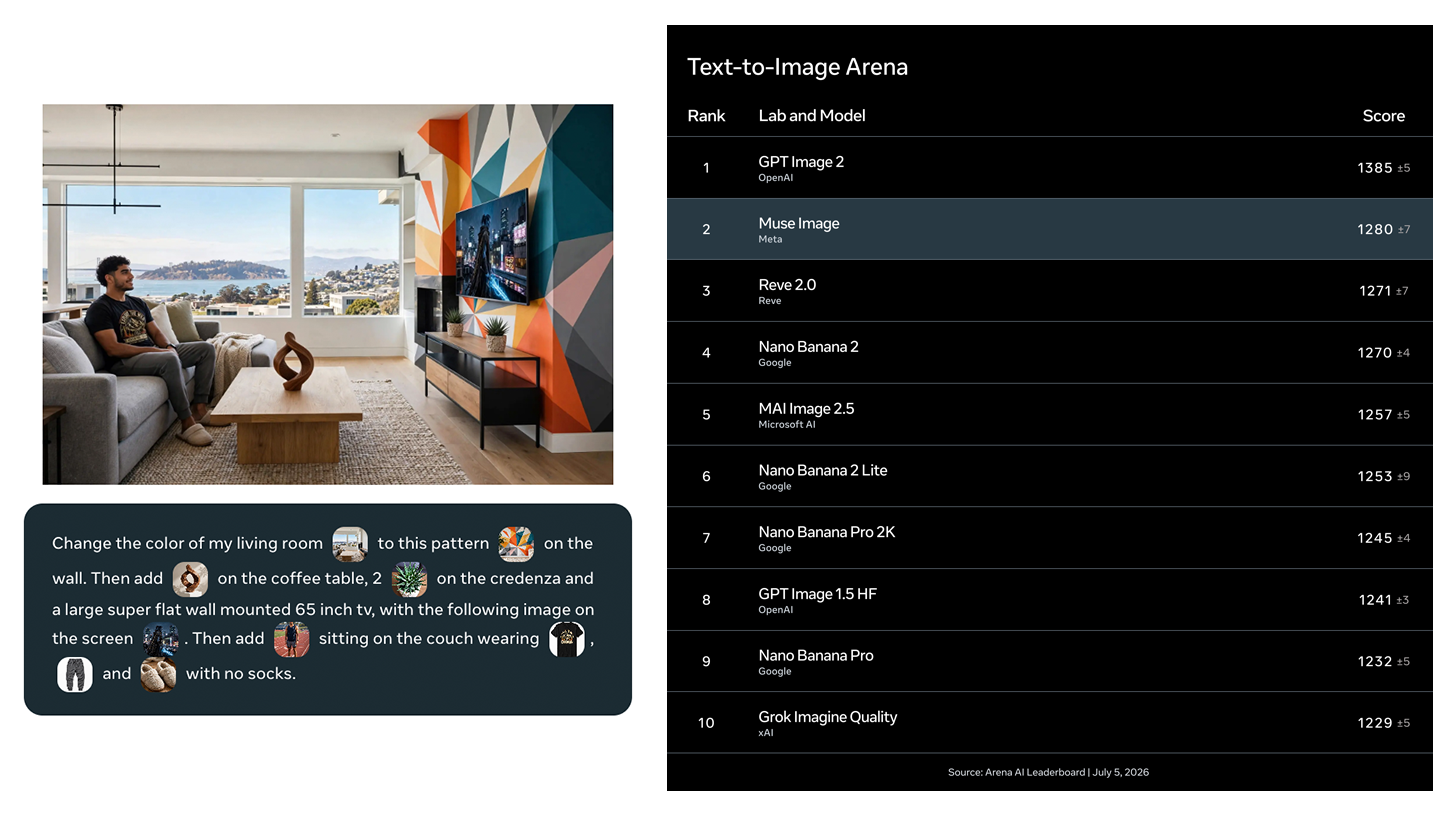
Read our last AI newsletter: Meta climbs the AI image leaderboard
Read our last Tech newsletter: Microsoft axes nearly 5K jobs
Read our last Robotics newsletter: This $8K robot can do your laundry
Today’s AI tool guide: Add CGI to any video with Higgsfield
RSVP to next workshop on July 22: No-code product building
That's it for today!Before you go we’d love to know what you thought of today's newsletter to help us improve The Rundown experience for you. |
|
See you soon,
Rowan, Zach, Shubham, and Jennifer — the humans behind The Rundown