Meta climbs the AI image leaderboard
PLUS: Run better 1-on-1s with employees using AI

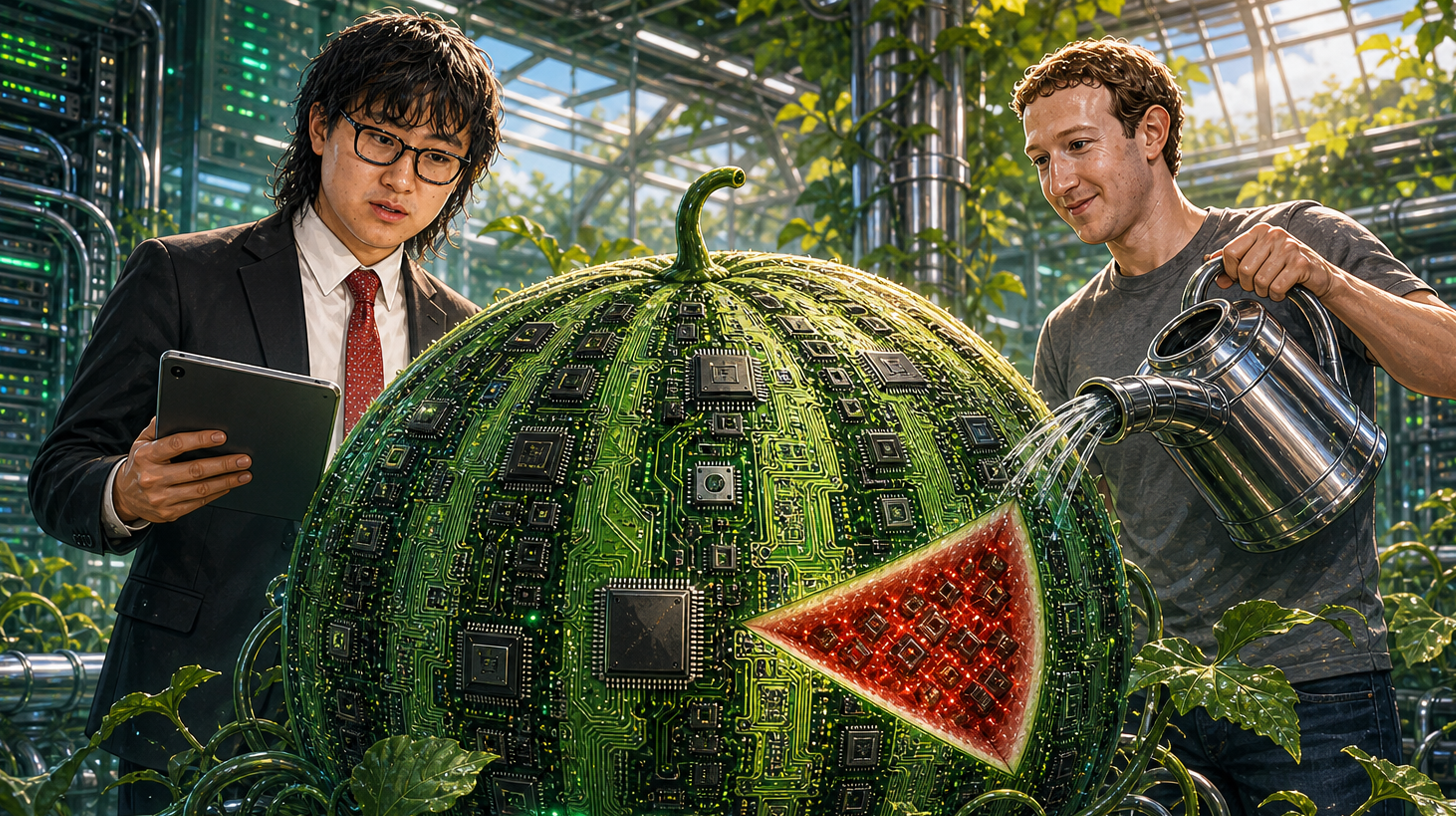
Good morning, AI enthusiasts. Meta's Alexandr Wang was talking a big game days ago, saying the in-training 'Watermelon' model had pulled level with GPT-5.5 and promising an X user, "you'll like what we have cooking."
Today, Meta’s kitchen served something even more surprising: Muse Image, which opens at No. 2 on the leaderboards with an equally strong video model teaser behind it — the kind of receipts that make the Watermelon hype even harder to dismiss.
Reminder: Our next live workshop is today at 12 PM EST. Join and learn how to create a viral AI avatar content pipeline that covers topics, research, avatar and voice generation, and monetization strategies. RSVP here.
In today’s AI rundown:
Meta’s new in-house AI image model
Beijing considers new restrictions for Chinese AI
Run better 1-on-1s with employees using AI
DoorDash grades the AI reviewing its code
4 new AI tools, community workflows, and more
LATEST DEVELOPMENTS
META

Image source: Meta
The Rundown: Meta just released Muse Image, the debut image model from Alexandr Wang's Superintelligence Labs, rolling out across Meta AI with strong opening rankings on Arena’s leaderboards, customization and agentic abilities, editing, and more.
The details:
Muse Image combines with Meta’s Muse Spark to leverage agentic capabilities such as web search and tool use, and edits its own outputs for better results.
The model slots into the No. 2 spot across Arena’s text-to-image and editing leaderboards, trailing only OpenAI’s GPT Image 2.
It is free inside Meta AI and rolling out across Instagram and WhatsApp, with Facebook, Messenger, and the Meta ads platform getting it at a later date.
Meta also teased a Muse Video model coming soon, with its preview ranking No. 3 on the Arena leaderboard behind Seedance 2.0 and Gemini Omni Flash.
Why it matters: Meta previously outsourced its creative AI to Midjourney and Black Forest Labs, but Wang’s MSL team just cooked up a very impressive in-house option. A powerful image (and incoming video) model of its own is a massive win for a company with no shortage of creative user needs between social media, advertising, and chat.
TOGETHER WITH GOOGLE FOR STARTUPS

The Rundown: The brand new Google for Startups Generative Media Technical Guide is the definitive blueprint for startups to start building production-grade, multimodal creative apps using DeepMind's newest models and orchestration tools.
Inside the guide, you will:
Discover models like Veo and Lyria
Master deterministic control and programmatic guardrails
Ensure cryptographic provenance and economic scale
AI & GEOPOLITICS

Image source: Images 2.0 / The Rundown
The Rundown: Beijing is reportedly discussing rules that would limit use of the country’s strongest models outside of China, a shift that could turn popular, low-cost systems from ByteDance, Alibaba, and Zhipu AI into a layer of national tech control.
The details:
Reuters reported that China’s commerce officials met with ByteDance, Alibaba, and Z AI on possible foreign-use limits for top models and future releases.
Qwen, Doubao, and GLM-5.2 sit at the center of the discussion, after Chinese models gained global users on low costs and efficient, strong performance.
The discussions reportedly included both closed and open models, plus startup-funding limits and penalties for leaking proprietary AI.
Washington ran the same play in June with Anthropic’s Fable and Mythos export controls; OpenAI’s GPT 5.6 also faced increased launch scrutiny.
Why it matters: After Mythos/Fable set the precedent, the world has seen how fast model access can change overnight for political reasons. Beijing moving in the same direction is an UNO reverse card that would make that risk two-sided: Western users could lose the increasingly popular Chinese models just as quickly.
AI TRAINING

The Rundown: In this guide, you will learn how to run better 1-on-1s with employees or mentees using Claude Cowork. You will set up a Cowork project from past transcripts, create your template and evaluation rubric, and use it to help people make progress.
Step-by-step:
Create a new Claude Cowork project. Drop any transcripts you have from previous 1-on-1s into that project folder
Prompt: “I work at [Company]. I manage [X] number of employees. View the transcripts of previous 1-on-1s, organize this repo, and create a call template and evaluation rubric that is specific to me and standard across my team”
Use the template for your next 1-on-1 and fill out the rubric for that employee. Then, drop the template, rubric, and transcript back in the project
Pro tip: Use automation to have Claude update the call template as new transcripts come in, or have it create a performance dashboard for the team.
PRESENTED BY DATADOG

The Rundown: As AI systems grow more complex, maintaining reliability requires full visibility across your entire stack. Watch this on-demand webinar to see how teams like Dust use unified observability to reduce MTTR and keep complex AI systems running at scale.
You'll learn:
How unified observability connects infrastructure, logs, and apps in one view
How Dust used observability context to reduce complex incident investigations from hours to minutes
What it looks like for engineering teams to maintain reliability in the AI era
AI RESEARCH

Image source: DoorDash
The Rundown: DoorDash detailed DashBench, an internal benchmark that tests AI code reviewers against 105 of the company's past code changes to see how many problems each setup catches, with a pairing of Kimi K2.6 and Fable 5 performing best.
The details:
DoorDash built the test after realizing it had no way to count the bugs its AI reviewer missed, since everyday feedback only tracked what the AI flags.
Models reviewing code alone caught between 20-30% of problems, while DoorDash's pairing of two Claude models found just over half.
Pairing the free-to-download Kimi K2.6 with Claude Fable 5 caught about two-thirds of the problems and 8 of 10 critical bugs, at a cheaper $3.81 per review.
Co-founder Andy Fang posted that DashBench gives DoorDash the confidence to bring open models into the pipeline, saying, "Better quality, cheaper cost."
Why it matters: DoorDash, the AI lab? Jokes aside, two takeaways: 1. every major company can likely benefit from this level of AI research into their own processes and 2. the use of Kimi K2.6 shows how serious open-source options have become, with cost savings and efficiency opportunities only growing with each new release.
QUICK HITS
🎆 Muse Image - Meta’s new in-house AI image generator
🚀 Hy3 - Tencent’s open-source model for cheap, reliable agent deployment
🗣️ Willow Frontier Mini - Willow's free, unlimited AI dictation model
🤖 Gemini Managed Agents - Agent API with background tasks, remote tools
Anthropic said that Fable 5 will now be available in subscription plans until July 12, after initially planning to move it off plans and onto usage credits on Wednesday.
Tufa Labs took first place in ARC-AGI-3's $37.5K milestone contest, wrapping a small Qwen model in an open-sourced coding agent to tackle the game-based benchmark.
Microsoft is reportedly running Excel and Outlook prompts on its in-house MAI models, with Mustafa Suleyman pushing to "ultimately eliminate" its Anthropic bill.
Anthropic also announced that its Claude Cowork platform is being added to mobile and web in beta, giving users the ability to move between devices during tasks.
Figma acqui-hired the team behind AI app-builder and agent platform Bud (formerly Orchids).
COMMUNITY
Every newsletter, we showcase how a reader is using AI to work smarter, save time, or make life easier.
Today’s workflow comes from reader Sarah D. in London, England:
“I am a sixty-one-year-old woman travelling in a van. I use AI as a decision engine to help me live safely, efficiently, and independently while travelling off-grid. It helps me plan routes, estimate fuel use, manage battery life, track food and water consumption, and choose stopovers based on remoteness, water access, shelter, and data coverage.
My agent also supports daily battery modeling, fatigue-aware drive planning, and scenario planning like 'If I stay here 3 days, will I run out of power?' Plus a morning energy forecast, midday route planning, and evening battery check.”
How do you use AI? Tell us Visit videoask.com.
Read our last AI newsletter: The part of Claude’s brain nobody built
Read our last Tech newsletter: Microsoft axes nearly 5K jobs
Read our last Robotics newsletter: This $8K robot can do your laundry
Today’s AI tool guide: Run better 1-on-1s with employees using AI
RSVP to next workshop today at 12 PM EST: Create short form videos with AI
That's it for today!Before you go we’d love to know what you thought of today's newsletter to help us improve The Rundown experience for you. |
|
See you soon,
Rowan, Zach, Shubham, and Jennifer — the humans behind The Rundown