Grok 4.6 storms the AI frontier
PLUS: Generate 100 pain-point ad hooks from customer feedback

Good morning, AI enthusiasts, and welcome to 5,731 new readers. Calling Grok a frontier model might have sounded ridiculous a year ago, but SpaceXAI’s latest model is paving a trajectory that likely doesn’t have rivals laughing anymore.
Grok 4.6 comes in hot with strong performance at a massive discount from Fable and Sol, with Elon Musk already declaring it "objectively No. 1 when considering intelligence, speed & cost" and an even stronger 4.7 teased as just weeks away.
In today’s AI rundown:
SpaceXAI’s Grok 4.6 storms the frontier
Nate's Notebook: Why your AI still feels dumb
Generate 100 ad hooks from customer feedback
Dog that got an AI cancer vaccine now has a company
LATEST DEVELOPMENTS
SPACEXAI

Image source: SpaceXAI
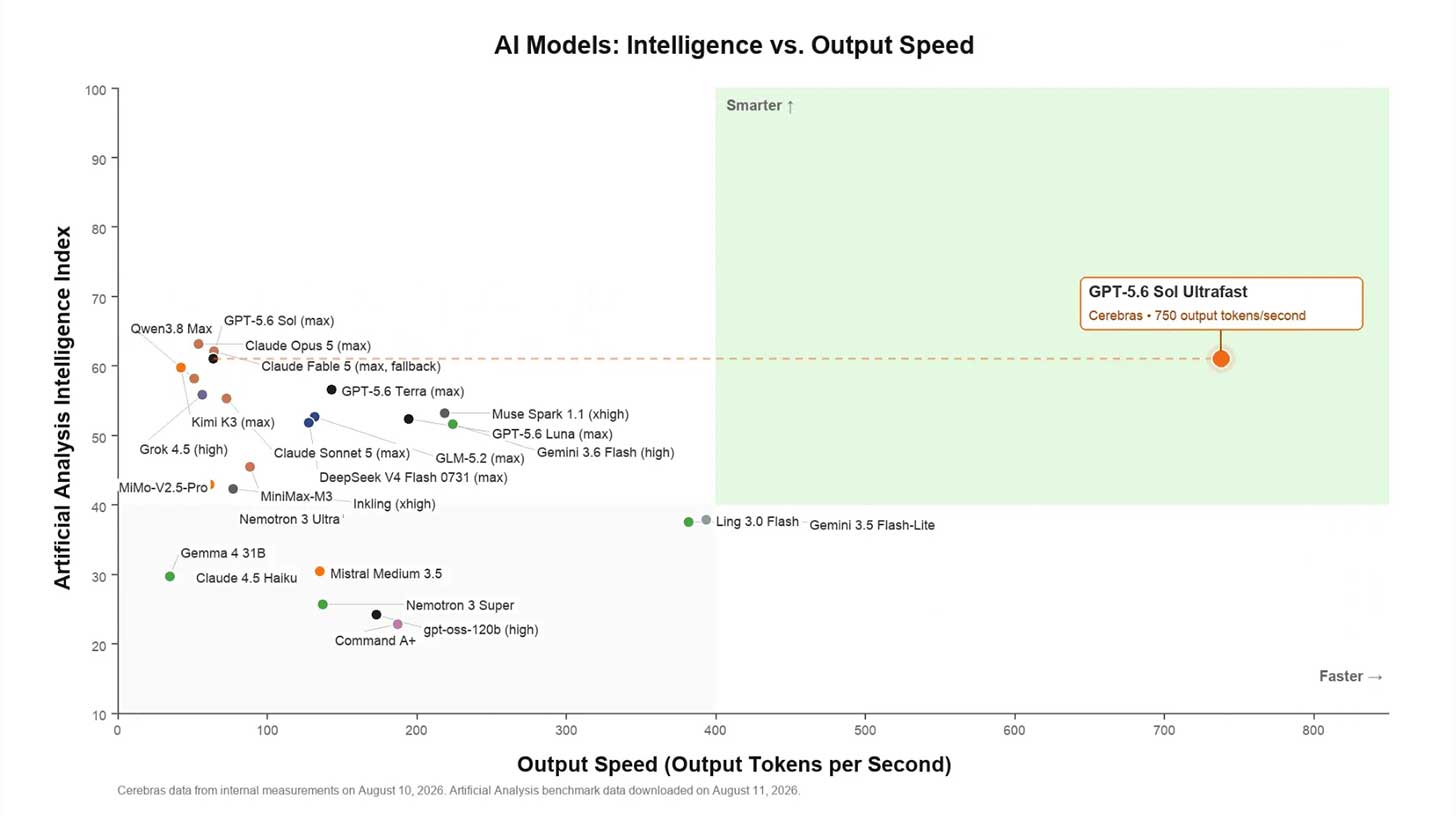
The Rundown: SpaceXAI just launched Grok 4.6, its new top model with benchmark scores that compete with frontier options like Anthropic’s Fable 5 and OpenAI’s GPT-5.6 Sol while charging 60% less — a massive turnaround for the once-ridiculed model.
The details:
Grok 4.6 scored a 61 on Artificial Analysis’ Intelligence Index, passing Sol and now sitting behind just Opus 5 (63) and Fable 5 (62).
The release edges Fable on real-world professional and legal work, while beating Sol on a pair of coding benchmarks that 4.5 had trailed.
4.6 also undercuts the frontier on price at $2/$6 per 1M tokens, with Elon Musk calling it “objectively No. 1 when considering intelligence, speed & cost”.
Musk also revealed that Grok 4.7 “should be ready in 3 to 4 weeks”, saying the upgrade will “exceed all current models”.
Why it matters: Is Elon about to overtake the frontier? The Cursor/xAI partnership had already shown results, but Grok has now gone from punchline to the frontier. With 4.7 on the way, this is the type of pressure that might force the hands of frontier rivals with both new models and price — something not many would’ve expected a year ago.
TOGETHER WITH ORACLE

The Rundown: LinkedIn just replaced its AI writing button with one to report AI slop instead. AI doesn’t sound like you because it writes from zero every time. Authentic writing is built on three kinds of memory.
In this blog, you’ll find:
The three memory layers
Reflection loops that adjust style over time
Code and the notebook to build AI that sounds like you
NATE’S NOTEBOOK

The Rundown: Each week, Rundown AI educator Nate Grahek breaks down what he's seeing while teaching real teams to use AI.
Nate: Most of the frustrated people I teach aren't really skeptics. They asked AI for something big, got slop back, and filed the comfortable verdict: see, it's still dumb. The output was bad. You were also aiming it wrong. Both things are true.
Here's my hypothesis for why smart people get stuck: they use AI for work outside their domain. Writing code, drafting contracts — it feels like superpowers. But in your own field, you know what good looks like in three seconds. Outside it, you're just hoping. If you can't judge it at a glance, don't ship it.
Now think about what real work goes through: research, testing, cutting, rearranging. Then, last, the finished thing. Most people hand AI that final verb and skip everything before it. Backwards. The early verbs are where AI does its best work and where you can steer. Go wider and deeper than you ever could, then take the last verb yourself.
One more rule: tell it upfront what format you work in (Word doc, spreadsheet, deck) so the handoff lands where you finish.
What's one task this week where you're asking AI to finish that you could reframe as AI prepping for you instead?
AI TRAINING

The Rundown: In this guide, you will learn how to turn customer feedback into a spreadsheet full of ad ideas with ChatGPT Work. We’ll extract the pain points, generate the copy and image prompts, then turn the version you like into a reusable app.
Step-by-step:
Make a folder on your PC, create a ChatGPT Work project inside it to keep the CSVs, images, and code. Then, grab 10-20 customer comments/reviews
Have ChatGPT turn them into a CSV with the person, pain point, frustrating moment, desired outcome, objection, and where the comment came from
Make another CSV to turn every pain point into an ad headline, CTA, and square feed-image idea. See and pick which angles are interesting
Generate initial ads and optimize them by giving feedback. Once finalized, ask ChatGPT to scaffold an app that runs the CSV with an OpenRouter key and saves ad images in folders
Pro tip: Don't automate 100 things at once. Do the task manually, fiddle with it until you get a good output (here's the full walkthrough), then make the process repeatable.
PRESENTED BY IBM

The Rundown: IBM Bob is an AI coding partner that helps enterprise teams coordinate planning, coding, testing, and validation across the software development lifecycle. Designed to help accelerate delivery while supporting governance, visibility, and control.
Key capabilities include:
Coordinating workflows across the SDLC
Providing governance controls for enterprise teams
Helping accelerate planning, coding, and validation
GAMGEE

Image source: Gamgee
The Rundown: Paul Conyngham introduced Gamgee, a Y Combinator-backed startup building mRNA cancer shots matched to the mutations in a single dog's tumor, coming just months after he made one with ChatGPT and AlphaFold for his own dog Rosie.
The details:
Several vet visits over 11 months missed Rosie's mast cell cancer, and once surgery, chemo, and immunotherapy all failed, her outlook fell to just months.
Conyngham used AI tools for the science and analysis, with UNSW then developing a personalized vaccine that helped reduce Rosie’s tumors.
Sam Altman met with Conyngham in March following the initial story, saying it had him thinking that “this should be a company”.
Australian vets are hosting the first trials, with Gamgee taking cases worldwide and managing the custom design, treatment, and monitoring end-to-end.
Why it matters: Saving dogs is a mission we can get behind, and Conyngham’s story is an amazing example of being able to just do things in the AI age. The hope is also that the start of personalized cancer treatments doesn’t end at dogs, and AI is going to be a major driver of pushing the same sort of research forward into the human realm.
QUICK HITS
COMMUNITY AI WORKFLOW OF THE DAY
Today’s workflow comes from reader Erica Conti:
"My husband, son, dog, and I were struggling to track our schedules in one place, and we had considered buying a Skylight calendar for years, but it costs $300. I decided to build my own instead.
I created a product requirements document for a family calendar in Claude, then shared it with Lovable, which built the first version. Lovable helped me integrate our Google Calendars and Todoist projects so all of our events and tasks appeared in one place, and Google Photos so our family photos rotate in the background.
I launched the calendar as a password-protected website and placed it on our kitchen iPad, editing it as we used it. It is tailored to our needs and costs less than the Skylight. The photo feature also makes it personal. I look forward to evolving it over time."
See Erica’s full workflow Visit The Rundown University. How do you use AI? Tell us for a chance to be featured.
🤖 Grok 4.6 - SpaceXAI's new near-frontier model
🚀 Qwen3.8-Max - Alibaba's flagship, newly open-weight model
🤑 DeepSeek V4 Pro - DeepSeek’s cost-effective new release
💼 Grok Bot - SpaceXAI’s always-on agent teammates with their own cloud
Glean:GO San Francisco, August 26-27 - The intelligence era is here. Join us in person or virtually to make AI part of your everyday work and get more time back for the work that matters. Register now.*
Google announced that its Gemini app officially hit 1B users, saying the AI is now the fastest-growing product in the company’s history.
DeepSeek quietly rolled out V4 Pro, a new model coming in at just $0.435/$0.87 per 1M pricing with benchmarks that slot slightly below both the frontier and open leaders.
AI coding startup Lovable secured $400M in new funding that values the company at $13.3B, more than doubling its valuation from its previous December raise.
Google introduced the Pixel 11 lineup, embedding Gemini AI further across the devices, with new voice upgrades, multistep task capabilities, and proactive prompts.
*Sponsored Listing
Read our last AI newsletter: Anthropic slips AI watermarks into Claude
Read our last Tech newsletter: Apple’s almost-glass iPhone
Read our last Robotics newsletter: Uber’s $10B answer to Waymo
Today’s AI tool guide: Create 100 ad hooks from customer feedback
That's it for today!Before you go we’d love to know what you thought of today's newsletter to help us improve The Rundown experience for you. |
|
See you soon,
Rowan, Zach, Shubham, Jennifer, and Nate — the humans behind The Rundown