Demis Hassabis puts a clock on AI oversight
PLUS: Build a no-code voice agent for customer intake with Grok

Good morning, AI enthusiasts. Last month, the U.S. government was improvising its way through a Mythos and Fable ban. Now, one of AI’s most respected lab chiefs is volunteering a more permanent answer.
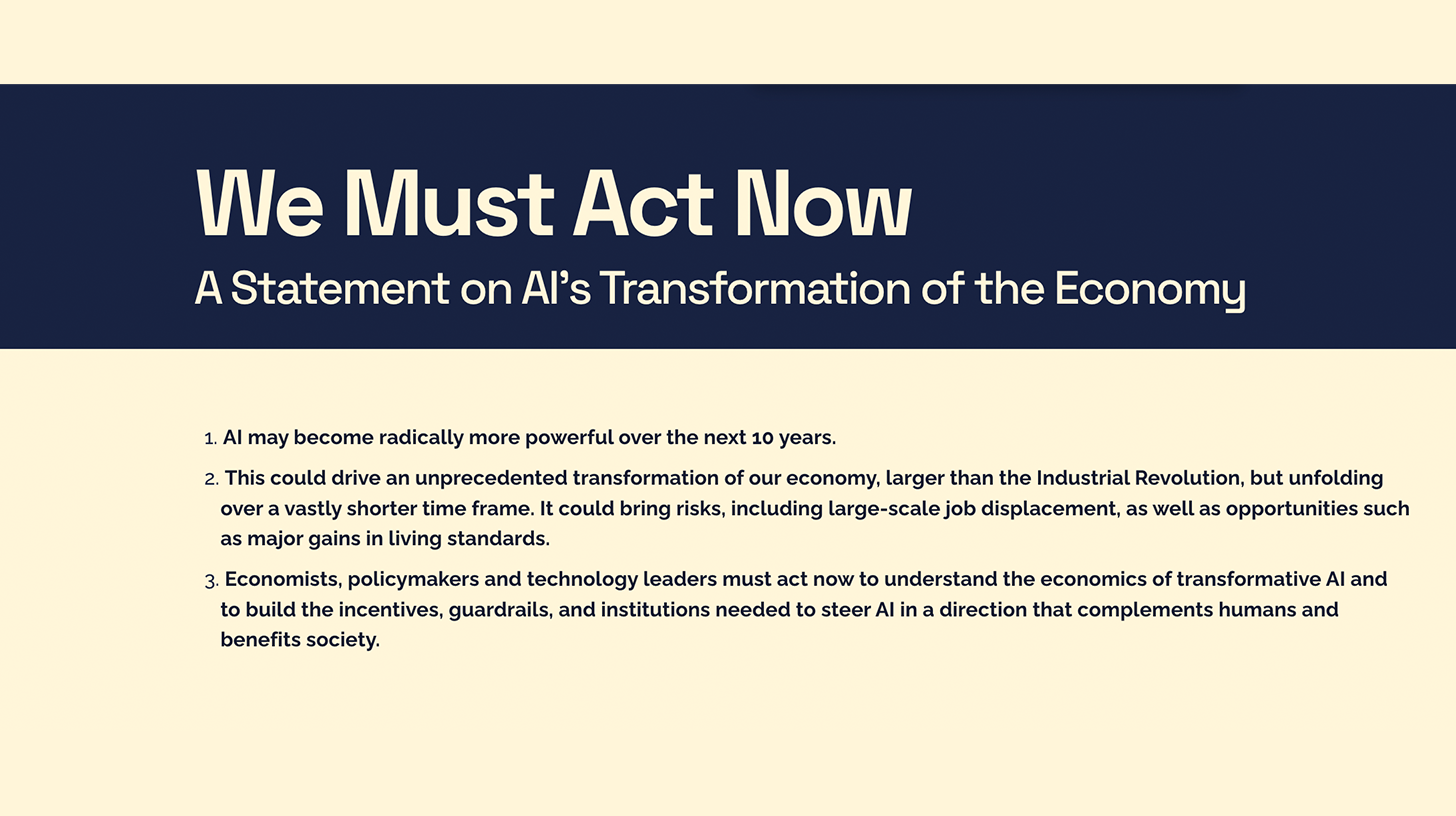
Google DeepMind's Demis Hassabis is proposing a U.S.-led body that would vet frontier models prior to release, and he wants it operational before the year is out — with the push now moving from whether AI oversight is coming to who gets to design it.
In today’s AI rundown:
DeepMind CEO pitches U.S. AI watchdog
Report: OpenAI's first device is an AI speaker
Build a no-code voice agent for customer intake
New York stalls the AI data center boom
4 new AI tools, community workflows, and more
LATEST DEVELOPMENTS
AI REGULATION & GOOGLE DEEPMIND

Image source: Demis Hassabis (@Demishassabis on X)
The Rundown: DeepMind CEO Demis Hassabis just published a plan for a U.S. body that would safety-test advanced AI before public release, pitching a formal rulebook to a government that spent the last month making AI policy one emergency at a time.
The details:
Modeled on FINRA, the finance world's self-regulator, the group would screen new models for deception, bioweapons creation, and malicious hacking skills.
Capability would decide coverage, not location or access, with “frontier” labeled labs voluntarily submitting models for review 30 days before release.
Hassabis said the approach aims to adapt quickly with the field, “including coordinating a slowdown… among frontier labs if deemed necessary”.
Hassabis wants the independent oversight body running this year, telling Axios open-source capabilities could move into dangerous territory within 18 months.
Why it matters: The industry already knows what oversight without rules looks like after Mythos/Fable: act first, sort out questions later. Hassabis' plan is the most concrete one yet, but 'independent' needs questioning when the body is both funded by the labs and answers to a government that just got a taste of AI regulation powers.
TOGETHER WITH CUBE DEV

The Rundown: Cube is the agentic analytics platform for teams that need AI to be right about their data, not just sound right. Chat, dashboards, and embedded agents, all grounded in one governed model of your business.
With Cube, you can:
Ask in plain English, get grounded answers
Connect Claude, ChatGPT, and Slack via MCP
Embed AI analytics, like Brex and Webflow
Get started now and see agentic analytics on your own data.
OPENAI

Image source: OpenAI Dev Day
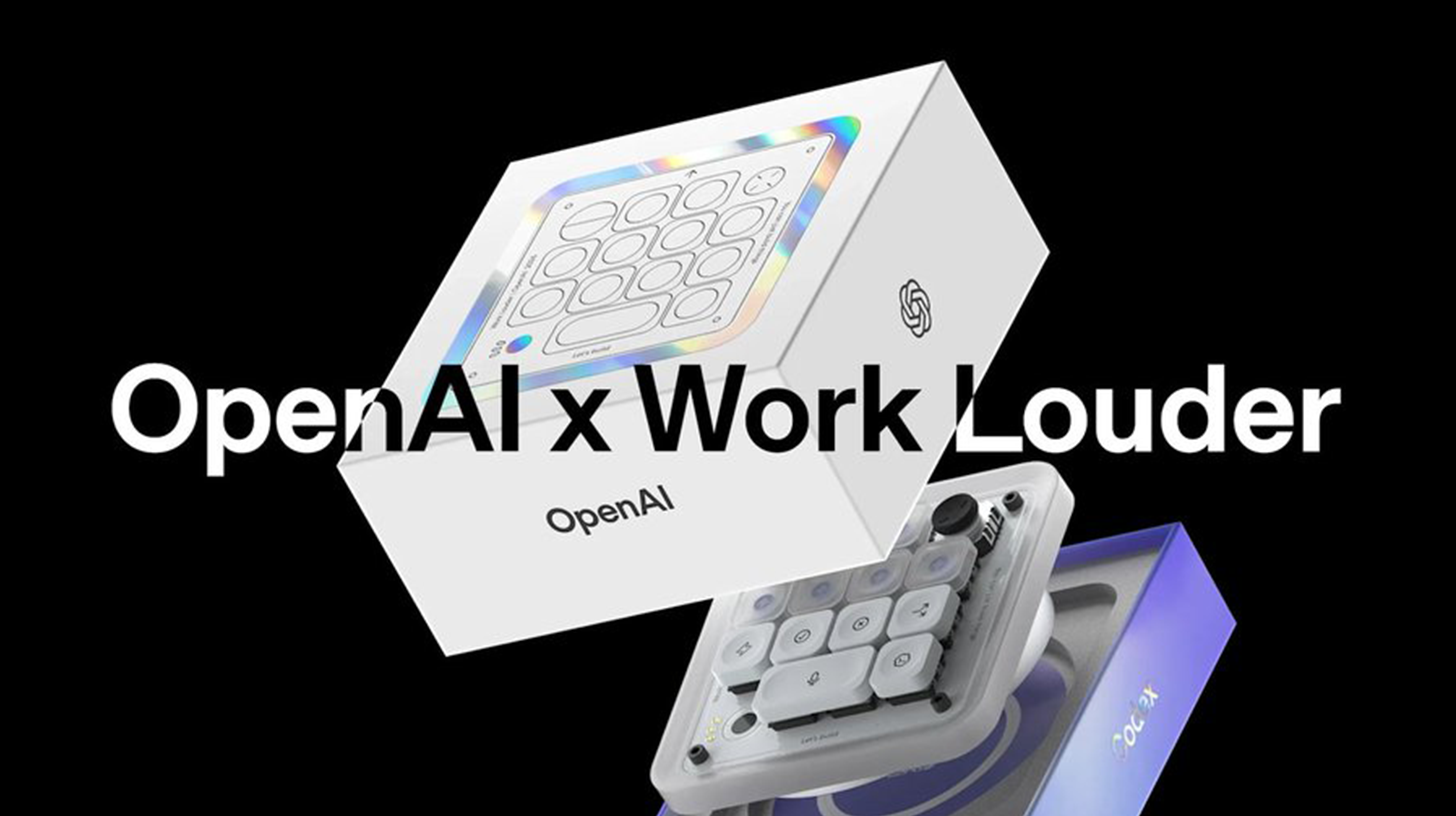
The Rundown: OpenAI’s Jony Ive-designed AI hardware will be a screen-free, battery-powered speaker built around a humanlike personality, according to a Bloomberg report — with Apple's trade-secrets suit now looming over a potential 2027 release.
The details:
A rechargeable battery would let users carry it between rooms, while onboard cameras and sensors will give the device a read on its surroundings.
Capabilities include fielding questions, sending replies, queuing music, and operating smart-home gear via GPT-Live, OAI’s recently upgraded voice mode.
Personality is a key pitch, with features like mechanical movement making it feel 'alive' and the ability to study data like emails for better personalization.
OAI responded to Apple's lawsuit, saying it's "not aware of any evidence that this complaint has merit," as Apple seeks a court order blocking its hardware.
Why it matters: Was this the original plan, or a release schedule shifting in light of Apple’s claims? Either way, a smart speaker is likely not the computing interface of the future that the masses had in mind. But just like Ive’s visionary iPhone design, creating a new paradigm likely requires breaking away from traditional forms.
AI TRAINING

The Rundown: In this guide, you will learn how to set up a Grok voice agent that answers inbound calls, qualifies leads, and transfers the right callers straight to your phone.
Step-by-step:
Go to Grok’s Voice Agent Builder and hit Create a "Lead Qualification" agent. Then, describe your business, its target, and what a good lead should answer
Tell Grok to have the agent transfer qualified leads to your phone, and make sure to claim a phone number for your agent. You can even pick the area code
Make a test call in the browser and tighten up any questions that don't work well. You will need to call the agent from a phone to test the transfer function.
Pro tip: Once the intake flow is solid, connect your CRM or internal tools so qualified calls can create a follow-up task. Test the handoff with fictional data first.
PRESENTED BY YOU.COM

The Rundown: Search results go stale, so teams bolt on an API, add a scraper, wire up a parser, and hope it holds. Yeah, it works in the demo, but then it breaks under production load six months later. This guide from You.com explains why treating research as simple retrieval is the wrong frame, and what a purpose-built stack looks like instead.
What you'll learn:
Why general-purpose search hits 93% SimpleQA accuracy but still fails high-stakes workflows
The difference between an API that returns results and one that answers questions
How teams reclaim 6–12 months of time with a single endpoint
What finance, legal, and compliance workflows need beyond web search
Stop treating research as retrieval. Download the guide.
AI DATA CENTERS

Image source: Office of Gov. Kathy Hochul
The Rundown: New York Governor Kathy Hochul just froze new permits for the biggest data centers via an executive order, implementing a pause of up to 12 months that makes her state the first to slow the AI buildout via official legislation.
The details:
Existing buildouts will continue moving, with the hold impacting over a dozen proposals that each clear 50 megawatts in size.
Regulators plan to use the pause to write new standards for water, air, and electricity impacts, with the freeze lifting once the rules are enacted.
Hochul also wants data centers' tax breaks repealed, and is floating a fund they'd pay into for grid upgrades, aiming to shield households from costs.
Union president Mark McManus said the pause "kills good-paying union jobs," with trade groups warning projects will simply take their money to other states.
Why it matters: Data centers have become a massively polarizing AI issue in the U.S., with growing anger (some founded, some inflamed) across every buildout. It's part of why Elon Musk and others are pushing for data centers in space, and every state that says no makes the idea look less ridiculous if the tech can meet the challenge.
QUICK HITS
🗣️ Mercury 2 - Inception's diffusion reasoning model for realtime voice agents
📚 Claude for Teachers - Free Claude with teaching and lesson-planning skills
🪴 Bonsai 27B - PrismML's 27B model small enough to run on iPhones
🎨 Reve API - Native-4K image generation with element-level editing control
SpaceXAI is deleting uploaded customer data after a researcher discovered its Grok Build coding agent shipping whole repositories to a company-controlled cloud.
Anthropic launched Claude for Teachers, giving verified U.S. K-12 educators a free year of premium access with lesson planning aligned to state academic standards.
AI antibody startup Chai Discovery raised $400M at a $3.8B valuation, coming a day after partnering with pharma giant Novartis to license its Chai-3 drug-design AI.
Healthcare AI company actAVA introduced CURA 1T, a 1T parameter clinical model it claims beats frontier rivals on healthcare benchmarks at significantly lower costs.
Anthropic is facing backlash for a new ad that features imagery like a graveyard and a burning house accompanying questions from real users on AI’s safety and impact.
COMMUNITY
Every newsletter, we showcase how a reader is using AI to work smarter, save time, or make life easier.
Today’s workflow comes from reader Nick B. in Bradenton Beach, FL:
“I'm a marine service technician. I work on several boats, and one in particular has a fairly extensive project list. I had been doing update emails, intended to be weekly, but because it was so cumbersome, I was only doing it about once a month.
Then I used Google Gemini to create a web page for that boat. The client and I can both add new projects and make a log update on every project whenever we want. We call it the Vessel Command Center, and it's branded with the boat's and client's name and information. Now, 24 hours a day, my client can see the status of every project.
The page looks great. I love it, and my client loves it. I plan to do this for pretty much every boat going forward. It's a great way to keep track of every project's status.”
How do you use AI? Tell us Visit videoask.com.
Read our last AI newsletter: Economists put AI’s job shock on the clock
Read our last Tech newsletter: Meta’s Louisiana data center hits $50B
Read our last Robotics newsletter: NEO’s new humanlike hands
Today’s AI tool guide: Build a no-code voice agent for customer intake
RSVP to next workshop on July 17: Get knowledge work done with GPT 5.6
That's it for today!Before you go we’d love to know what you thought of today's newsletter to help us improve The Rundown experience for you. |
|
See you soon,
Rowan, Zach, Shubham, and Jennifer — the humans behind The Rundown