Anthropic slips an invisible signature into Claude
PLUS: Use ChatGPT to build a custom Mac shortcut system

Good morning, AI enthusiasts, and welcome to the 5,596 new readers who joined us yesterday. That memo you just worked with Claude to write? It might soon carry an invisible signature that says so.
Anthropic just quietly detailed the rollout of invisible watermarks that label everything its Claude models touch, and, like most features forced onto the world, a lot of users aren’t happy about it.
Reminder: Our next live workshop is today at 2 PM EST. Join University Instructor Nate Grehek for “Your AI Reset”, a beginner catch-up on the latest terms, tools, and setups to get better results in your work. RSVP here.
In today’s AI rundown:
Anthropic adds AI watermarks to Claude outputs
Grok Bot is the latest AI agent teammate build
Use ChatGPT to build a custom Mac shortcut system
xAI co-founder’s River banks $1.1B for personal AI
LATEST DEVELOPMENTS
ANTHROPIC

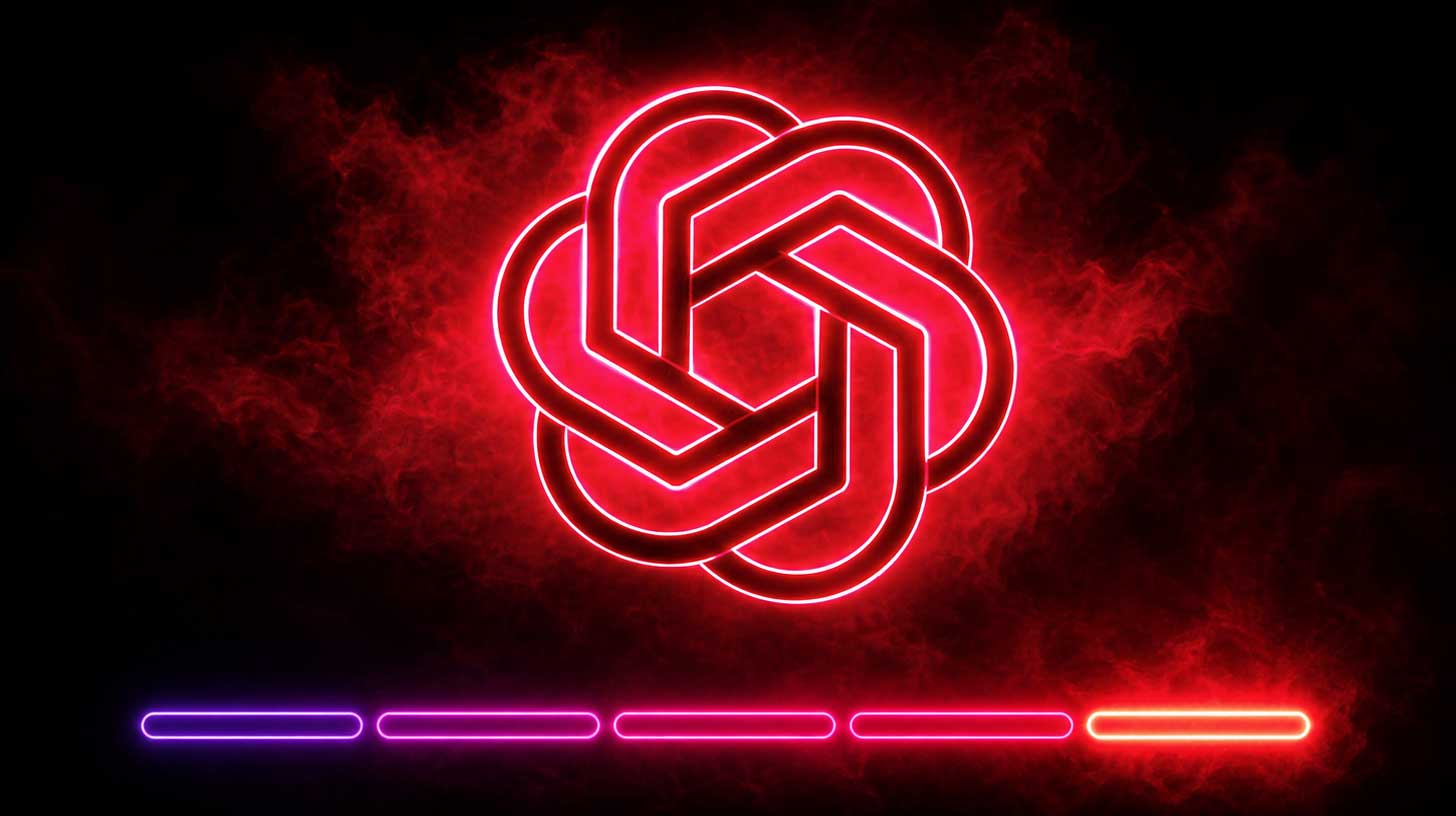
Image source: Images 2.0 / The Rundown
The Rundown: Anthropic just published a support page detailing plans to embed invisible watermarks in text, code, and file outputs from Claude, putting the EU AI Act’s transparency rules into practice globally across its user base.
The details:
Text and code generated by new Claude models will carry a hidden watermark that carries through when copied and pasted outside the platform.
Files will get the same C2PA provenance standard label that is already used across the industry to mark AI-generated media.
Older Claude models will need to be ‘retrofitted’ to include the labelling, with models shipping after Aug. 2 having the tool built in.
Anthropic is also planning to release its own detection tools and noted that a mark shows content was “processed by Claude”, not necessarily fully authored.
Why it matters: The move is a polarizing one, with takes ranging from positive to dystopian and overreaching. Anthropic isn’t alone in signing the AI Act, with OpenAI, Google, Meta, and others (notably absent: xAI) likely needing to navigate the issue as well. For the negative camp, the case for private and open models continues to grow.
TOGETHER WITH YOU.COM

The Rundown: Search results go stale, so teams bolt on an API, add a scraper, wire up a parser, and hope it holds. Yeah, it works in the demo, but then it breaks under production load six months later. This guide from You.com explains why treating research as simple retrieval is the wrong frame, and what a purpose-built stack looks like instead.
What you'll learn:
Why general-purpose search hits 93% SimpleQA accuracy but still fails high-stakes workflows
The difference between an API that returns results and one that answers questions
How teams reclaim 6–12 months of time with a single endpoint
What finance, legal, and compliance workflows need beyond web search
Stop treating research as retrieval. Download the guide.
SPACEXAI

Image source: xAI
The Rundown: SpaceXAI and Cursor just rolled out Grok Bot, a new beta app that turns Grok into an iMessage-style chat of teammates that have their own dedicated computers, work autonomously, and can access everyday apps just like a real user.
The details:
Bots are able to coordinate with each other independently or in group chats, and learn from workflows and improve over time.
New specialist agents can be generated by Bots inside a job or receive handoffs from another worker, with work continuing 24/7 without a laptop open.
Bots can also access websites and apps on a user’s behalf and observe and create workflows to automate tasks.
The beta covers iPhone and Mac, Windows, and Linux desktops for SuperGrok Heavy and top Cursor tiers, with Elon Musk saying access will expand soon.
Why it matters: The group chat is becoming a top form factor for running teams of agents. OpenClaw and Hermes already live in messaging apps, and Jack Dorsey's Buzz built a Slack rival where agents are channel members. Grok Bot feels like a middle-ground version built for the masses (if the price comes down significantly).
AI TRAINING

The Rundown: In this guide, you will learn how to use ChatGPT Work to set up time-saving keyboard shortcuts and automations for you on your Mac, with no installations needed to get started.
Step-by-step:
Open ChatGPT Work and say: “Based on what you know about me and my workflow, suggest 10 time-saving hotkeys we can set up in Apple Shortcuts”
Keep the shortcuts that will save you the most time. Say: “Keep the highest-frequency shortcuts and avoid macOS or app conflicts”
Enable Computer Use and paste the approved list, saying: “Set these up in Apple Shortcuts. Do not change anything outside this list. Test each shortcut”
Let ChatGPT build them, then press each key to test it out. Also ask for “a one-page cheat sheet of every shortcut, where it lives, and what is left to do”
Pro tip: Ask ChatGPT Work for the top 10 time-saving automations it would set up for you. It can create them in Automator and pull them directly into Shortcuts.
PRESENTED BY QUICKBASE

The Rundown: Pave turns the data your team already has into real, working software, not a prototype or a rebuild. Upload a spreadsheet or describe it, and get an app that's structured, governed, and built to run.
With Pave you can:
See real-time data across your operation
Get workflows that match how your team works
Give your team shared visibility they can rely on
RIVER AI

Image source: River AI / The Rundown
The Rundown: Former xAI co-founder Igor Babuschkin just raised $1.1B for River AI, his two-month-old startup focused on building open-source AI that is trained, tuned, and controlled by the individual instead of a major corporation.
The details:
Before xAI, which he left a year ago after helping co-found the startup with Elon Musk in 2023, Babuschkin worked at OpenAI, Tesla, and Google.
River claims its live API, released at launch, turns open-weight models into ones a business actually can own, cutting training to just minutes.
Babuschkin told the NYT the goal is a highly customizable assistant that follows across devices while running on the user’s own private hardware.
He also said, “We don’t want these AI companies to rule the world and control this superpowerful technology,” hitting at closed U.S. frontier labs.
Why it matters: It’s another eye-popping raise for a company without much to show yet, but Babuschkin’s pedigree is worth betting on. With questions about access (Fable/Mythos ban) and forced watermarks (above) putting privacy and control top of mind in the industry, River is pulling at a string with a whole lot of interest.
QUICK HITS
COMMUNITY AI WORKFLOW OF THE DAY
Today’s workflow comes from reader Alastair Cross:
“My mum’s 80th birthday is next week, and my dad, sister, and I wanted to create a photobook of her life. My dad scanned hundreds of photos from over the years and sent them to me to clean up. Because we were on a tight deadline, I didn’t have time to open and edit each image individually.
I asked ChatGPT to build a tool that accepts a folder of scanned images in various formats, including single photos, overlapping photos, and photos cut off by the scanner. The tool processed each, cropped and straightened the photos, and provided a UI where I could review and make adjustments.
I then configured the tool to output the images to Google Drive and created a spreadsheet containing thumbnails of every image, along with a rating system for photos we wanted to include in the final book.”
See Alastair’s workflow Visit The Rundown University. How do you use AI? Tell us for a chance to be featured.
🤖 Grok Bot - xAI's always-on agent teammates with their cloud computer
🎬 LTX-2.5 - LTX's open-world model for video, real-time avatars, robotics
⚡ Nemotron 3.5 Lightning - Nvidia's small, open model for agentic work
💻 ChatGPT Desktop - App for ChatGPT, Work, and Codex, now on Linux
OpenAI COO Brad Lightcap is leaving to “start something new,” saying there are “a few important new things the world will need to get right” as AI enters its next phase.
Anthropic reportedly told investors it plans to prioritize AI in healthcare and biology to help “mitigate some of the negative sentiment around AI”.
AI video company LTX released LTX-2.5, an open-weights world model that tops rivals like Gemini Omni Flash on internal tests for video generation speed and quality.
Nvidia released a small, fast Nemotron 3.5 Lightning model and anticipates its Nemotron 4 to be “on par with the best open-source AI models in the world.”
Read our last AI newsletter: Meta returns to its open-source roots
Read our last Tech newsletter: Apple’s almost-glass iPhone
Read our last Robotics newsletter: Uber’s $10B answer to Waymo
Today’s AI tool guide: Use ChatGPT to build a custom Mac shortcut system
RSVP to next workshop today at 2 PM EST: Your AI reset
That's it for today!Before you go we’d love to know what you thought of today's newsletter to help us improve The Rundown experience for you. |
|
See you soon,
Rowan, Zach, Shubham, Jennifer, and Nate — the humans behind The Rundown