Anthropic pulls Mythos, Fable after U.S. order
PLUS: Turn any ChatGPT image into an editable Canva design
wRead Online | Sign Up | Advertise

Good morning, AI enthusiasts. Anthropic and the U.S. government are entangled again — and this time, it’s over blocking access to the company’s frontier models, not expanding them for federal use.
After a U.S. order tied to a disputed jailbreak, Anthropic pulled its powerful Mythos and Fable 5 models offline worldwide. For a lab desperately calling for tougher AI rules, the moment has arrived in a messier way than CEO Dario Amodei likely had in mind.
In today’s AI rundown:
Anthropic pulls Mythos, Fable after U.S. order
The Rundown Roundtable: Our AI use cases
Turn any ChatGPT image into an editable Canva design
OpenRouter fuses models into frontier rival
4 new AI tools, community workflows, and more
LATEST DEVELOPMENTS
ANTHROPIC

Image source: Images 2.0 / The Rundown
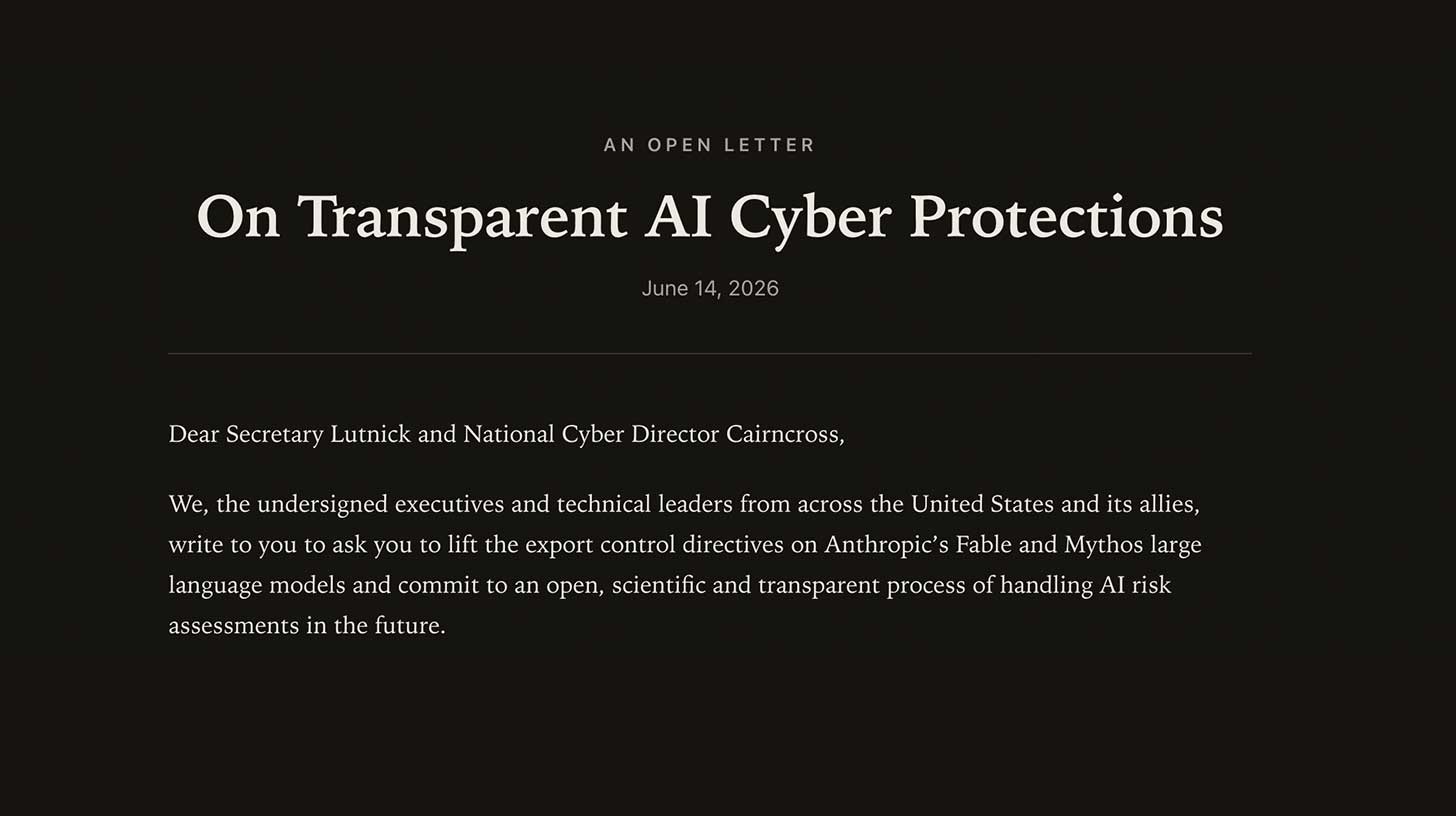
The Rundown: Anthropic just pulled its two most powerful AI models, the newly released Mythos and Fable 5, worldwide after the Trump administration ordered it to block all foreign access — citing a reported jailbreak the company called minor.
The details:
The U.S. implemented an “export control directive” requiring Anthropic to remove access for all non-U.S. citizens, even those within the country.
The move was surprisingly traced to Anthropic investor Amazon, which was one of the groups that flagged the potential Fable vulnerability to officials.
Anthropic said it was only given “verbal evidence” of the “non-universal jailbreak,” also claiming the same concerns are available in models like GPT 5.5.
Semafor reports the move was partly tied to fears that a China-linked group may have accessed Mythos, though details remain unclear.
The ruling would have also blocked foreign-national Anthropic employees from the models, pushing the company to suspend access for everyone.
Why it matters: This is a bigger moment than it might look. Amodei has pushed hard for AI regulation, and it’s arriving more chaotically than he probably hoped. Anthropic’s past feuds with Washington — even as the government flirts with taking an equity stake in rival OpenAI — are critical context: this is far more than a jailbreak story.
TOGETHER WITH GLEAN

The Rundown: The Work AI Index 2026 from Glean’s Work AI Institute surveyed 6,000 digital workers and found that higher AI usage often hides more cleanup, output-checking, and context switching.
Read the report to learn:
Where AI time savings go
Why hidden human labor is eating into the AI dividend
What high AI achievers do differently
THE RUNDOWN ROUNDTABLE
 Visit rundown.ai
Image source: Images 2.0 / The Rundown
The Rundown: The Rundown Roundtable is a weekly feature where we poll members of The Rundown staff about how we use AI in our work and daily lives.
Nate, University Educator: I ask Claude every month or so to be my Claude Code learning coach by simply typing the /insights command. It provides a hyper-personalized website report card with advice to help me use Claude Code better, with exact examples of where things go wrong, features, and prompts I should try.
Jennifer, Tech & Robotics Writer: I was deep in a Claude research session, trying to brainstorm an idea, rejecting its responses, asking for more, rejecting again. Eventually, it broke the pattern and stopped complying, telling me the problem was how I’d framed the question and explaining why.
It had a point, and that may be one of AI’s more interesting uses: not just an engine for fast answers but as a friction layer for thought.
AI TRAINING

The Rundown: Learn how to connect Canva to ChatGPT and turn one generated image into a Canva project you can keep editing. Instead of regenerating the same visual every time you need a new format, you can move it into Canva and keep working from the same starting point.
Step-by-step:
Open ChatGPT desktop, go to Settings > Apps > Browse Apps, and add Canva.
Go back to ChatGPT, start a new thread, and generate an image like a social post or an infographic.
In that same thread, type @Canva, then hit Enter so ChatGPT confirms the app mention. Use this prompt: “Now turn it into a new @Canva project.”
Once Canva creates the project, keep going in chat. Use this prompt: “Okay, now resize that as a new @Canva project for a story post.”
From there, keep editing in ChatGPT. Ask Canva to adjust layout, swap text, clean up spacing, or make more versions without starting over from a fresh image.
Pro tip: If you do not mention @Canva first, ChatGPT may treat this like a normal text instruction instead of sending it to the Canva app.
PRESENTED BY AWS MARKETPLACE

The Rundown: AI agents forget everything between sessions. AWS’s workshop and companion guide show you how to build persistent agent memory on AWS with Amazon Bedrock and tools from across the AI landscape.
In this workshop, you’ll learn to:
Build short-term memory for active context
Design long-term memory with semantic retrieval
Implement episodic memory for interaction recall
OPENROUTER

Image source: OpenRouter
The Rundown: OpenRouter just launched Fusion, an API that pools responses from multiple AI models into a single answer, with benchmarks showing the model panel nearly matches Fable 5’s deep-research performance at lower cost.
The details:
Fusion sends user prompts to several models at once, has a separate model evaluate each response, then merges them into one final reply.
A trio of DeepSeek V4 Pro, Kimi K2.6, and Gemini 3 Flash hit 64.7% on a Perplexity benchmark, just below Fable’s 65.3% for about half the spend.
CEO Alex Atallah pitched Fusion as a bet against one-model dominance, saying, “The future of AI is neurodiversity, not single-model takeovers.”
Why it matters: Model council-type solutions aren’t new, with Perplexity Computer, Grok, and others utilizing them. But OpenRouter’s easy API solution comes at an important time given the Fable restrictions, with some users potentially having to get creative with their ability to access frontier-level performance in the near future.
QUICK HITS
🫂 Fusion - OpenRouter’s new tool that fuses several models into panels to achieve frontier performance
⚙️ Kimi-K2.7-Code - Moonshot’s new open-source coding model, with 30% token efficiency
🧠 GLM-5.2 - Z AI’s new flagship coding model with usable 1M context
📱 Siri AI - Apple’s newly overhauled on-device AI assistant
Mark Zuckerberg is reportedly scrambling to contain a revolt inside Meta’s Applied AI unit after he admitted in a memo that Meta “made mistakes” with its AI restructuring.
Moonshot AI released Kimi-K2.7-Code, an open-source coding model posting double-digit gains over K2.6 on agent benchmarks while cutting reasoning-token use by 30%.
McDonald’s is piloting ArchIQ, a Google-powered AI drive-thru system at five locations, two years after it shelved its last AI test when wrong-order videos went viral.
China’s universities have scrapped more than 12K programs over the last five years, swapping arts and languages for tech fields as AI alters the graduate job market.
Meta has reportedly begun unwinding its $2B Manus deal after Beijing ordered the acquisition reversed, cutting off data sharing while the Chinese AI agent startup’s founders rush to raise $1B for a buyback.
COMMUNITY
Every newsletter, we showcase how a reader is using AI to work smarter, save time, or make life easier.
Today’s workflow comes from reader Kyle H. in Toronto:
“I’m traveling in new countries and start out completely lost at how to navigate them. Things like how their transit works, what you need to do when buying groceries that I’ve never seen before, like tagging your own fruits, and getting sweet deals on local specialties.
AI has helped me understand this all instantly. I never used to be a fan of Google’s AI in Search, but being able to quickly enter AI Mode and ask about which transit tickets I should buy based on my schedule is one of many use cases where I’m loving it. I’m genuinely seeing the vision play out where we all have little experts in our pockets to help us through our daily lives.”
How do you use AI? Tell us Visit videoask.com.
Read our last AI newsletter: Jeff Bezos’ $41B ‘artifical general engineer’
Read our last Tech newsletter: SpaceX posts biggest IPO in history
Read our last Robotics newsletter: Europe’s humanoid moonshot gets $1.4B
Today’s AI tool guide: Turn ChatGPT images into an editable Canva design
RSVP to our next workshop on June 17: Build a Marketing Creative Studio
That's it for today!Before you go we’d love to know what you thought of today's newsletter to help us improve The Rundown experience for you. |
|
See you soon,
Rowan, Joey, Zach, Shubham, and Jennifer — the humans behind The Rundown