AI's next dataset is your apartment
PLUS: Build a custom blog writing agent with no code

Good morning, AI enthusiasts. A startup will clean your New York apartment for free. The bill comes due in a currency you might not expect: the data captured during the process.
MicroAGI’s new Shift app subsidizes the cleanings by recording workers on the job, turning a free service into a strange preview of AI’s next data hunt — where humans are the customer, the labor, and the training material for automation.
In today’s AI rundown:
Startup cleans apartments in exchange for AI data
The Rundown Roundtable: Our AI use cases
Build a video workstation with Higgsfield and Claude
Ex-DeepMind group tackles self-improving science AI
4 new AI tools, community workflows, and more
LATEST DEVELOPMENTS
PHYSICAL AI

Image source: Shift
The Rundown: German startup MicroAGI’s Shift app just opened a free home-cleaning service in New York City that records its cleaners through head-mounted cameras, trading chores for first-person data to both sell to AI labs and use in its own AI research.
The details:
A vetted cleaner shows up wearing a camera that co-founder Bercan Kilic calls a "magic hat," filming the roughly two-hour job point-of-view style.
Despite covering the cost of the cleaning, the human footage is worth more to robot makers for training, letting Shift cover the bill and still profit.
Shift's site claims to already pay people across the world $20 an hour to film everyday chores, with $5M+ paid out in Q1 across a variety of tasks.
GM Harry Kilberg said the launch drew "thousands and thousands of bookings," with New York first and London, Munich, and Zurich next.
Why it matters: As we've seen with DoorDash paying couriers to capture task data, the next AI dataset is coming from ordinary human work instead of the internet. Shift pushes that model deeper into the home, where people are both the customers getting free service and the workforce teaching robots how to replace pieces of the job.
TOGETHER WITH NEBIUS

The Rundown: Nebius Token Factory is an AI cloud platform that lets you run open-source LLMs in real production. Capture live traffic, fine-tune and optimize, then deploy your own checkpoints to dedicated GPU endpoints, with stable latency, predictable cost, and clear data residency.
With Nebius, you can:
Deploy 60+ open-source models via one API
Fine-tune and serve your own checkpoints
Scale to 100M+ tokens per minute
THE RUNDOWN ROUNDTABLE
 Visit rundown.ai
Image source: Ideogram / The Rundown
The Rundown: The Rundown Roundtable is a weekly feature where we poll members of The Rundown staff about how we use AI in our work and daily lives.
Zach, AI Writer: It’s finally gardening season in the Midwest, and I wanted to do a big overhaul of my space with a new large in-ground bed and a more organized layout of crops.
I first took some images of the space and had ChatGPT / Codex generate some visualizations of what it could look like based on my rambling list of requirements and measurements. After deciding on the vision, I asked for help creating a materials list, a step-by-step guide to building the bed (with instructions on sawing, drilling, etc.).
I also provided a list of what we wanted to grow, and was able to get a well-planned map of where to place each plant, optimizing for aspects like shade vs. sun, companion plants, vining, etc. Several trips to Home Depot and a couple of days of work later, we have an awesome, refreshed space and a thoughtful, organized garden for the season!
Joey, Partnerships: I recently had an Evolt body scan. I've uploaded my results to Claude, shared my daily habits (sleep, diet, schedules, etc.), and asked it to create a full workout and diet plan based on the areas I want to improve.
I was also able to include my recent Oura ring report to see if there's anything wrong with me. Will I follow it? We'll see....
AI TRAINING

The Rundown: In this guide, you’ll learn how to build a short-form video workstation with Higgsfield + Claude Code that can generate campaigns, track results, improve prompts from feedback, and turn successful workflows into reusable skills.
Step-by-step:
Create a dedicated project folder, open it in Claude Code, install the Higgsfield CLI, authenticate your account, and add the Higgsfield skills package
Ask Claude to interview you about brand, audience, and content goals, then set up campaign folders (with input, output, draft, and final folders), files for brand guidelines, tracking, and a workflow README
Create the first campaign by prompting to generate two video concepts, turning them into Higgsfield-ready prompts, then, once approved, generating the videos and saving them in the output folder
Finally, turn the campaign workflow into a reusable skill, then create a second skill that improves future videos from feedback, prompt revisions, and notes
Pro tip: Run at least a few campaigns manually before automating. The best skills come from real feedback.
PRESENTED BY GITLAB

The Rundown: GitLab Transcend is a free virtual event streaming live from London on June 10, with regional replays for APAC and AMER on June 11 — packed with live demos and agentic AI use cases from your peers.
With GitLab Transcend, you'll get:
Live demos of Duo Agent Platform
Agentic AI use cases from your peers
The Developer Show with Colleen Lake
INHERENT LABS

Image source: Inherent Labs
The Rundown: Several Ex-Google DeepMind employees came out of stealth with $50M for Inherent Labs, a London startup building an AI science platform that puts scientists alongside self-improving AI to work out which problems are worth pursuing.
The details:
Co-founders Tantum Collins, Edward Hughes, and Louis Kirsch came from DeepMind, while Kaloyan Aleksiev previously worked at Reka AI and Microsoft.
The Faraday platform will pair researchers with self-improving agents built to spot higher-value scientific questions instead of only answering prompts.
The lab says it will test recursive self-improvement across the research org, including everything from agent training to resource allocation and decisions.
Inherent is also exploring what “AI taste” looks like in science as the research process shifts, and how humans and machines can best work together.
Why it matters: Self-improving AI is a quest many of the top AI labs and newly funded startups are trying to tackle, and Inherent adds another group with strong pedigrees to the list. Inherent is applying the recursive logic to science itself, making the entire lab and organization the loop instead of just the model training.
QUICK HITS
⚙️ Codex - OAI’s agentic coding tool, with new feature expansions on Windows
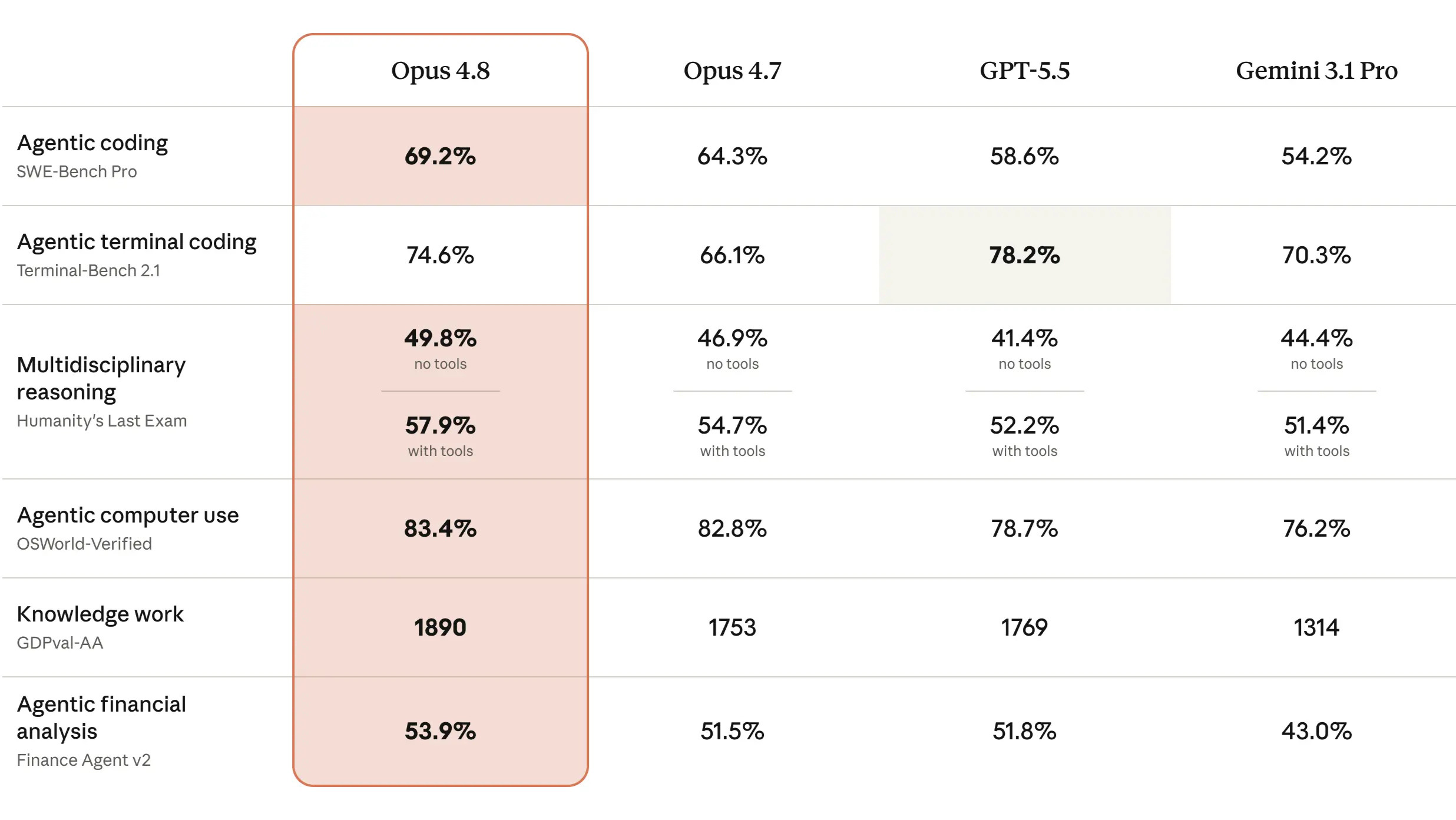
🚀 Claude Opus 4.8 - Anthropic’s newly updated top model class
🍎 Koji by Brilliant - AI tutor for math and coding
🫂 Dynamic Workflows - Deploy subagents within Claude Code
5-Day AI Agents Vibe Coding Intensive with Google, June 15–19 – Learn to build real AI agents in just five days. Registration closes tomorrow. Sign up now.*
Microsoft is reportedly set to merge GitHub Copilot, chat, Cowork, and Autopilot into one super app, matching similar all-in-one plays OAI and Musk's X are already making.
SoftBank committed up to $87B to build what will be the largest AI data center project in France, extending an infrastructure spree that includes a $60B+ OAI stake.
Nvidia unveiled RTX Spark, a superchip designed for personal AI agents, bringing up to 1 petaflop of AI performance to Windows laptops with all-day battery life.
Sam Altman posted that OpenAI is hiring for its Robotics division, saying that the company imagines “everyone having a personal robot doing anything they need.”
OpenAI launched Rosalind Biodefense, giving the U.S. government and vetted partners access to its biology AI for pandemic-preparedness and outbreak-response.
*Sponsored Listing
COMMUNITY
Every newsletter, we showcase how a reader is using AI to work smarter, save time, or make life easier.
Today’s workflow comes from reader Wyatt B. in Athens, AL:
"I’m using a product within HubSpot (SalesHub) called Prospecting Agent. The prospecting agent can be set up to run specific “plays” where I enroll companies from our CRM (as well as contacts associated with those companies) and constantly look for buying signals and other trigger events that could provide a warm lead.
For example, if I enroll a fictions company called Acme Corp, and associated contacts John and Jane Smith, my prospecting agent will look for buying signals in relevant news, articles published by the company or contacts, acquisitions, stock alerts, or other relevant events that could warm a lead so my SDRs aren't going in cold.
I can also build custom sequences where the agent will take the trigger event and write an email from one of my SDRs or me and reach out to the prospect, and choose to approve on demand. This has allowed my company to hire fewer SDRs, allowing existing SDRs to focus on prospecting and closing deals faster."
How do you use AI? Tell us Visit videoask.com.
Read our last AI newsletter: Anthropic just eclipsed OpenAI
Read our last Tech newsletter: Meta launches paid tiers across its apps
Read our last Robotics newsletter: Figure’s humanoids get a retail job
Today’s AI tool guide: Build a video workstation with Higgsfield and Claude
RSVP to next workshop on June 18: Build a Marketing Creative Studio
That's it for today!Before you go we’d love to know what you thought of today's newsletter to help us improve The Rundown experience for you. |
|
See you soon,
Rowan, Joey, Zach, Shubham, and Jennifer — the humans behind The Rundown