XPeng opens IRON production lines ahead of mass production push
XPeng opens IRON humanoid production lines, pairing its EV supply chain with more than $900 million in announced financing for its robotics arm.
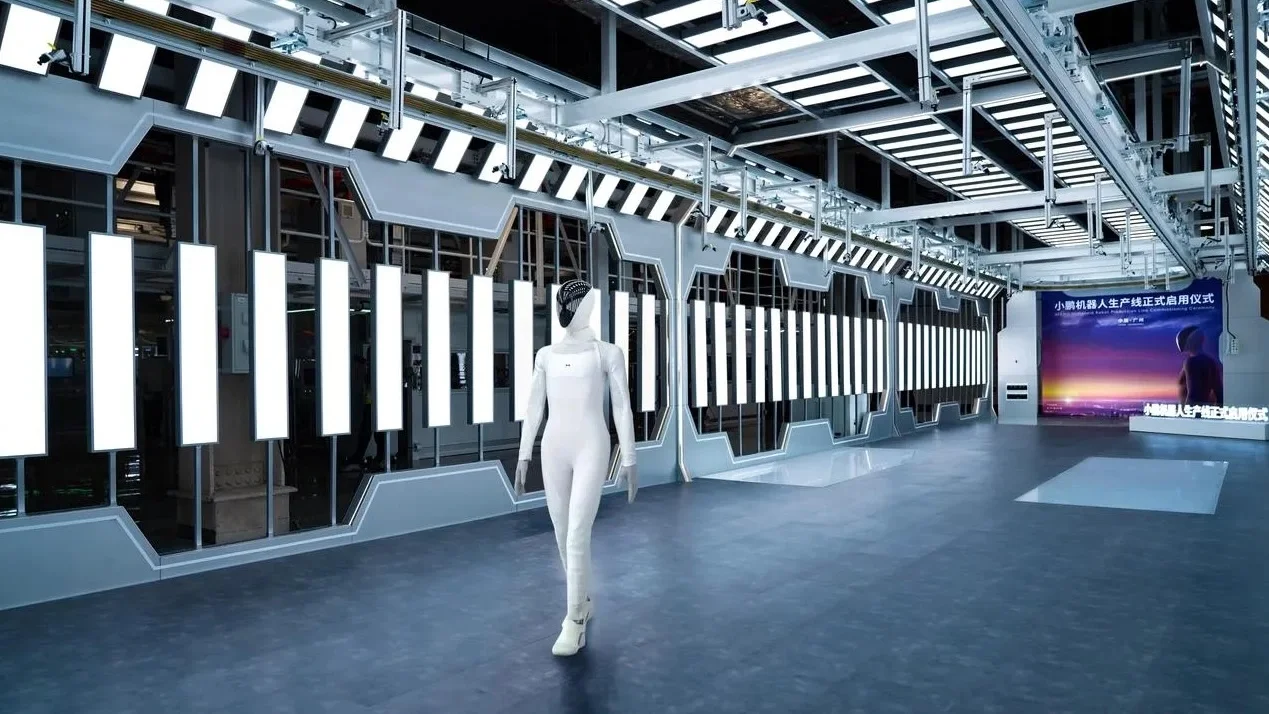
XPeng has commissioned production lines for its IRON humanoid as it targets mass production by the end of 2026. The Chinese EV maker said on September 8 that the first completed robot walked off under its own power.
The rollout plan, covered in The Rundown’s September 10 edition, puts XPeng’s own stores and campuses first. The company aims to begin commercial deliveries in China and overseas in 2027.
What XPeng has built
XPeng says more than 80% of the lines’ core processes are automated. The announcement gives no figures for sustained output, the share of robots that pass quality checks or the cost of building each robot.
XPeng lists 76 degrees of freedom, or independent movements, including 21 in each hand. Three of its Turing AI chips provide up to 2,250 trillion operations per second, according to the company.
Why it matters
XPeng’s announced financing could strengthen its challenge to Tesla, Unitree and UBTech. In a release published August 25, XPeng announced more than $900 million in financing for its robotics arm, valuing that business above $6.3 billion after the investment. Its August 24 filing describes investment agreements subject to conditions, and closing remains unconfirmed. About $600 million of the commitments came from outside investors, with the rest from an XPeng subsidiary and entities controlled by executives.
XPeng says the funds will support hardware and software development, model training, data generation, production facilities and international expansion. That spending plan addresses both the work of building robots consistently and making them capable enough for customers.
XPeng also brings an established automotive supply chain and manufacturing experience that a new robotics company may still need to develop. According to its 2025 annual report, it began mass production of its first vehicle in November 2018 and delivered 429,445 vehicles in 2025.
Experience at that scale could help with choosing suppliers, setting quality checks and fixing assembly defects. Those advantages would need to show up in consistent robot output and manageable costs. The annual report also warns that component shortages and reliance on individual suppliers can disrupt production.
The Tesla comparison reflects a shared strategy. In its 2025 annual report, Tesla describes designing its own AI chips and applying lessons from autonomous driving to Optimus. Both automakers see their existing operations as a resource for scaling humanoids.
XPeng’s control over key hardware could also help. It says it designs its own chips and develops IRON’s controllers, motion modules and hands. That could let teams adjust hardware and models together as problems emerge.
XPeng’s own stores and campuses offer places to test IRON. Early deployments could help staff measure how reliably IRON repeats useful tasks, how often people must intervene and what maintenance it needs.
Commercial buyers will need evidence that IRON can do useful work reliably at a viable cost.
Sources & further reading
This story builds on reporting from The Rundown newsletter on September 10, 2026.