Ultrahuman raises $70 million to push smart rings into apps and AI controls
Ultrahuman’s $70 million financing brings Qualcomm into its push to make smart rings control apps, devices, and AI, with key capabilities still unproven.
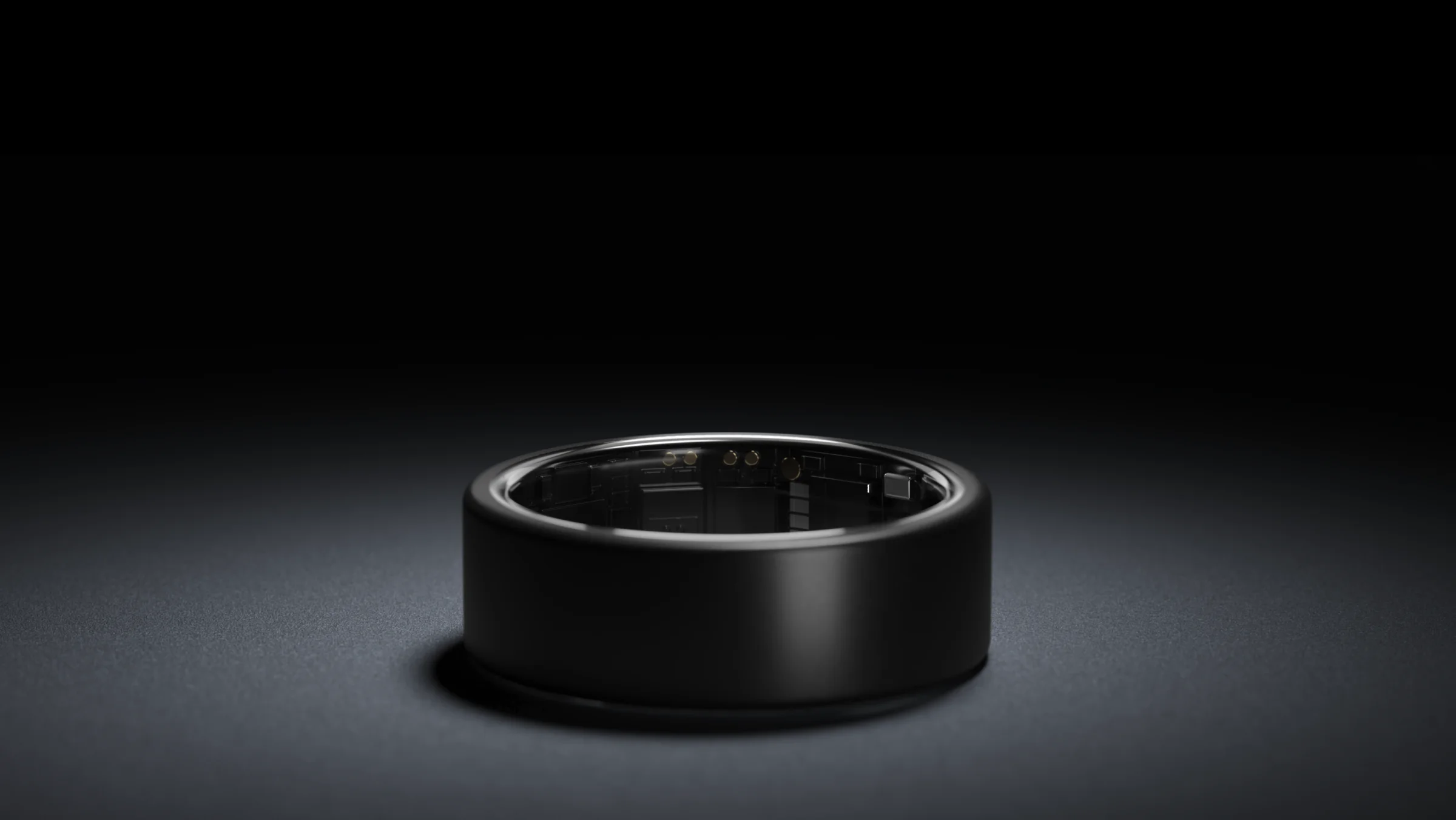
Ultrahuman has raised $70 million from investors including Qualcomm Ventures as it works to expand its smart rings from health tracking into controls for apps, devices, and AI. The ambition is to give a ring enough computing power and software support to accept commands from its wearer.
As covered in The Rundown’s September 4 newsletter, the Bengaluru company plans both new hardware and software features. As of September 6, the controller capabilities remain a roadmap: delivery of the proposed September software update has yet to be confirmed.
What Ultrahuman is building
Ultrahuman’s September 3 financing announcement named Qualcomm Ventures, Labcorp, Alpha Wave, Blume, Nexus, and Alteria among the participants. The funding will support sensing, AI, miniaturized electronics, health algorithms, research, and expansion, alongside its broader ambitions for human-computer interfaces.
According to TechCrunch’s September 3 interview, the company said the financing comprises $65 million in equity and $5 million in debt. TechCrunch reported a $365 million valuation, roughly triple its 2023 valuation, citing unnamed sources.
Ultrahuman said it is working with Qualcomm on a future ring that would incorporate Qualcomm silicon and run more algorithms on the device. It also described a September software update intended to connect rings with apps and games, and exploratory work on pointer functions, car keys, and gesture controls. The chip, hardware release date, and supported apps and devices remain unspecified.
The company told TechCrunch it had sold about 800,000 rings and was generating revenue at an annualized rate of $140 million, with a target of $200 million by January 2027. Those figures are company claims; the January figure is a forecast.
Why it matters
Ultrahuman wants to give people another reason to wear a smart ring: issuing commands to software and devices alongside tracking their health. If it succeeds, a ring could become an input device for apps, games, and AI interactions. The practical test is whether a wearer can make an intentional gesture and reliably get the intended action.
The company has already pursued a developer platform. Its 2024 PowerPlugs announcement described applications built around health data and access to sensor streams. The new ambition extends that relationship into control. Developers would need a documented path from a ring gesture to an app action, along with clear compatibility requirements, before they could build dependable experiences around it.
Qualcomm’s involvement gives Ultrahuman a major chip partner for that effort. More processing on the ring could expand what it can do, but the partnership alone leaves important engineering questions open. Continuous interaction would have to fit within a small wearable’s power budget while delivering dependable recognition and response times. A demonstration of a complete task would help establish which work happens on the ring, a phone, or in the cloud. The announced plans do not yet specify where any AI model would run.
Permissions would also become part of the experience. Ultrahuman’s developer documentation, reviewed September 6, describes authenticated access to health metrics and requires authorization through its app to access another user’s data. A controller platform would need similarly clear boundaries around device actions. People considering a ring as a car key or gesture controller would need to understand how commands are authorized and how accidental actions are prevented.
The competitive context gives this expansion commercial significance. Oura’s September 3 IPO registration statement disclosed about $1.2 billion in unaudited revenue for the nine months ended June 30, 2026. That covers October 2025 through June 2026 and measures a different period and basis from Ultrahuman’s annualized revenue rate. As Oura prepares for an IPO, Ultrahuman is pursuing an additional reason for customers to choose its ring. Whether controls provide that advantage depends on useful integrations, reliable operation, and demand for commands delivered from a finger.
Sources & further reading
- 01therundown.ai ↗
- 02Ultrahuman Raises $70 Million to Build the Next Generation of Human-Computer Interface for Health | Fitt Insider ↗
- 03Qualcomm backs Ultrahuman in $70M round on bet to turn smart rings into computers | TechCrunch ↗
- 04Ultrahuman announces its App Store ‘PowerPlugs’ with the World’s First AFib Detection Technology on a Smart Ring ↗
- 05Ultrahuman Vision: The Interface to Your Bio-Data Cosmos ↗
- 06www.sec.gov ↗
This story builds on reporting from The Rundown newsletter on September 4, 2026.