UCLA’s PhoneBot puts an Android phone in charge of a small humanoid
UCLA’s PhoneBot pairs an Android phone with a small humanoid that could give students and small labs a way to study walking robots on a limited budget.
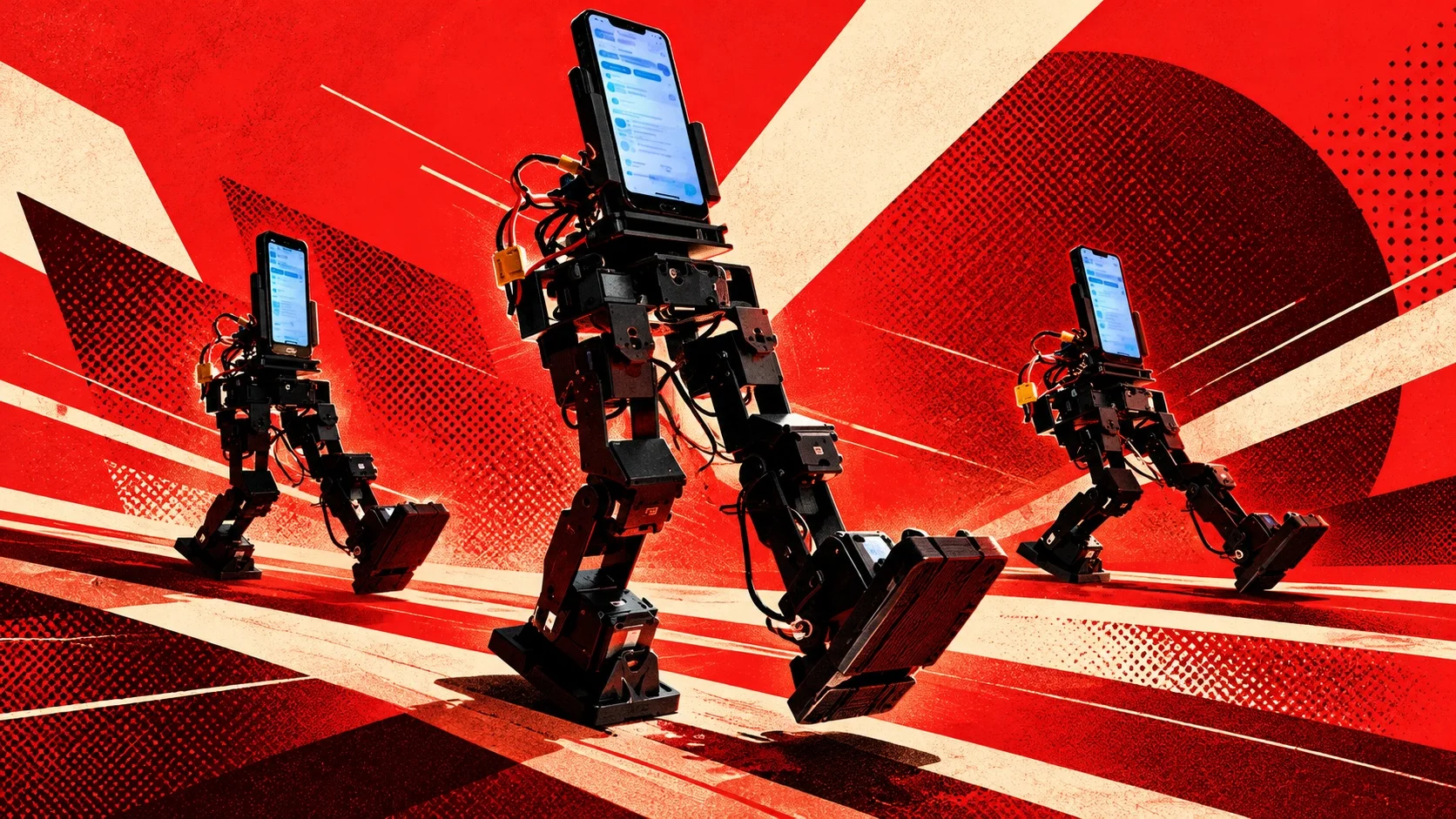
UCLA researchers have built PhoneBot, a miniature humanoid that puts an Android phone in charge of sensing and movement decisions. The team estimates its hardware at about $400, excluding the phone, as The Rundown reported on October 12.
The team’s paper, posted October 6, describes a robot about 19 inches tall with 13 motors. Six drive each leg, and one swivels the torso.
How PhoneBot works
The phone supplies camera images and motion sensing and runs the movement controller. It connects over Wi-Fi to a separate onboard computer that handles the motors. Speech recognition and the language model run on a laptop.
The researchers tested PhoneBot with four Android models, including the 2017 Honor 9. That handset handled core tasks but lacked the Google services needed for ARCore mapping.
An uneven gait prompted a change in training. Researchers added mirrored examples that swapped left and right, and reported better results in simulation. Hardware demonstrations showed the robot walking and pushing itself upright from lying face down.
PhoneBot has no arms, and the team has trained it only on flat ground. Motor strength also limits what it can carry and constrains more demanding movements.
Why it matters
Putting a phone in charge of a robot has a clear precedent. Intel Labs’ OpenBot paper from August 2020 described a $50 wheeled body, excluding the Android phone. PhoneBot extends that idea to the trickier job of balancing on legs. This scrappy machine could give students and small labs a foothold in humanoid robotics.
A phone already combines cameras, motion sensors, computing and wireless connections. Reusing that package could reduce the work of choosing and connecting separate sensors and computers. For a small lab, that could make the first stage of a walking robot project easier to plan.
The mirrored training offers a concrete experiment for students. They could compare controllers trained with and without those examples, then test how the choice affects balance. The reported simulation gains give that experiment a starting point. Repeated physical tests would help show how often the robot falls and how reliably it gets back up.
A class collecting donated phones should check exact models against the features it wants to teach. Google’s ARCore documentation sets out device certification and software requirements for mapping. The Honor 9 result shows that a handset can run core robot tasks while lacking support for another function.
Builders would also need to check current component prices. On October 15, ROBOTIS’s U.S. listing for the motors showed $27.50 each, compared with the paper’s $23.90 assumption. Thirteen at the listed price would cost $357.50 before any other hardware. A class would need to price the full parts list before treating $400 as its budget, then account for a compatible phone and access to a laptop for language features.
OpenBot’s official repository gives builders instructions for the body, firmware, Android apps and training a driving controller. That sets a useful standard for PhoneBot’s educational promise. A complete parts list, build files, clear assembly steps and downloadable controllers would help students and small labs judge whether they can get it running with their budget and skills.
Sources & further reading
- 01therundown.ai ↗
- 02[2610.08737v1] PhoneBot: A Low-Cost Open Humanoid Robot Platform Reusing Smartphones ↗
- 03PhoneBot: A Low-Cost Open Humanoid Robot Platform Reusing Smartphones ↗
- 04[2008.10631v1] OpenBot: Turning Smartphones into Robots ↗
- 05ARCore supported devices | Google for Developers ↗
- 06DYNAMIXEL XL430-W250-T – ROBOTIS AMERICA ↗
- 07GitHub - ob-f/OpenBot: OpenBot leverages smartphones as brains for low-cost robots. We have designed a small electric vehicle that costs about $50 and serves as a robot body. Our software stack for Android smartphones supports advanced robotics workloads such as person following and real-time autonomous navigation. · GitHub ↗
This story builds on reporting from The Rundown newsletter on October 12, 2026.