Trump proposes an AI Force to protect the U.S. lead in AI
Trump’s proposed AI Force favors industry growth and existing law as leading AI executives call for slower development and more safety oversight.
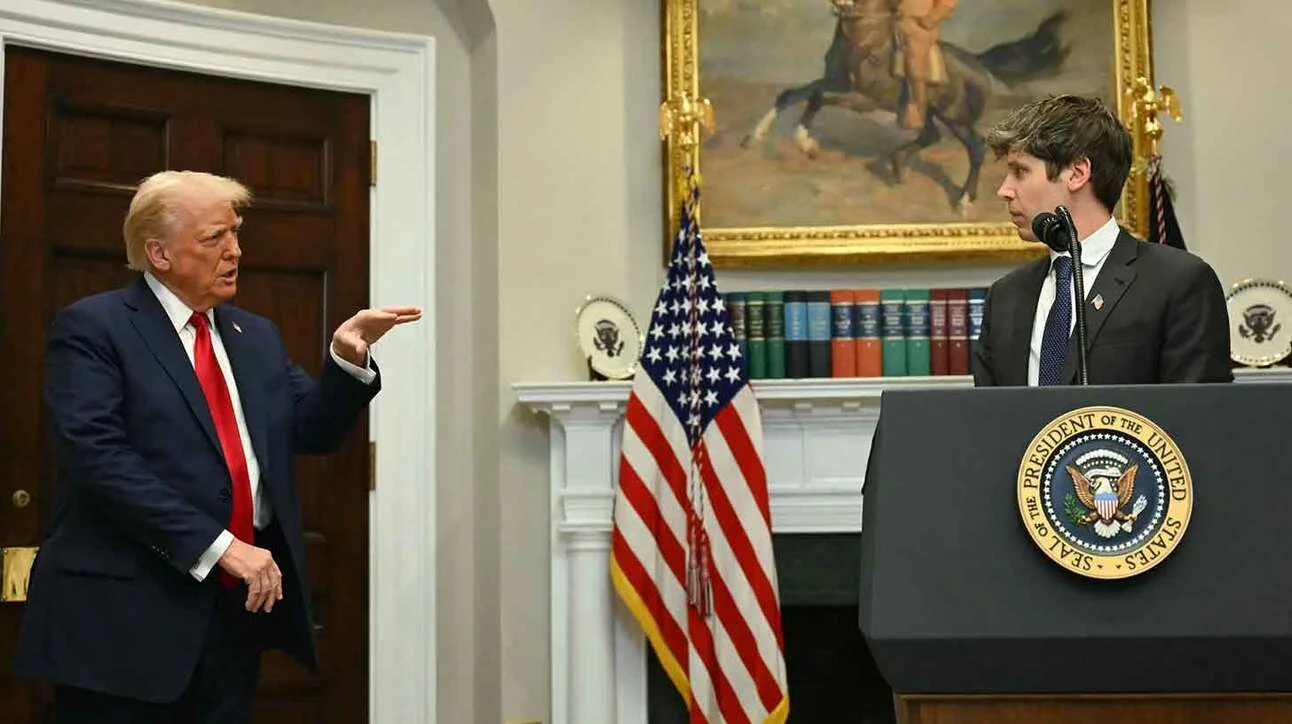
President Donald Trump announced plans on September 19 to create an “AI Force” and name a new AI czar to protect the U.S. lead in AI. The proposal, covered in The Rundown, pairs support for industry growth with enforcement through existing criminal and civil law.
Trump dismissed concerns about keeping AI aligned with human goals as a “hoax,” ABC News reported. He said the force would watch over the industry and look for bad actors.
What Trump proposed
Trump modeled the idea on the Space Force. Whether the AI Force would sit inside the military remains unclear, and he gave no structure, powers, funding or launch timeline.
The planned appointment follows David Sacks’s departure from the AI and crypto czar role in March. Trump has not named the new czar or explained whether the job would carry the same responsibilities.
Why it matters
The move clarifies Trump’s AI priorities. He is backing the industry, leaning on existing law and treating competition with China as a reason to keep development moving. Trump also predicted AI could reach 25% of U.S. GDP and floated the name “Superior Intelligence,” The Guardian reported. That rhetoric frames the race as too valuable to slow.
For developers, Trump’s proposed approach signals federal support for growth. The practical questions are what scrutiny companies would face and whether they would have to give officials information about model risks. A pledge to pursue bad actors leaves open how the force would spot hazards before they cause harm.
The White House’s March 20 legislative framework shows how support for growth can coexist with targeted safeguards. It asked Congress to address child protection, AI scams and national security while calling for fewer barriers to deployment and consistent national rules.
The safety debate concerns how early oversight should begin and how fast AI capabilities should improve. In his September essay We Must Pace the Frontier, Anthropic CEO Dario Amodei called for slower capability gains so safety work could keep up. His plan combines independent evaluators embedded at labs with safety checks and incident reporting. It also calls for coordination among leading labs in democracies and attempts at wider international agreement.
Sam Altman and Elon Musk also backed slower development, while Altman supported embedded evaluators, AP reported on September 16. Industry views vary. Cohere CEO Aidan Gomez raised concerns about powerful labs setting rules together.
Amodei’s plan also seeks to preserve democracies’ lead over authoritarian competitors. Competition with China shapes both arguments for faster progress and calls for caution. Coordination would depend on labs accepting scrutiny and agreeing on a pace despite commercial and geopolitical pressures. Whether evaluators could spot emerging risks early enough for labs to act remains uncertain.
Public concern adds pressure. Pew Research Center surveyed 3,488 U.S. adults from June 22 to 28, 2026, and found 52% were more concerned than excited about AI’s growing role in daily life. Concern crossed party lines. Separately, 71% expected AI to produce fewer U.S. jobs over the next 20 years.
Those views predate the AI Force announcement. Reassuring workers and the wider public would require a clear account of who checks risks, how officials handle wrongdoing and what the administration expects AI growth to mean for jobs.
Sources & further reading
- 01therundown.ai ↗
- 02Trump says he will form new 'AI Force' but continues to call AI fears a 'hoax' - ABC News ↗
- 03Trump to create ‘AI Force’ to monitor technology as fears over out-of-control agents grow | Donald Trump | The Guardian ↗
- 04President Donald J. Trump Unveils National AI Legislative Framework – The White House ↗
- 05Dario Amodei — We Must Pace the Frontier ↗
- 06Slowing down AI: What would that look like and how possible is it? | AP News ↗
- 07Democrats now more worried than Republicans about AI, its impact on jobs | Pew Research Center ↗
This story builds on reporting from The Rundown newsletter on September 22, 2026.