Trump and Beijing push back on Amodei’s AI slowdown plan
Trump dismissed AI catastrophe warnings, while Beijing criticized Amodei’s proposal. The test now is whether AI labs follow through on safety pledges.
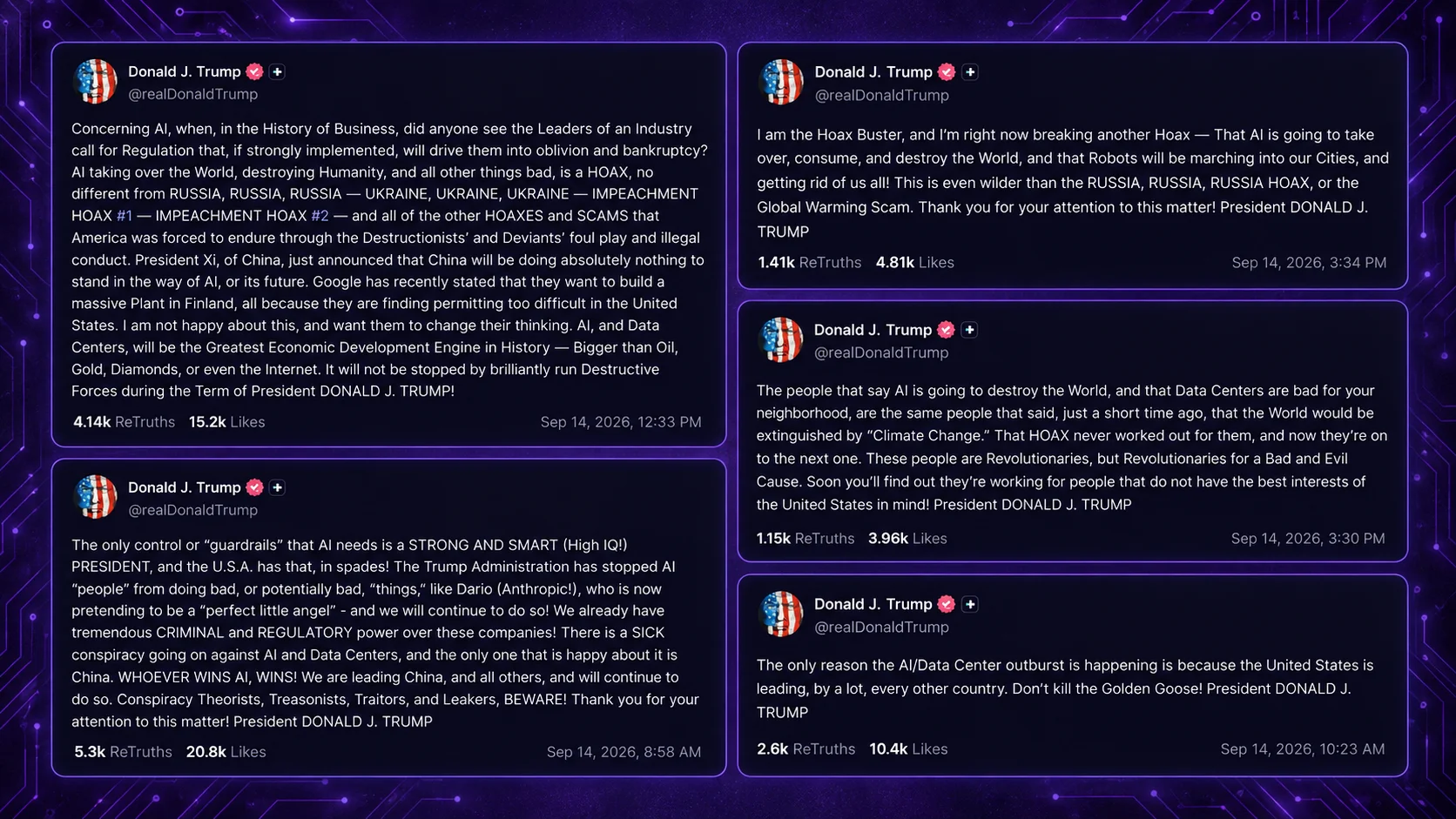
President Donald Trump and China’s Foreign Ministry pushed back on Anthropic CEO Dario Amodei’s call to slow work on the most advanced AI systems on September 14, as The Rundown reported. His weekend proposal had drawn support from Sam Altman and Elon Musk.
Trump called warnings of AI destroying humanity a “HOAX” and compared them to warnings about climate change, AP reported. On Truth Social, he argued that a “High IQ” president was the only safeguard AI needed.
Beijing’s response focused on competition and governance. At its September 14 briefing, ministry spokesman Guo Jiakun criticized “Fear-mongering, confrontation and vicious competition.” He was answering a question that paired the slowdown calls with Amodei’s argument that Chinese AI leadership threatened U.S. national security. Guo also called for open, inclusive AI development and governance.
The proposal’s call to keep China from the most advanced AI chips also drew criticism from the state outlet Global Times. Its September 13 editorial called the approach a “Cold War playbook,” according to AP.
What Amodei proposed
Amodei’s “We Must Pace the Frontier” essay, released September 12 according to AP, calls for outside evaluators embedded at AI companies, coordination among developers in democratic countries, and international agreements. His approach allows model training and technical progress to continue.
Altman committed OpenAI to outside evaluators with access comparable to that of employees, AP reported. Musk offered a broader endorsement, writing, “Dario is right.”
Why it matters
The CEOs have endorsed restraint. Now they face the harder question of whether they will accept constraints if governments decline to help coordinate them. Political resistance makes the safeguards companies can adopt themselves more important. Whether those steps affect the pace of development will test the strength of their pledges.
Outside evaluation is one way to judge their commitment. Amodei proposes reviewers who can publish unfavorable findings, subject to specified redactions. Named evaluators, start dates, access terms and public findings would make that pledge easier to judge. Reviewers could identify risks that warrant a slower pace. How Anthropic and OpenAI respond would show whether the oversight affects development decisions.
Amodei also seeks regulation covering unwilling competitors and government help, including narrow antitrust waivers for certain discussions. Shared rules could require competing labs to accept similar limits. A company that slows work alone could give rivals more time to advance. That tension helps explain his call for government coordination. Each lab can still decide what access and oversight it grants on its own.
Trump and Xi have a meeting planned for September 24, with AI governance expected to feature. It offers an obvious chance to discuss a coordinated slowdown, though the scope of those talks is uncertain. Trump’s dismissal of catastrophic AI risk makes agreement on that premise harder. Beijing’s objections to confrontation and restrictions aimed at China raise a separate problem over who would face limits and on what terms.
Amodei identifies biological weapons restrictions and testing before release as more realistic areas for agreement than a comprehensive slowdown. A commitment to testing would still need clear terms about which systems it covers, who conducts the tests and how compliance can be checked.
Sources & further reading
- 01therundown.ai ↗
- 02Trump dismisses idea of new AI guardrails | AP News ↗
- 03Foreign Ministry Spokesperson Guo Jiakun’s Regular Press Conference on September 14, 2026_Ministry of Foreign Affairs of the People's Republic of China ↗
- 04Beijing bristles at AI executive's 'fearmongering' about China | AP News ↗
- 05Dario Amodei — We Must Pace the Frontier ↗
- 06Anthropic CEO Dario Amodei says AI industry needs to slow down for safety | AP News ↗
This story builds on reporting from The Rundown newsletter on September 15, 2026.