Starship reaches orbit and delivers 26 Starlink satellites
Starship delivered 26 Starlink satellites on its first orbital flight. Full reuse and refueling will shape its cost and role in NASA’s lunar plans.
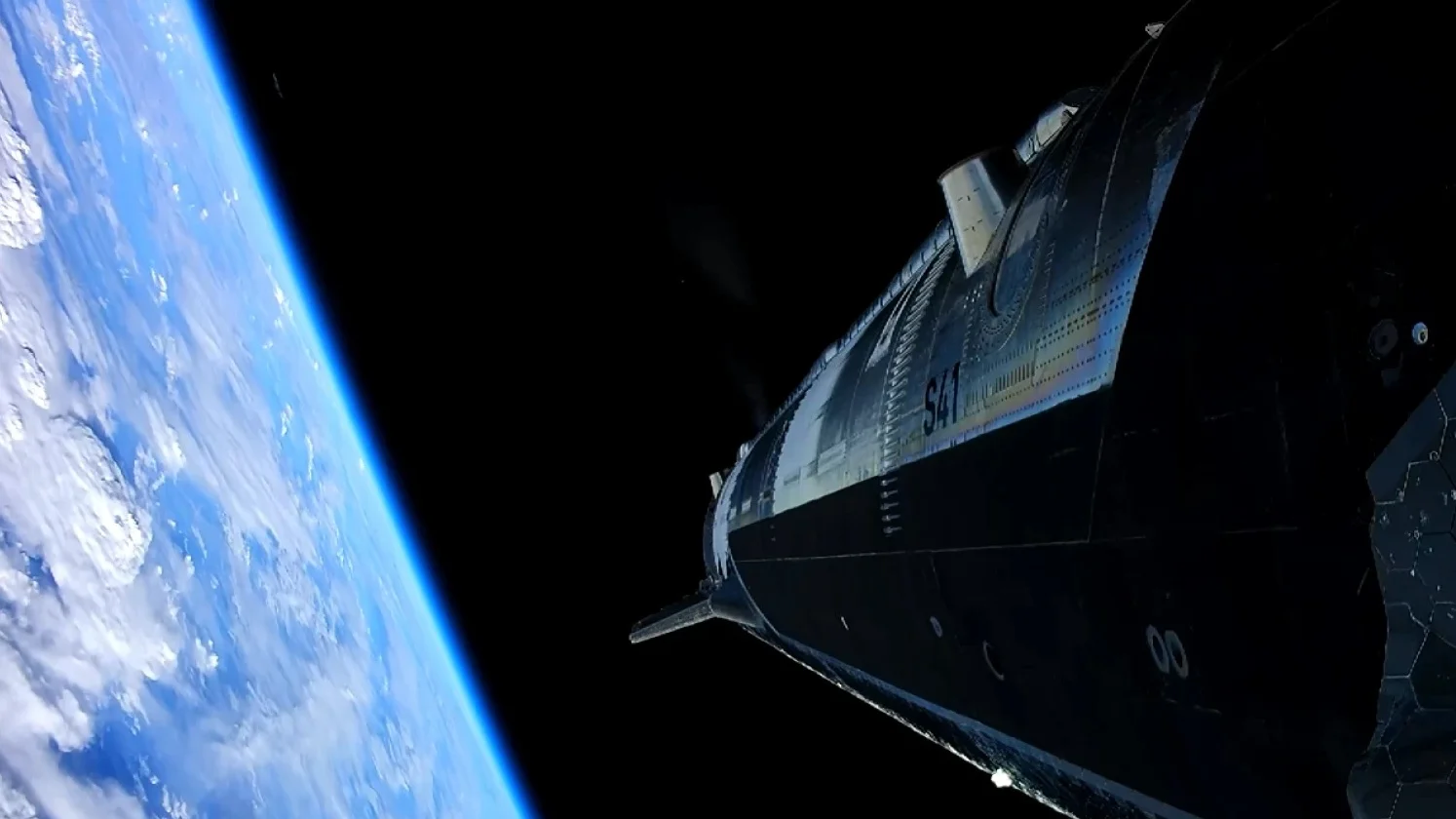
SpaceX’s Starship reached orbit and delivered 26 Starlink V3 satellites for the first time on Monday, Sept. 28, as The Rundown reported. The flight turned its experimental megarocket into a working satellite launcher, even as engine trouble forced an early return.
The launch from Starbase, Texas, marked Starship’s 14th flight. All 13 previous tests had followed suborbital paths.
Engine trouble cut the mission short
An engine shut down prematurely after Starship separated from its Super Heavy booster. Controllers shortened the planned mission from 10 hours to about three as a precaution.
Both stages ended at sea. Starship touched down in the Pacific, then tipped over and burned. SpaceX had not planned to recover the ship.
Why it matters
For SpaceX, Monday’s flight advances a launch system meant to make a much larger Starlink network affordable. The economic case still depends on recovering both stages and flying them again, spreading the cost of the hardware across multiple missions.
Elon Musk has described a goal of putting 100,000 satellites in orbit for the next generation of Starlink. That ambition makes frequent launches central to the plan, while the deployment schedule and mix of satellite designs remain uncertain.
The practical test will be how much work each recovered stage needs before its next launch. Refurbishment costs and the time between flights will help determine whether reuse delivers the savings SpaceX needs. Monday’s flight does not establish those costs or how often SpaceX can launch and reuse the same hardware.
SpaceX’s role in NASA’s crewed Moon plans depends on another capability, refueling in orbit. NASA’s inspector general described the proposed system in a March 10 report. Tanker flights would supply an orbital fuel depot, which would then transfer propellant to the lunar lander.
The sequence requires tanker launches, spacecraft meeting and docking, and storage and transfer of extremely cold propellant. An earlier Starship experiment described in the report moved propellant between tanks inside one spacecraft. The inspector general identified large transfers between separate spacecraft as a major technical challenge.
NASA has also left open which company will carry its first Artemis landing crew. In its March 3 revision of the program, the agency designated Artemis III as a 2027 demonstration in Earth orbit and targeted Artemis IV for the first Artemis landing in early 2028. NASA says readiness will determine whether SpaceX or Blue Origin provides that lander.
NASA’s July outline of the lander tests describes trials with versions of both companies’ landers. These include meeting and docking with Orion, checking that hardware and software work together, and verifying mission readiness and crew safety. Uncrewed lunar demonstrations will also help NASA judge whether a lander is ready to carry astronauts to the surface.
Sources & further reading
- 01therundown.ai ↗
- 02SpaceX launches its Starship into orbit for the first time | AP News ↗
- 03A look at the SpaceX IPO by the numbers | AP News ↗
- 04oig.nasa.gov ↗
- 05NASA Strengthens Artemis: Adds Mission, Refines Overall Architecture - NASA ↗
- 06How NASA’s Artemis III Lander Test Will Pave Way for Moon Landings - NASA ↗
This story builds on reporting from The Rundown newsletter on September 29, 2026.