Robotics firms build robot gyms to teach machines everyday tasks
Robotics firms are funding robot gyms and human demonstrations. Early gains leave questions about how reliably machines can work in unfamiliar settings.
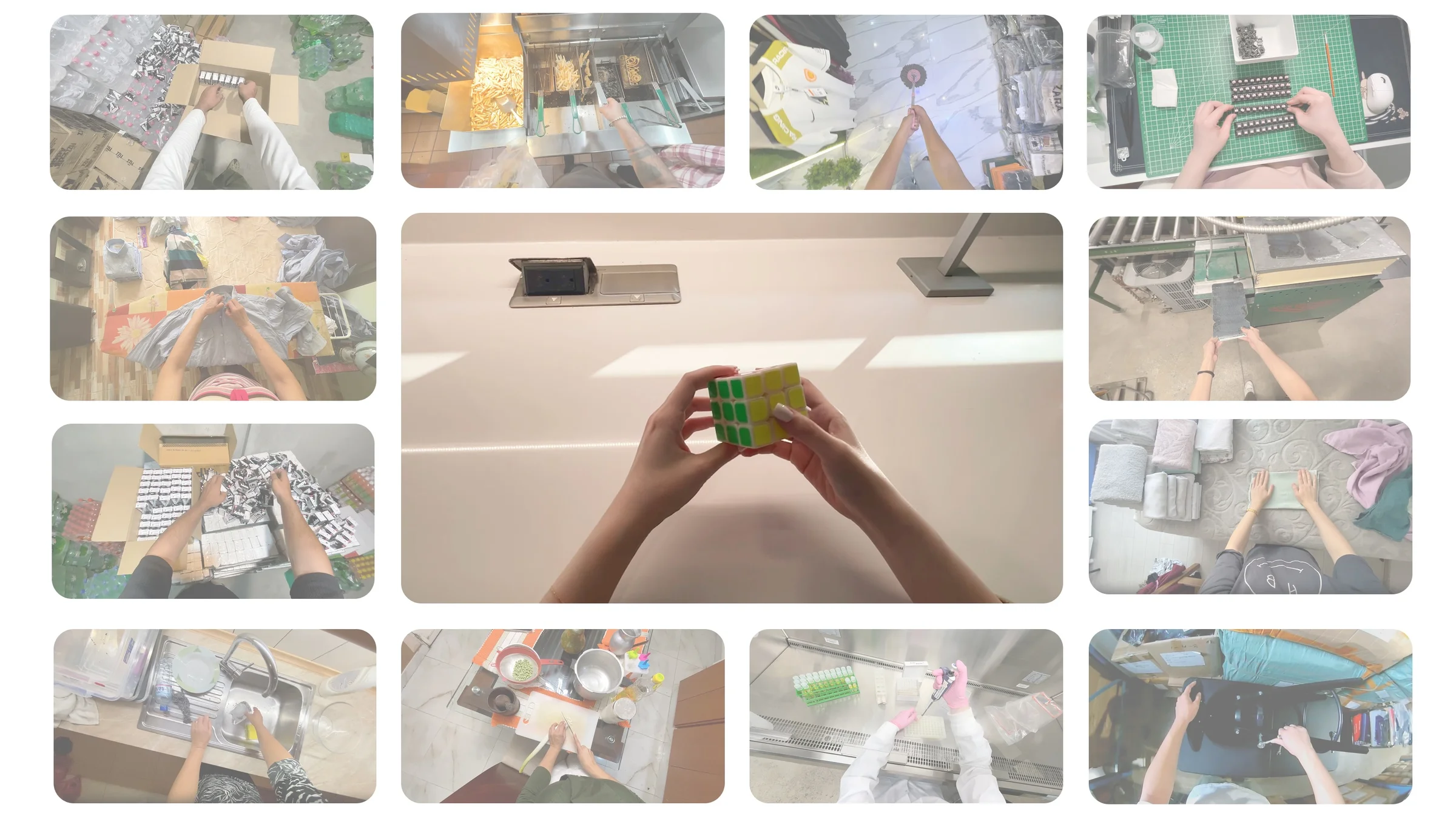
Robotics companies are building “robot gyms” and paying people to record everyday tasks, a push covered in The Rundown. Figure has committed more than $1 billion to data and computing over the 12 months beginning August 25, 2026, as it works to teach robots to operate in unfamiliar homes and workplaces.
Mecka, which records human demonstrations in homes and commercial settings, announced a $60 million Series B on October 7. Sequoia Capital led the round, and Nvidia participated. Mecka says the money will expand its data infrastructure, research and commercial robot deployment.
How robot gyms collect data
In its August announcement of Index, Figure reported more than 44,000 weekly active contributors, over 16 million uploaded videos and $15 million paid to contributors. The data program also filters submissions, reviews them for fraud, removes duplicates, adjusts the mix of data and adds labels.
NEURA Robotics describes gym cells that reproduce customers’ tools, fixtures and working conditions. People guide robots remotely while the system captures movement, force, video, touch and audio. NEURA adds workplace recordings and simulation, then retrains and tests around difficult grips, lighting conditions and object variations.
Why it matters
Getting robots to work reliably in unfamiliar homes and workplaces means teaching them to handle situations they haven’t seen before. These commitments are a costly bet that enough examples of human work will help machines adapt when objects, lighting and working conditions change.
Figure reported on September 17 that robots completed 56% of tasks across tidying, towel folding and bedmaking in 30 previously unseen Bay Area homes, compared with 9% without earlier training on Index data. Figure held later training conditions fixed. The robots had already learned those tasks elsewhere, so the test measured their ability to transfer skills to new homes and objects.
Dyna Robotics reported in August that increasing human video training from 1,000 to one million hours improved robot performance after further training on robot demonstrations for specific tasks. Its comparisons found that training with video prediction delivered better gains as data grew than training focused only on actions. That suggests the way a model learns matters alongside the amount of footage it receives.
For developers, collecting more video brings work in sorting, labeling and training. Figure’s removal of duplicates and NEURA’s focus on difficult conditions point to the value of covering situations a robot still struggles with. A gym built around a customer’s tools may help with a defined job, while each new site may still need preparation and testing. The cost of gathering demonstrations is one part of that effort.
On October 13, Physical Intelligence announced an API beta for uploading data, adapting models and running them. Its workflow calls for teams to collect demonstrations, train, test on robots and let failures guide the next round of data collection. That approach keeps testing and further training central to deployment.
For households and businesses considering robots, the test is whether they can finish jobs dependably in unfamiliar settings. Figure’s gains are encouraging, but a 56% completion rate still leaves work to do before households could depend on those skills. The company evaluations cover selected tasks and systems, leaving performance across a wider range of homes and jobs uncertain. Buyers should ask vendors how often robots finish, how much human help they need, how they recover from errors and how long tasks take at sites excluded from training.
Sources & further reading
- 01therundown.ai ↗
- 02Introducing Index: Building The World’s Largest and Most Diverse Physical Dataset ↗
- 03Mecka raises $60M Series B led by Sequoia Capital — Mecka ↗
- 04How to Train a Robot: From Real-World Data to Deployment ↗
- 05Helix 2.5: Zero-Shot 30-Home Generalization ↗
- 06Dyna-2: A 1-Million-Hour Scaling Law for World-Action Models — DYNA ↗
- 07Frontier Models for Every Robot: Announcing our API beta ↗
This story builds on reporting from The Rundown newsletter on October 12, 2026.