Ring revives its flying home camera and adds a $1,000 security rover
Ring’s Drone Cam and Rover Cam narrow Amazon’s robotics pitch to checking alarms, with short flights, plan costs and a past shutdown to weigh.
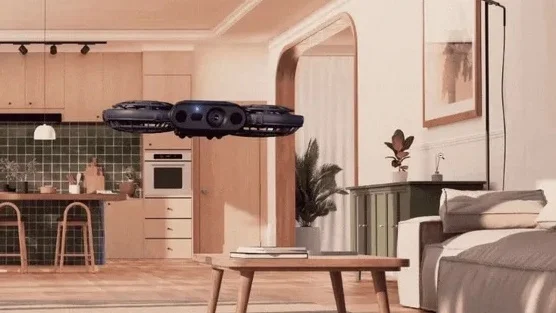
Amazon’s Ring announced Ring Robotics on Nov. 10, pairing a $249.99 indoor drone for homes with a $999.99 wheeled camera for businesses. Ring says both can patrol preset points and respond to alarms on their own.
As The Rundown reported, the products bring back Amazon’s push to send a camera to investigate an alert. Ring targets Dec. 16, 2026, for U.S. Rover Cam shipments and Jan. 27, 2027, for Drone Cam. Ring says the drone needs FCC authorization before it can be sold.
How the cameras work
Ring says Drone Cam records 2K video, uses LED lights in dark spaces and switches its camera off while docked. Users carry it through the space during setup. Rover Cam explores its surroundings to map them on its own.
The rover records up to 4K video and can keep recording in its dock. It has lights and a siren, and lets business owners speak and listen through it. Scheduled patrols require compatible Ring Protect plans for both robots.
As of Nov. 13, Ring’s Drone Cam documentation says it records during flight, including trips the user starts. It lists up to eight minutes of flight under controlled conditions and recommends 5 Mbps upload bandwidth. The drone has no microphone, speaker or siren.
Why it matters
Amazon’s effort to put autonomous robots into homes and offices now spans six years. It unveiled Always Home Cam in 2020 and opened an invitation list in September 2021. That version already promised preplanned flights triggered by a Ring Alarm sensor. Amazon later announced the end of Astro for Business in July 2024, telling customers their devices would stop working on Sept. 25 that year.
Ring narrows the pitch to a job its existing security customers already understand. When an alarm trips, send a camera to check. Amazon reported more than 17 million Ring customers in 2021, showing the scale of the business behind that pitch. Ring says feedback on Astro helped shape Rover Cam, with customers favoring roving security.
A homeowner could get a view beyond a fixed camera’s coverage. A business owner could inspect a preset point and address someone there through the rover. The value depends on whether the robot reaches the right spot in time to show what caused the alert.
The drone’s short flight window fits the idea of a quick check. Battery charge, route coverage and connectivity will matter each time an alarm triggers a flight. Ring’s Jamie Siminoff told WIRED that adding sensors to earlier designs increased their computing and battery demands. Ring responded by moving processing to the cloud. How reliably that approach will work across different homes remains uncertain.
Ring’s August 2026 encryption paper describes a phased rollout of a system that rotates keys every five minutes and deletes Ring’s copies after 24 hours. The videos can remain stored. The design permits temporary cloud processing, and the app can supply keys again for processing the user requests.
Subscriptions and support also affect the purchase. Scheduled patrols require an ongoing plan as well as the hardware purchase. Astro’s shutdown gives buyers a concrete reason to ask how long Ring plans to support each robot and what happens to its functions if that support ends.
Sources & further reading
- 01therundown.ai ↗
- 02Ring announces Ring Robotics, ushering in a new era of security ↗
- 03Drone Cam | Ring ↗
- 04Amazon Devices & Services news—September 2021 ↗
- 05Amazon is bricking its Astro business robots less than a year after launch | The Verge ↗
- 06Ring’s Indoor Drone Camera Is Back—and Now Powered by AI | WIRED ↗
- 07Ring-AE-E2EE-Whitepaper-August-24-2026-Final ↗
This story builds on reporting from The Rundown newsletter on November 12, 2026.