OpenAI plans textGrain watermarks for ChatGPT and Codex in the EU
OpenAI plans EU text watermarks for ChatGPT and Codex, keeps API marking optional, and warns that detection cannot settle authorship or truth.
OpenAI introduced textGrain on October 5, a hidden watermark headed for ChatGPT and Codex output in the EU. It plans to roll the feature out to eligible users across plans over the next few weeks to meet the EU AI Act’s transparency rules.
As The Rundown reported, API customers worldwide can also turn on textGrain for selected models. That option opened on October 5, with watermarking off by default.
How the watermark works
textGrain leaves a statistical pattern in word choices that readers cannot see but a detector can recognize. OpenAI says its tests showed no meaningful difference in benchmark quality and that textGrain matched or exceeded the alternatives it tested, including Google’s SynthID.
OpenAI is limiting the text detector to approved researchers and expert organizations at launch, citing the risk of errors.
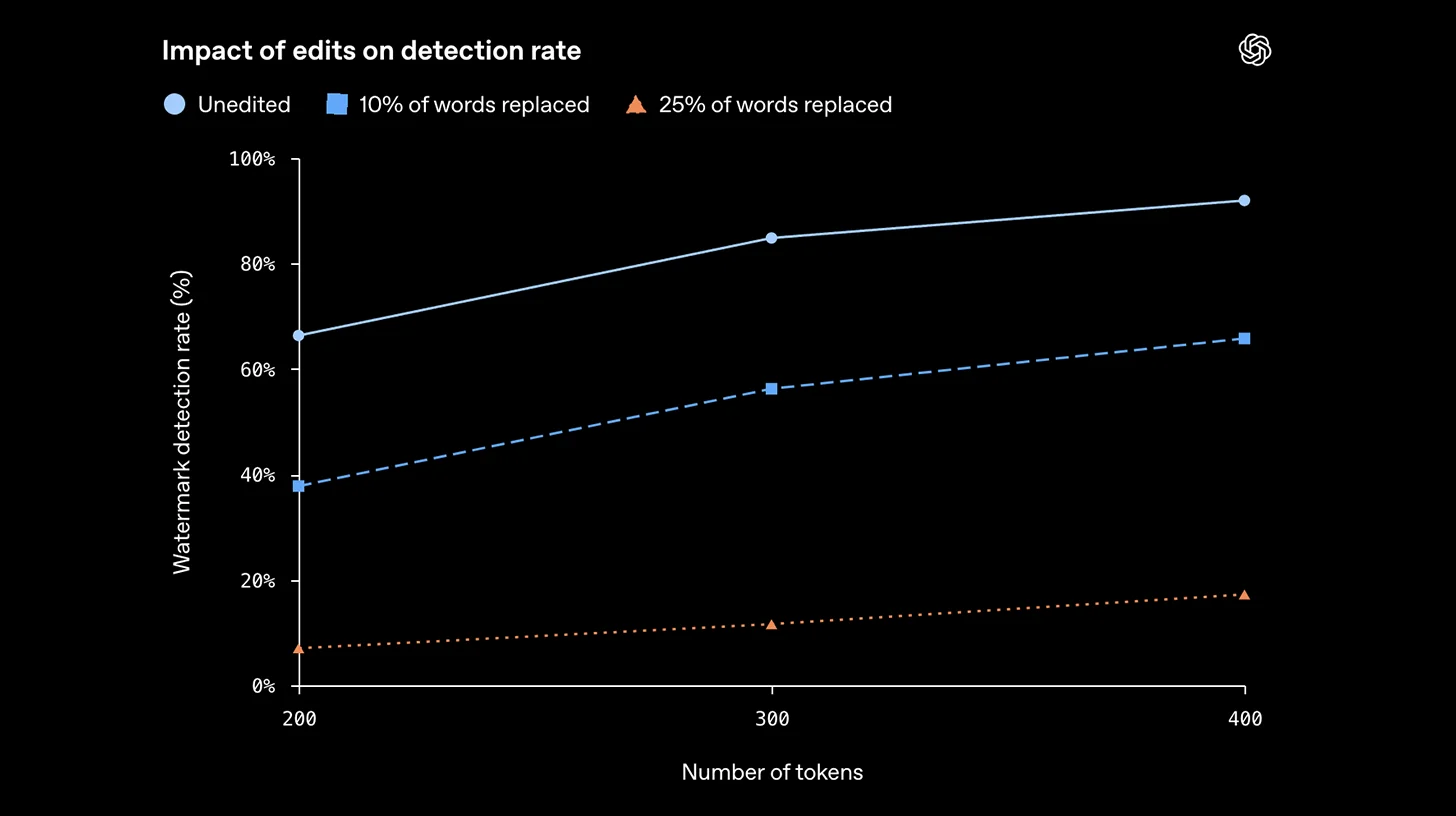
Editing can weaken the signal. In OpenAI’s test with 400 tokens of text, detection fell from about 92% to 66% after 10% synonym replacement, and to 17% after 25% replacement. Results with other text and edits may differ.
Why it matters
OpenAI’s narrow rollout and emphasis on limits make textGrain look like a guarded compliance effort. It is tying automatic deployment in ChatGPT and Codex to EU rules while giving API customers a choice.
Anthropic announced its watermark in August, using a version of Google DeepMind’s SynthID approach. It set a global policy across Claude products, citing the lack of a durable way to limit marking by region. Its September 1 update said support for older models was still expanding.
WIRED reported objections from developers over false positives and the risk of treating light AI editing as authorship. OpenAI’s narrower defaults could help it avoid some of that backlash.
OpenAI’s caution predates those objections. It warned about watermark limits in June while backing the EU transparency code and stronger verification tools. Anthropic’s September 1 update also discussed interpretation limits and described a detection API in private preview for eligible organizations.
For schools, employers and publishers, the practical issue is what a detected mark can establish. OpenAI says it cannot prove who owns the words, how much a human shaped them or whether they are true. Institutions should examine drafts, their rules for AI assistance and the human review involved before deciding whether someone broke a policy.
Restricting the detector may reduce casual accusations based on uncertain results. It also leaves people outside approved groups without direct access to OpenAI’s text checker at launch.
The European Commission’s guidance separates providers’ duties to add marks that software can read from disclosure duties for organizations deploying AI. Article 50’s transparency obligations have applied since August 2. For text published to inform the public on matters of public interest, it describes a disclosure exception when content undergoes human review and is subject to editorial responsibility. Newsrooms and application developers need to work out which disclosure duties apply to them and who takes responsibility for publication.
Sources & further reading
- 01therundown.ai ↗
- 02Our approach to EU text provenance rules | OpenAI ↗
- 03How Claude's text watermarking works \ Anthropic ↗
- 04Coders Say They Already Found Workarounds to Claude’s Invisible Watermarks | WIRED ↗
- 05Supporting Europe’s work in ensuring a trustworthy AI ecosystem | OpenAI ↗
- 06Code of Practice on Transparency of AI-generated Content | Shaping Europe’s digital future ↗
This story builds on reporting from The Rundown newsletter on October 6, 2026.