OpenAI reportedly folds robotics team into core research
OpenAI’s reported robotics shift suggests a bigger role for general models, though staff dispute the report and robot tests show practical limits.
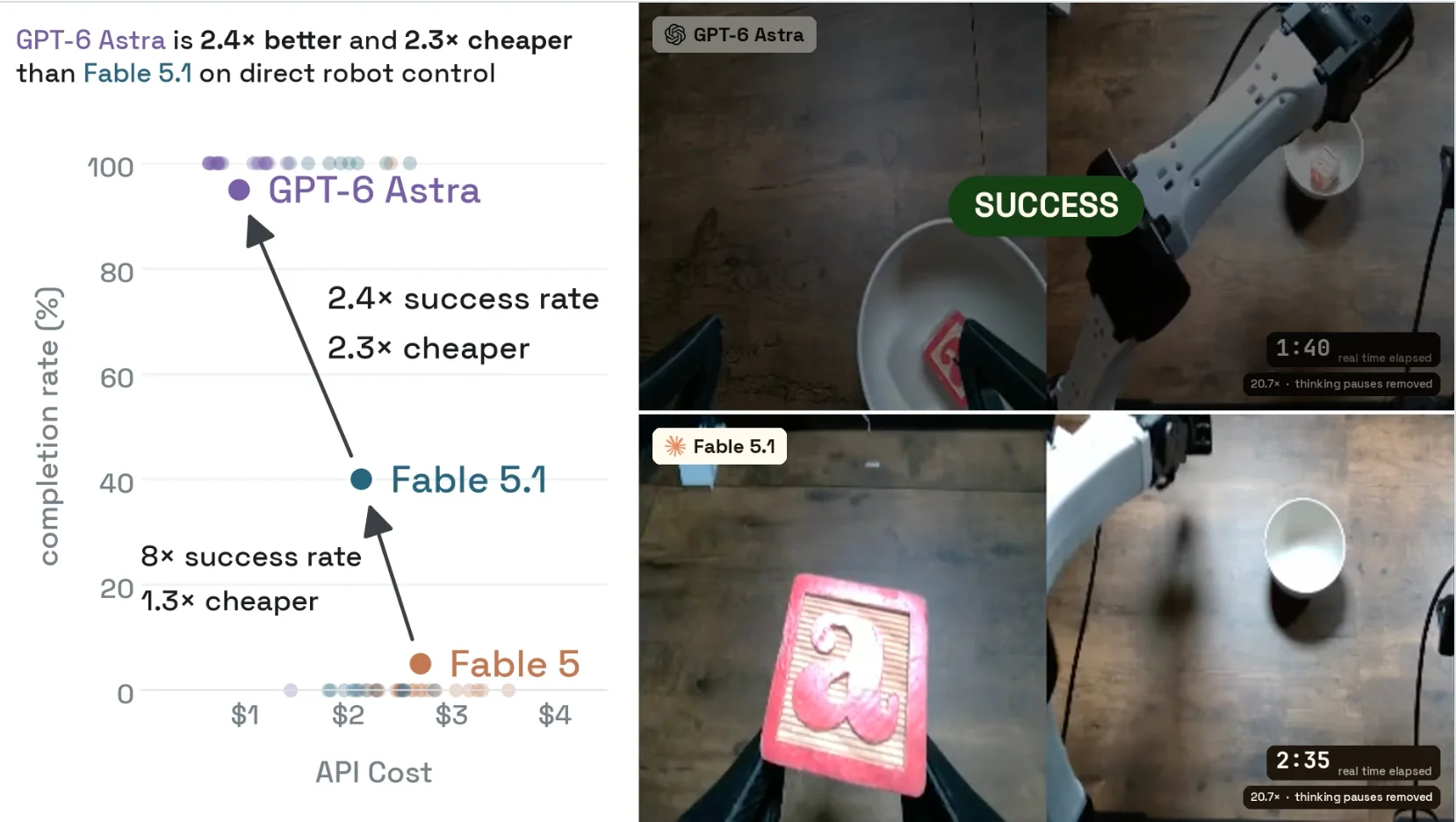
OpenAI moved its robotics team into its main research and product groups, Fortune reported on November 13. The company said GPT-6 Astra and other general models can run robots without a separate model built for the job. The reported shift, covered in The Rundown, drew pushback from staff.
OpenAI engineer David Schnurr called its robotics work “alive and well” and pointed to 15 open roles. Another employee called the report “completely wrong”. The scope of any reorganization remains unclear.
What the robot tests show
In an October 14 research report, NVIDIA researchers described testing Astra on simulated robot tasks without extra training for robot control. On the RoboLab-120 test, they reported 66.3% success when Astra generated actions directly. The setup still included robot control software.
The simulation paused while the model worked, and direct calls took 18.56 seconds on average. Researchers ran five trials per task and excluded assembly tasks. Those conditions leave the approach’s speed and reliability on physical machines unresolved.
Google DeepMind offered another example in its November 10 Gemini Robotics 2.5 announcement. It reported 96% success in a trial picking and packing automotive parts with Apptronik’s Apollo 2 on Mercedes-Benz production lines. The system combines a model for workflow management with Gemini Robotics 2.5 for actions. Questions about productivity, uptime and safety across a factory remain open.
Why it matters
The reported shift suggests general models may be able to do more robotics work than expected. Improving the intelligence that guides a robot could then become a bigger research priority than developing the hardware itself. Folding that work into core research would fit that approach.
For robotics researchers, the potential gain is that improvements to a shared model could carry over to robot behavior. NVIDIA’s experiment gives that idea concrete support. It also shows why timing matters. A robot in a changing environment must respond while events continue around it. Tests that pause for the model leave questions about response time, interruptions and recovery.
For teams deploying robots, where the model runs also matters. Google’s June 2025 announcement of a local robotics model described a system that runs without a network connection, aimed at fast responses and places with unreliable connectivity. That points to a practical role for specialized models even as general reasoning improves. Faster, more dependable control is part of improving a robot’s intelligence.
Hardware engineers could benefit from the same model improvements. OpenAI said on November 3 that its hardware teams, including robotics, turn to ChatGPT and Codex for design work, manufacturing drawings, simulations and design reviews. Better general models could help engineers build and refine the machines as well as guide their actions.
The company’s own example also shows why physical engineering remains demanding. A device designed by Astra needed review and revision after the model missed manufacturing tolerances, production constraints and assembly details. General models could speed up this work, while engineers still have to check whether a design can be built and assembled correctly.
Google’s pilot pairs separate reasoning and action models, showing that the push for better robot intelligence can take more than one form. The unresolved question is how much of a robot’s work a general model can handle reliably, and where specialized components still improve results.
Sources & further reading
- 01therundown.ai ↗
- 02Exclusive: OpenAI disbands stand-alone robotics team as general AI models start running robots | Fortune ↗
- 03x.com ↗
- 04x.com ↗
- 05Astranomy: An Empirical Study of GPT-6 Astra as a native robot policy ↗
- 06Gemini Robotics 2.5: Accelerating Physical Intelligence — Google DeepMind ↗
- 07Gemini Robotics On-Device brings AI to local robotic devices — Google DeepMind ↗
- 08Accelerating engineering for the physical world | OpenAI ↗
This story builds on reporting from The Rundown newsletter on November 16, 2026.