MIT’s CW-Net helps people spot flawed reasoning in autonomous cars
MIT and Motional’s CW-Net reveals concepts behind autonomous car decisions, helping people recognize flawed reasoning while leaving safety questions open.
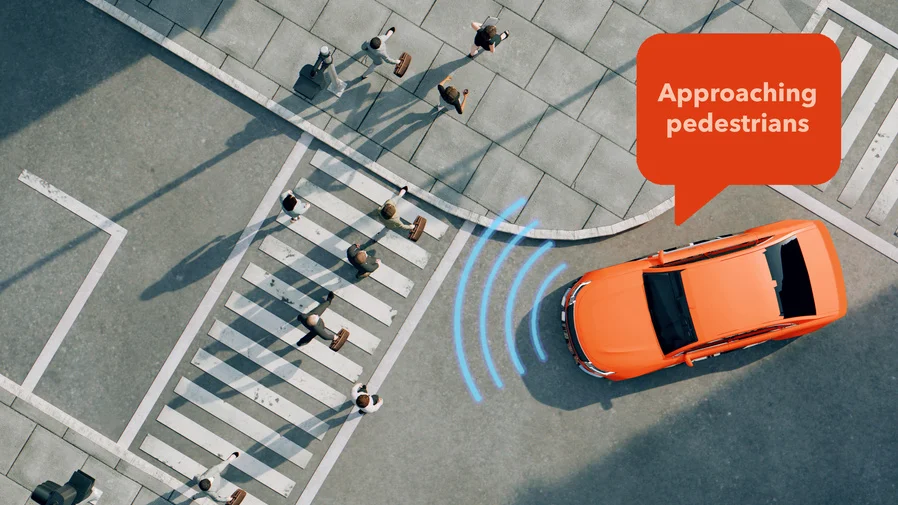
MIT and autonomous driving company Motional have built a system that makes parts of a car’s planning process visible as it drives. Called CW-Net, it presents concepts such as “close to cyclist” and “approaching stopped vehicle” alongside the vehicle’s planned trajectory, giving people another way to recognize when its reasoning may be going wrong.
The researchers published their findings in Nature on September 2. As covered in The Rundown’s September 3 newsletter, the work points toward a practical benefit for safety drivers and engineers: spotting a worrying mismatch between what a car does and why its planner does it.
How CW-Net makes planning visible
Autonomous cars can produce a sensible maneuver for a flawed reason. Watching a vehicle stop tells an observer little about whether its planner correctly accounted for a nearby cyclist or whether another safety system intervened.
CW-Net exposes recognizable concepts within that process. In its principal architecture, the concept layer’s outputs feed into the final stage that scores possible trajectories. That gives the explanations a direct role in the planning decision. Motional describes a dashboard of concept activations, offering a view into specific parts of the planner’s reasoning.
According to MIT’s September 2 announcement, researchers deployed the system in a Motional robotaxi on a private track, generating explanations in real time alongside planned trajectories.
A stop that concealed a planning problem
In one test, a driver initially believed the car stopped because it had accounted for a cyclist. The concept display raised doubts: cyclist activation was low.
The paper gives an important distinction. The perception system had detected the cyclist, but the experimental planner was not configured to consume cyclist inputs. Subsequent analysis established that a backup braking system was overriding unsafe planned trajectories. The explanation helped prompt caution before investigators established the full cause.
The researchers also tested whether explanations helped people anticipate vehicle behavior. One online study involved nine Motional experts and 30 nonexperts. A separate situational-awareness study analyzed 99 participants after attention checks, comparing concept explanations with speed and steering information. Its public-road recordings were collected with the vehicle driven manually.
The researchers reported improvements in predicting behavior, including during surprising events in the separate 99-person study. Those findings concern understanding and prediction in the tested situations. Whether the system reduces crashes remains unestablished.
Why it matters
Autonomous cars can be hard to trust because their reasoning is mostly invisible while they drive. CW-Net is a step toward making that reasoning legible. A concept such as “approaching stopped vehicle” gives safety drivers and engineers something concrete to inspect, potentially helping them catch a failure forming before they have to reconstruct it afterward.
The cyclist test shows why that visibility can matter even when the car appears to behave acceptably. A successful stop can encourage confidence in a planner that has a serious blind spot. Seeing the weak cyclist signal gave the observer a reason to become more cautious. The practical value is better calibrated trust: people can question an apparently reassuring maneuver when the explanation suggests the planner has missed something important.
For engineers, concept traces can also turn an initial guess into a testable hypothesis. In another demonstration, a driver blamed a traffic cone for unexpected braking. The stopped-vehicle concept pointed toward a different explanation, and removing the cone did not eliminate the stop, according to the authors’ project page. That kind of feedback could help engineers choose their next test with more information than the vehicle’s movement alone provides.
The explanation still needs scrutiny. A concept can faithfully expose a mistaken internal representation. The supplementary validation results show errors in concept classification, so a readable label does not establish what is actually happening on the road.
There is also a human attention tradeoff. As of September 6, the authors’ project page describes CW-Net as a proof of concept tested with limited scenarios and one planner type. It says drivers needed time to interpret probabilities and that production interfaces must avoid distraction. For supervised testing, the promise is meaningful: give people enough insight to recognize suspicious reasoning and investigate it. Demonstrating that this insight arrives early enough to support reliable intervention remains an important next step.
Sources & further reading
- 01therundown.ai ↗
- 02Explainable deep learning improves human mental models of self-driving cars | Nature ↗
- 03Inside the Brain of a Self-Driving Car: How Motional and MIT are Cracking Open the Black Box of AI | Motional ↗
- 04System helps humans predict when self-driving cars will make mistakes | MIT News | Massachusetts Institute of Technology ↗
- 05Explainable deep learning improves human mental models of self-driving cars ↗
- 06Explainable deep learning improves human mental models of self-driving cars ↗
This story builds on reporting from The Rundown newsletter on September 3, 2026.