Microsoft’s Maia 300 could weaken Nvidia’s pricing power
Microsoft plans to deploy Maia 300 in 2027. Its own AI chips could give it more bargaining power with Nvidia, even as demand for GPUs stays strong.
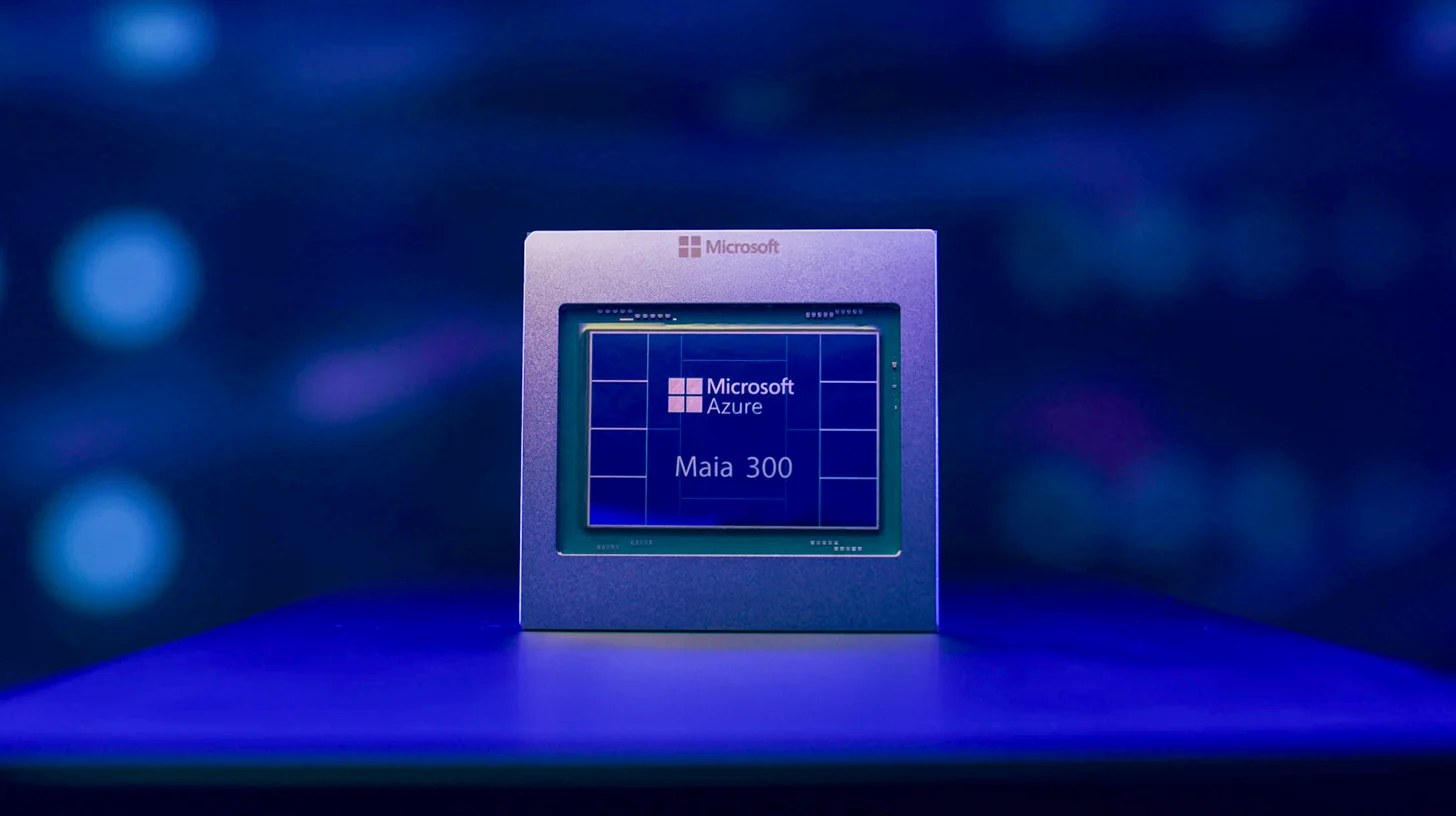
Microsoft unveiled Maia 300 on Oct. 12, with production deployments planned for 2027. The company expects the new system to deliver 40% more tokens per megawatt than what it calls “leading GPU-based systems.”
The plan, covered in The Rundown, would make the Maia family Microsoft’s primary system for inference, the work of running AI models to generate responses. That would bring more of the computing behind Copilot and other products onto chips Microsoft designs itself.
Microsoft’s plan for Maia
CEO Satya Nadella called the effort “our biggest bet yet on our own silicon” and said deployments spanning multiple gigawatts would begin in 2027. Microsoft’s July earnings guidance put companywide reported capital spending for calendar 2026 at approximately $175 billion.
Maia 200 already serves Copilot and runs OpenAI and Microsoft models. Microsoft says GitHub Copilot and Microsoft Foundry are scheduled to follow by the end of 2026.
The efficiency claim describes expected AI output for a given amount of power. Microsoft has not identified the competing GPU configuration or provided enough test details to reproduce the comparison. Performance across different models and response speeds is still uncertain.
Why it matters
For Nvidia, the immediate threat looks limited. In the quarter ended July 26, 2026, it reported $96.2 billion in revenue, up 106% from a year earlier. Its Data Center business brought in $89 billion, up 117%. Those results show strong demand while big customers pursue their own chip plans.
The bigger threat concerns Nvidia’s pricing power over time. Microsoft plans to deploy Nvidia Vera Rubin and AMD Helios infrastructure alongside its own chips. If Maia can handle more of its inference work at a competitive cost, Microsoft could choose where to direct more of its future spending. That choice could help it negotiate better terms on GPU purchases. The effect would depend on how quickly Microsoft deploys Maia and whether the expected efficiency holds in practice.
Microsoft is part of a wider effort by AI companies to develop their own chips. OpenAI and Broadcom announced plans in October 2025 for 10 gigawatts of accelerators designed by OpenAI. The partners targeted deployments from the second half of 2026 through the end of 2029. As those alternatives become viable, other buyers could gain similar bargaining power.
Efficiency could also expand demand for computing. If Maia delivers more output within the same power budget, Microsoft could support more AI activity. That extra capacity could serve new workloads while the company continues buying GPUs. Nvidia could keep growing even as its customers gain more room to negotiate.
People paying for Copilot or Azure could benefit through more capacity or lower prices if Microsoft passes on efficiency gains. Microsoft could also keep any savings as higher margins. Its Maia announcement makes no commitment to lower customer prices.
Sources & further reading
- 01Microsoft to expand Azure Maia system to multi-gigawatt deployments - The Official Microsoft Blog ↗
- 02therundown.ai ↗
- 03Today we are announcing our biggest bet yet on our own silicon. Starting next calendar year, we will scale our Maia family to multi-gigawatt deployments, making it the primary inference system for… | Satya Nadella | 456 comments ↗
- 04Microsoft Fiscal Year 2026 Fourth Quarter Earnings Conference Call ↗
- 05NVIDIA Announces Financial Results for Second Quarter Fiscal 2027 | NVIDIA Newsroom ↗
- 06OpenAI and Broadcom announce strategic collaboration to deploy 10 gigawatts of OpenAI-designed AI accelerators | OpenAI ↗
This story builds on reporting from The Rundown newsletter on October 13, 2026.