iRobot’s Roomba Duo carries a second robot and hopes for a comeback
iRobot’s Roomba Duo prototype deploys a smaller robot beneath furniture, offering a novel comeback idea with price, reliability and launch questions ahead.
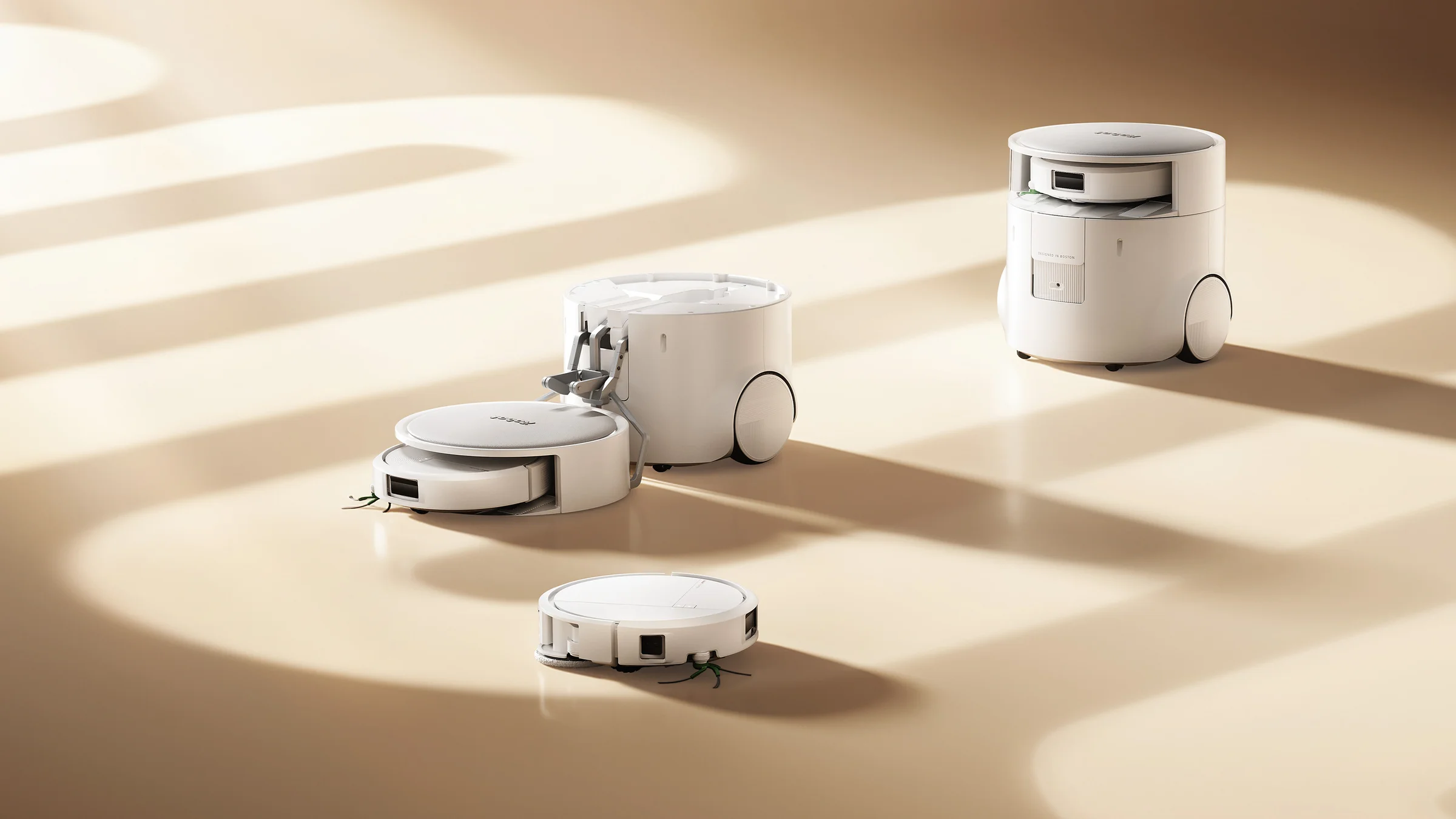
iRobot unveiled Roomba Duo at IFA 2026, a prototype that pairs a steam mopping robot with a smaller companion carried by a mechanical arm. The larger machine handles accessible floor space, then releases the companion so it can reach gaps the larger robot cannot enter.
As covered in The Rundown’s September 7 issue, the concept gives a former category leader a fresh idea to show after bankruptcy and a change of ownership. Its commercial prospects remain open. iRobot’s September 4 announcement identifies Duo as a prototype and provides no price or shipping date.
The company’s Japanese announcement that same day goes further, stating that the concept has no plans for sale. It is unclear whether that statement applies globally or specifically to Japan, but it makes an imminent launch difficult to assume.
How the two robots work together
According to iRobot, the arm mounted on the main unit stays level as it moves, allowing it to carry and release the companion. That smaller robot stands about 3.3 inches tall, giving it access beneath beds and sofas with sufficient clearance.
The company says both robots share a home map and coordinate in real time. The intended benefit is a single cleaning mission split between machines suited to different spaces. The main robot tackles open areas while the smaller one reaches beneath furniture.
The larger unit also combines several cleaning steps. iRobot says it applies steam to dried grime, scrubs with a roller about 2.4 inches in diameter and applies roughly 10 pounds of downward force. Hot air follows the cleaning process, which the company says helps protect wood floors. The announcement provides no comparative test results establishing cleaning improvements or compatibility with different floors.
The demonstrated companion is the existing Roomba Plus 575 Combo. Duo’s development also includes the larger robot, its arm, an autonomous mobile dock and the integration that lets the system work together, according to iRobot’s announcement.
Why it matters
Duo signals renewed ambition from a company that lost its lead in a category it helped define. The stakes extend beyond getting attention at a trade show. iRobot needs to turn an inventive design into a product that buyers can judge on cleaning, reliability and cost.
The ownership change gives that effort a plausible industrial foundation. On January 23, iRobot announced that Shenzhen PICEA Robotics and Santrum Hong Kong, collectively Picea, had acquired all of its equity as it emerged from Chapter 11. Picea was already iRobot’s primary contract manufacturer and secured lender. Bringing ownership, manufacturing and financing closer together could help align product plans with production. Whether that produces better execution or a recovery in market share remains uncertain.
For households with low furniture, Duo offers a concrete possibility. A larger machine could perform the more intensive floor cleaning while a slim companion covers areas beneath beds and sofas. Shared mapping could reduce the effort of managing two robots separately, provided the coordination works reliably in a home.
That benefit has to justify the added machinery. Carrying, releasing and retrieving another robot introduces more operations that must succeed during a cleaning job. The practical questions include arm durability, reliable retrieval, runtime and maintenance costs. If owners frequently have to intervene, the system’s extra reach could come with an unwelcome burden. Price will also determine how much buyers are being asked to pay for that coverage.
The competitive pressure is substantial. IDC estimates that global smart vacuum shipments grew 17.1% to 24.12 million units in 2025, while iRobot fell out of the top five. Roborock held global leadership, and Dreame expanded rapidly in Europe. iRobot’s decline occurred while the market was growing.
DJI has also entered the category, announcing a phased European rollout of its ROMO robot vacuum beginning October 28, 2025. That gives Duo another commercial competitor, though the announcement does not establish U.S. availability or superior cleaning performance.
Duo would need to offer a compelling combination of cleaning results, dependable operation, manageable upkeep and total cost to compete with those rivals. Its novel arm gives iRobot a distinctive concept, but the Japanese announcement’s lack of sales plans leaves even the path to purchase uncertain. A production commitment, price, availability and testing in homes would give prospective buyers the information needed to decide whether the concept delivers enough value. Customer adoption and regained market share would provide stronger evidence of a comeback.
Sources & further reading
- 01therundown.ai ↗
- 02iRobot Unveils Roomba® Duo at IFA 2026, Proving the Future of Floor Care Has a Familiar Name - Sep 4, 2026 ↗
- 03アイロボット、IFA 2026でコンセプトモデル「Roomba® Duo」を発表 | アイロボットジャパン合同会社のプレスリリース ↗
- 04iRobot Completes Court-Supervised Transaction with Picea, Enabling the Next Chapter of Growth - Jan 23, 2026 ↗
- 05IDC - Global Home Cleaning Robot Market 2025: Chinese Brands Dominate as Lawn, Window, and Pool Robots Surge ↗
- 06DJI's First All-in-One Robot Vacuum ROMO: Flagship Technology Flies into the Home ↗
This story builds on reporting from The Rundown newsletter on September 7, 2026.