IFA’s robot runway shows hardware progress as autonomy faces a harder test
IFA’s robot runway showed off movement and interaction. Reliable autonomy in homes and factories remains a harder test, despite new data and compute plans.
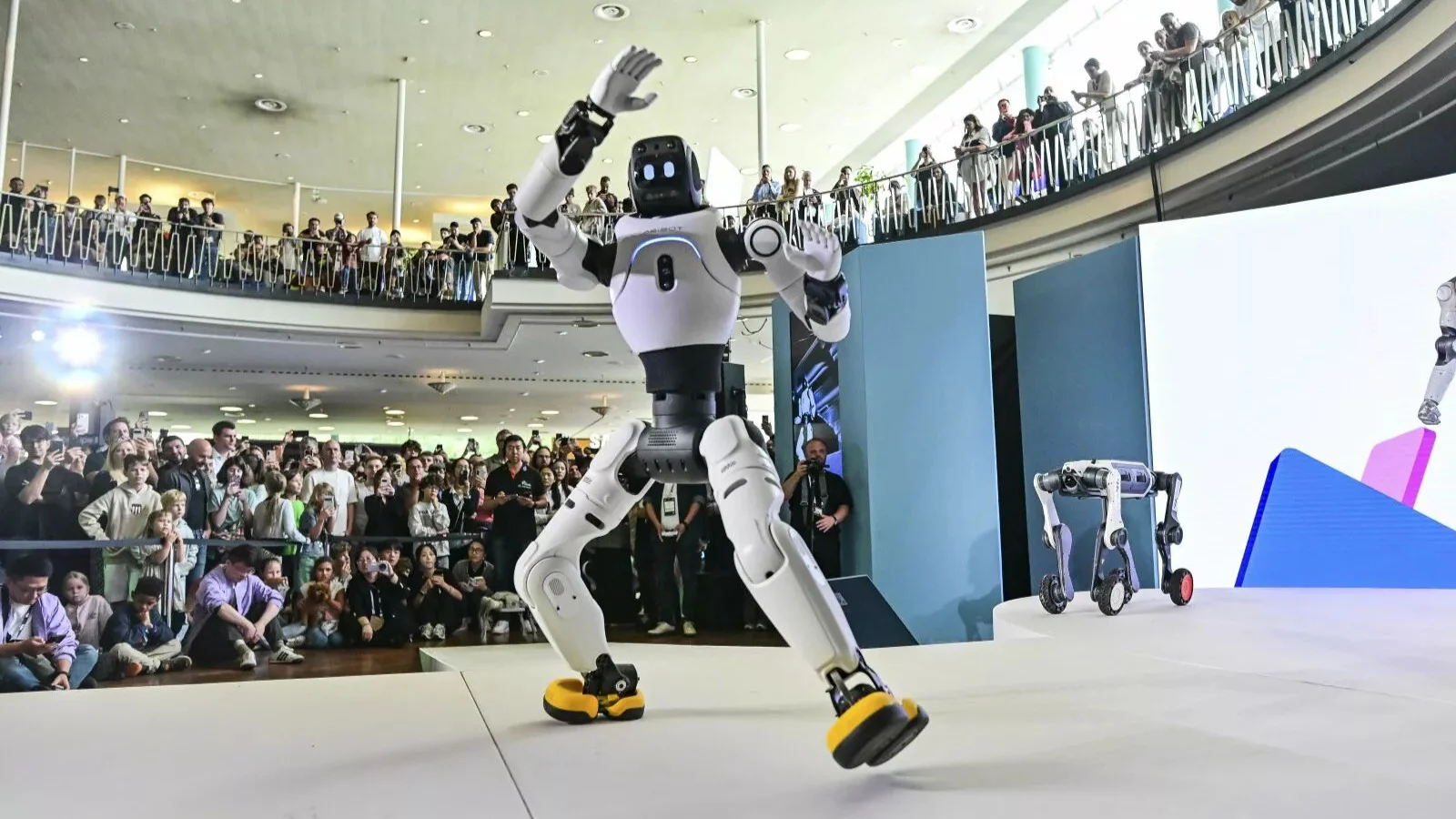
IFA 2026 put robots on a fashion runway, giving machines a stage to dance, pose, perform acrobatics and interact with an audience. As covered in The Rundown’s September 7 newsletter, the show offered an entertaining look at robotics hardware progress. Dependable autonomy in everyday surroundings remains a much harder test.
What the robots showed
In its September 5 account, IFA described 11 participating brands, including EngineAI, Dobot, DEEP Robotics, Agibot and Unitree. The Creator Stage program included dancing, Tai Chi, backflips, splits and audience interaction. A robot with four legs also demonstrated potential emergency and fire applications.
Those are the organizer’s descriptions of the performances. IFA’s account does not establish how each routine was controlled, how consistently the machines could repeat it or how they would respond to an unexpected obstacle.
The runway made movement and interaction easy to appreciate. A split or a dance gives an audience an immediate sense of a machine’s physical capabilities. Judging whether that machine can complete useful work safely requires evidence about the decisions and adjustments surrounding each movement.
Why it matters
The excitement around better robotics hardware is justified. Balance, mobility and coordinated movement are important ingredients for machines that could help in homes and factories. The difficult next step is getting those capabilities to work reliably amid unfamiliar objects, changing layouts and mistakes.
For someone considering a household robot, that distinction affects how much supervision a task might require. For a factory operator, it affects which jobs a robot could take on and how tightly its workspace would need to be controlled. A useful demonstration should help establish whether the machine can finish a job, recover when something goes wrong and operate safely around people.
Figure offers a concrete example of progress toward that goal. In its January 27 Helix 02 announcement, the company reported a four-minute dishwasher unloading and reloading sequence with no resets or human intervention. Figure says the system combines camera, tactile and body state inputs to coordinate walking, manipulation and balance. That brings perception and movement together across a practical task.
The remaining question is repeatability. Figure’s announcement does not provide a repeated household trial success rate or independent safety validation. How often a robot needs help, how it handles a failed grasp and whether it can resume a task after an error all matter to anyone expecting dependable assistance.
Physical Intelligence’s April 2025 research on π₀.₅ makes adaptation another concrete test. The developer reported kitchen and bedroom cleanup trials in homes excluded from training, while acknowledging errors in decisions and motor commands. Its reported success metric averages individual subtasks. A complete household job can contain several opportunities for failure, so that metric leaves questions about how consistently the robot finishes the whole assignment.
The setting matters, too. Physical Intelligence notes that constrained industrial environments can accommodate systems with limited ability to generalize. Useful factory robotics can advance through carefully bounded tasks while broad autonomy in unpredictable surroundings remains a longer project. The tradeoff is how much the environment and workflow must be arranged around the machine.
New data and compute efforts could help developers tackle those limits. In its August 25 Index announcement, Figure reported more than 16 million uploaded human task videos from homes and workplaces. That expands the variety of activity available for training, although the announcement did not publish a controlled evaluation establishing the effect on generalization.
Figure also announced an Nscale agreement on September 3 covering up to 100,000 NVIDIA Vera Rubin GPUs, with initial deployment targeted for the second half of 2027. The commitment points to substantial planned training capacity. Its effect on dependable autonomy remains to be demonstrated.
The runway deserves its place as a fun showcase of physical progress. The next evidence to watch is repeated completion of useful jobs in unfamiliar settings, with clear reporting on human assistance, recovery from errors and safety. Figure and other developers are working toward that standard, and there is still a long way to go.
Sources & further reading
- 01therundown.ai ↗
- 02IFA 2026: Humanoid robots on the runway, Physical AI and intelligent helpers for everyday life | IFA Berlin 2026 - Innovation For All ↗
- 03Introducing Helix 02: Full-Body Autonomy ↗
- 04A VLA with Open-World Generalization ↗
- 05Introducing Index: Building The World’s Largest and Most Diverse Physical Dataset ↗
- 06Figure and Nscale Sign Strategic Partnership For Up to 100,000 GPUs on the NVIDIA Vera Rubin Platform ↗
This story builds on reporting from The Rundown newsletter on September 7, 2026.