IFA 2026 puts household robots, thinner laptops and local AI in focus
IFA 2026 brings household robots, a laptop under 10mm thick and local AI hubs into focus, with practical questions about performance and availability.
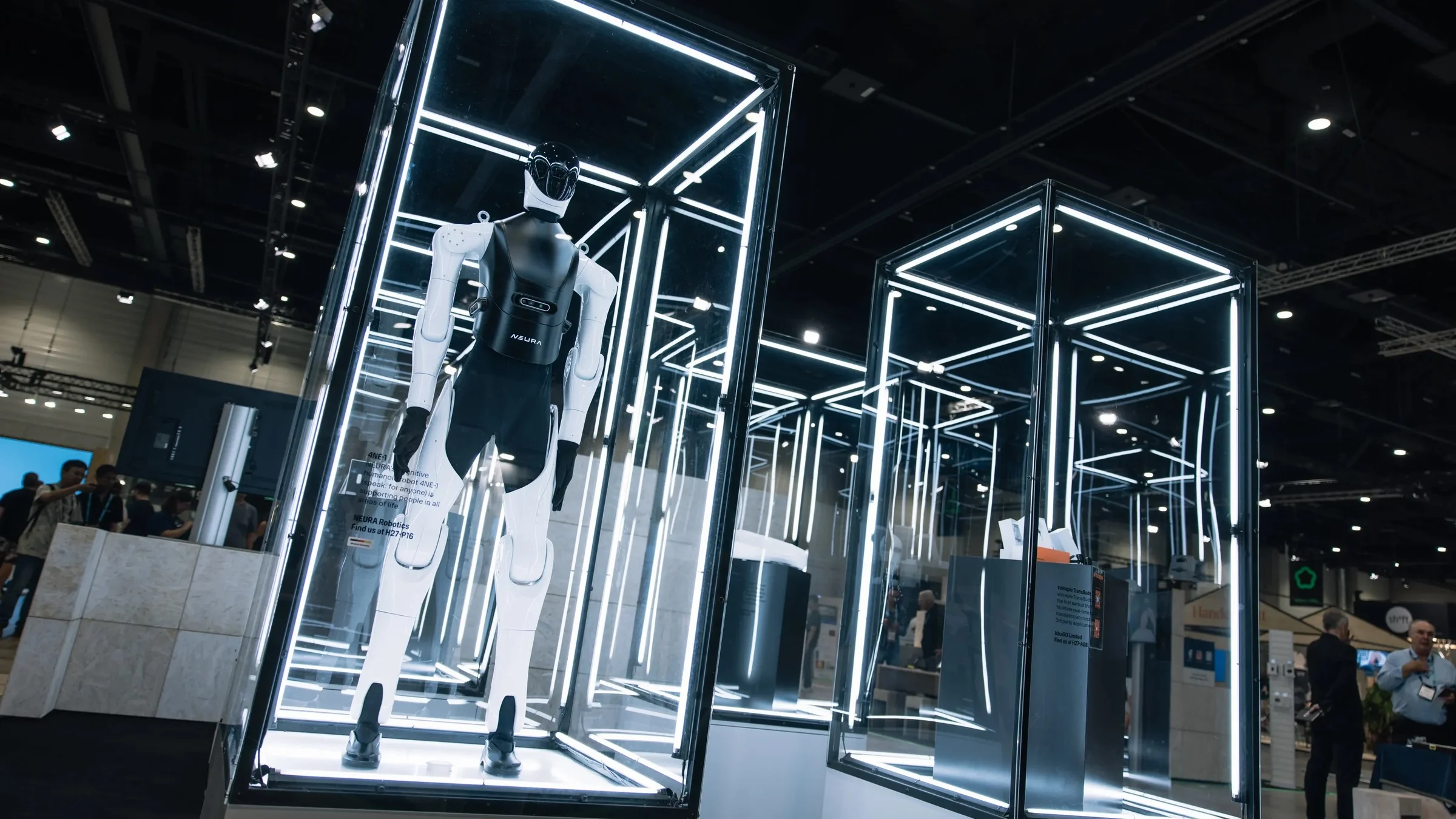
IFA 2026 is underway in Berlin, with household cleaning robots, an exceptionally thin laptop concept, a solar charging computer and a local AI home hub among the hardware drawing attention. The show runs September 4–8 and spans consumer electronics and appliances, with personal AI and household robotics featured in its program, according to IFA’s organizer.
The announcements highlighted in The Rundown’s September 4 newsletter point toward more automated chores, thinner computers and more processing inside the home. Their practical promise depends on how announced features translate into products people can buy and test.
Robots take on more of the cleaning routine
Dyson’s September 3 announcement introduced the R1 Nurovi Dry and R2 Nurovi Wash+Dry. The company says their dust and floor sensing adjusts cleaning behavior, while extending side sweepers help reach edges. The R2 adds triangular washing pads designed to reach corners and a dock that automatically washes and dries those pads. These features extend the cleaning workflow the machines can handle, though their effectiveness remains a Dyson claim.
Two different approaches to portable computing
Lenovo’s Project AeroBlade is a proof of concept with a 14-inch OLED display, a body under 10mm thick and a weight below 830g. Its Active Flow thermal system, developed with Frore Systems, replaces conventional fans with AirJet solid-state active cooling. Lenovo describes potential benefits for sustained performance, noise and dust intake, but its September 3 announcement provides no comparative test results establishing those gains.
Oukitel’s RG14-P explores mobility through solar charging. In its September 2 IFA announcement, the company lists 15W solar charging, a removable battery and a 1,000-nit touchscreen, positioning the rugged computer for demanding work away from mains power.
The RG14-P had already appeared at MWC. Oukitel’s earlier recap listed 10W solar charging and roughly six hours to reach 50% battery. The differing power ratings leave open whether the hardware changed and which charging conditions apply.
Anker puts AI processing inside the home
Anker says MindBase connects Anker and Matter-compatible devices, runs agents on a built-in AI Core compute card and offers expandable local storage up to 48TB. Home security is its first application. In its September 3 announcement, Anker said the MindBase Security Kit would launch later in 2026, with pricing closer to availability.
Why it matters
IFA’s breadth gives these announcements significance beyond any single device. Across computers, appliances and home systems, manufacturers are exploring how hardware can do more work automatically and bring more processing closer to the owner. AI and robotics have a prominent place in the show’s program, while the products illustrate specific ways that direction could affect daily routines.
For households, the immediate value of robotics could come from completing more steps within a familiar chore. Dyson’s automatic pad washing and drying could reduce the intervention needed between cleaning sessions. Buyers will still need to assess how often the machines require attention and how well they handle their floors. The announced functions make that promise concrete; their performance in homes remains to be established.
For people carrying a computer between locations, AeroBlade shows how cooling design could enable a thinner, lighter machine. The practical test is whether a production model can sustain useful performance within that small enclosure. Lenovo’s concept leaves that question open. Oukitel addresses another mobility concern: access to electricity. Its solar charging could help extend time away from an outlet, but the conflicting specifications and unresolved charging conditions make the size of that benefit uncertain.
MindBase offers a tangible example of the move toward less cloud dependence. Processing and storage inside the home could give owners more local control over household data and automation. That architecture also makes several purchasing questions important: which features require internet access, which devices work together and how long software support lasts. Anker’s announcement establishes the intended approach, while offline capabilities, privacy protections and the eventual price still need closer scrutiny.
Sources & further reading
- 01therundown.ai ↗
- 02IFA Berlin 2026 - Innovation For All ↗
- 03Introducing the new Dyson R1 Nurovi™ Dry and Dyson R2 Nurovi™ Wash+Dry robot vacuums ↗
- 04Lenovo Advances Hybrid AI for Business with New Think-Family Devices, Displays, and Security Solutions - Lenovo StoryHub ↗
- 05OUKITEL to Showcase Cross-Device AI and Next-Generation ↗
- 06Oukitel's Rugged Innovations Win Multiple “Best of MWC” Awards at MWC – Oukitel.Global ↗
- 07Anker Innovations Unifies Its Brands Under a Single Name: ↗
This story builds on reporting from The Rundown newsletter on September 4, 2026.