Google DeepMind launches think tank to prepare society for AGI
Google DeepMind’s new think tank expands Demis Hassabis’s push to prepare for AGI as Washington’s reported effort to create an AI oversight body stalls.
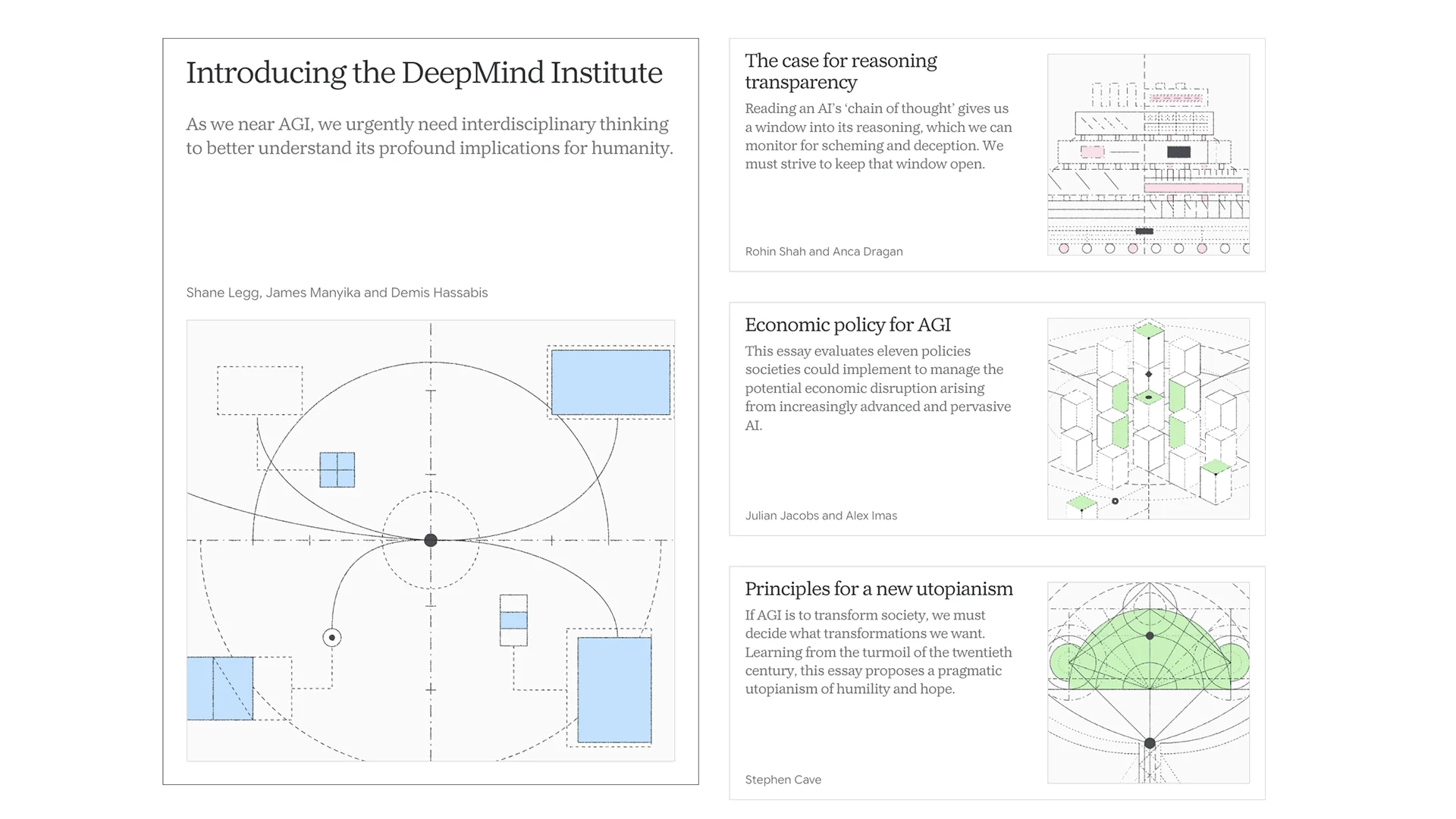
Google DeepMind launched the DeepMind Institute on September 16, 2026, creating a think tank within the company to explore how society should prepare for artificial general intelligence, or AGI. The launch, covered in The Rundown’s newsletter, gives Demis Hassabis’s push for AGI preparation a new publishing platform.
Hassabis, Shane Legg, and James Manyika direct the institute. Legg, DeepMind’s cofounder and Chief AGI Scientist, serves as managing editor. The platform welcomes outside researchers, and each essay carries a disclaimer separating its authors’ views from Google policy.
What the institute is publishing
The institute lists five pieces, including its introduction and a republication of Hassabis’s July framework. The other essays explore how to spot warning signs in AI reasoning, support workers through disruption, and imagine a better society with AGI.
The directors argue that AGI is close. They acknowledge that the technology still “lacks the consistency and creativity” needed for full AGI, but expect those gaps “to be closed soon.” That forecast supplies the urgency behind the institute’s work.
The July oversight proposal
Hassabis published his framework on July 14. He proposed a standards body initiated by the U.S. government, overseen federally, and funded largely by industry.
Labs would initially submit models voluntarily up to 30 days before release. Mandatory assessments for deployment in the U.S. could follow once the process proved effective. The body could also coordinate development slowdowns if necessary. Its scope would depend on model capabilities and include both open and closed models.
Why it matters
Hassabis’s July plan now looks timely. It laid out a way to coordinate oversight roughly two months before the institute opened. The institute extends that preparation into questions about the economy, safety, and the society AGI could create.
On September 16, WIRED reported that officials had explored a body along the lines Hassabis proposed, but work stalled after industry opponents lobbied Trump in August. Its account relies partly on unnamed sources, and the prospects for federal action remain uncertain.
DeepMind may have decided that preparation for AGI is unlikely to come from above. How much Washington’s stance influenced the institute’s creation remains unclear. The reported setback nevertheless gives its effort to prepare society added weight.
For workers and policymakers, one practical benefit could be having support plans ready before disruption deepens. Julian Jacobs and Alex Imas’s economic essay proposes tying responses to evidence in employment, wages, and labor’s share of the economy. They suggest unemployment insurance, earned income tax credits, and employer retraining for milder disruption. A negative income tax would address worsening displacement, with broader capital ownership as a backstop for structural changes in the labor market.
Designing those responses in advance could let governments prepare without having to settle on an AGI arrival date. The authors call for further empirical evaluation of their recommendations.
For AI buyers, Rohin Shah and Anca Dragan’s essay on reasoning transparency suggests questions to put to suppliers. Buyers could ask whether vendors test how well their models can be monitored and audit training rewards for incentives to hide warning signs. The authors warn that rewarding models for avoiding reasoning that looks suspicious can teach concealment. They also caution that readable reasoning alone cannot guarantee safety.
The institute’s publishing role can help turn those concerns into proposals that others can debate. Its directors also call for governments, the arts, and the humanities to take part. Putting worker support or an AI standards body into practice will require institutions with the power to fund programs and enforce rules.
Sources & further reading
- 01therundown.ai ↗
- 02Google, DeepMind launch institute to explore AGI ↗
- 03institute.deepmind.com ↗
- 04A Framework for Frontier AI and the Dawning of a New Age ↗
- 05Washington Won’t Be Regulating AI Anytime Soon | WIRED ↗
- 06Economic Policy for AGI — DeepMind Institute ↗
- 07The case for reasoning transparency — DeepMind Institute ↗
This story builds on reporting from The Rundown newsletter on September 17, 2026.