GMO unveils a humanoid ambulance to keep robots working
GMO’s humanoid ambulance carries tools, parts, and a replacement robot. Its service plan targets the emerging business of keeping these machines running.
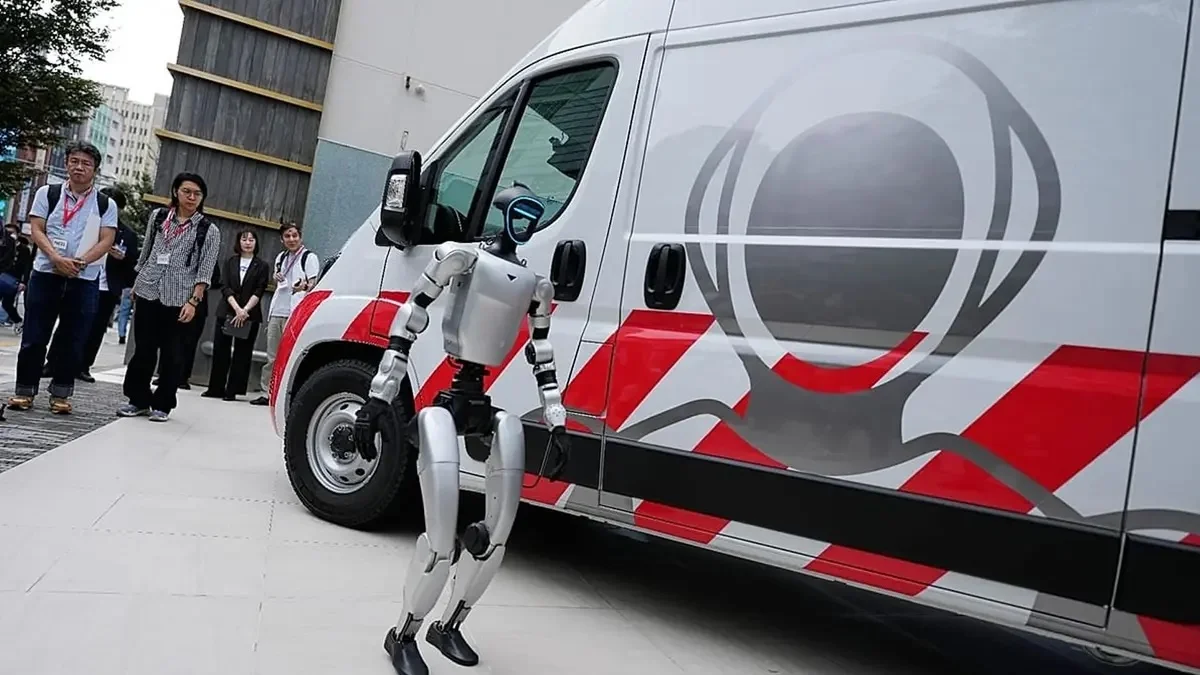
GMO Internet Group’s robotics arm has unveiled a mobile repair van for broken humanoids. The vehicle, featured in The Rundown’s robotics coverage, is designed to bring engineers, repair equipment, spare parts, and a replacement robot to machines that break down on the job.
GMO AI & Robotics, or GMO AIR, unveiled the GMO Humanoid Ambulance in Tokyo on September 8. The company says it is Japan’s first maintenance vehicle built specifically for humanoids, according to Euronews.
Repairs and a replacement
The spare humanoid is central to the plan. Engineers could leave a replacement at the customer’s site while taking the damaged machine to a repair base. GMO says the idea grew out of the disruption caused by sending broken robots away for repairs.
Euronews reported on September 11 that GMO had one vehicle at its Tokyo headquarters. The company said it could add more vehicles and repair bases if demand grows.
Why it matters
The bigger story is the emerging business of keeping these machines running. GMO’s June 19 Unitree announcement paired its authorized Japanese distribution agreement with implementation support, software development, maintenance, and operations. It also identified integration and safety checks as work needed alongside hardware sales.
That gives distributors a role beyond delivering a robot. They can help put it to work and keep it useful after the sale. For operators, the potential payoff from a repair service is less time lost when a machine fails.
A replacement could let a customer resume a task before the original unit returns from repair. But that depends on whether the replacement can perform the same work, how long setup and handover take, and whether engineers can reach the site promptly. Carrying a spare robot is only one step in restoring the customer’s work.
Business trials offer a place to test those recovery plans. In an April 30 announcement, GMO and JAL Ground Service outlined a Haneda Airport demonstration planned for May 2026 to 2028. The program would study humanoids for baggage and cargo handling and cabin cleaning, with staged checks on safety and operations. Buyers considering robots for such tasks should test repair arrangements and human backup alongside task performance.
The potential scale is substantial. In its May 2025 forecast, Morgan Stanley estimated that the broader humanoid economy could exceed $5 trillion by 2050, with about one billion humanoids in service. That total includes supply chains and repair, maintenance, and support networks. The bank gives no separate value for maintenance.
The bank expects adoption to stay relatively slow until the middle of the 2030s, then speed up. In a discussion of the forecast, analyst Adam Jonas emphasized that such projections explore possible outcomes and warned against false precision.
Technicians, parts, spare robots, and transport all add costs. Customers would need enough value from reduced downtime to justify paying for that capacity. Pricing and response guarantees remain unclear, leaving open how GMO can turn the proposed service into a business that pays for itself.
Sources & further reading
- 01therundown.ai ↗
- 02www.reutersconnect.com ↗
- 03euronews.com ↗
- 04GMO AI & Robotics Becomes an Authorized Distributor in Japan for Unitree Robotics, the World's No. 1 Humanoid Manufacturer - Providing a one-stop solution spanning humanoid robot sales, implementation support, and secure communications - | GMO AI & Robotics Corporation (GMO AIR) ↗
- 05Japan's First Demonstration Experiment for Utilizing Humanoid Robots at Airports Begins | GMO Internet Group, Inc. ↗
- 06Humanoid Robot Market Expected to Reach $5 Trillion by 2050 | Morgan Stanley ↗
- 07The Rise of The Humanoid Economy | Thoughts on the Market | Morgan Stanley ↗
This story builds on reporting from The Rundown newsletter on September 14, 2026.