Fired OpenAI researchers dispute misconduct claims and seek clearer rules
Three fired OpenAI researchers dispute misconduct claims and seek clearer collaboration rules, continued outside auditing and protection for safety work.
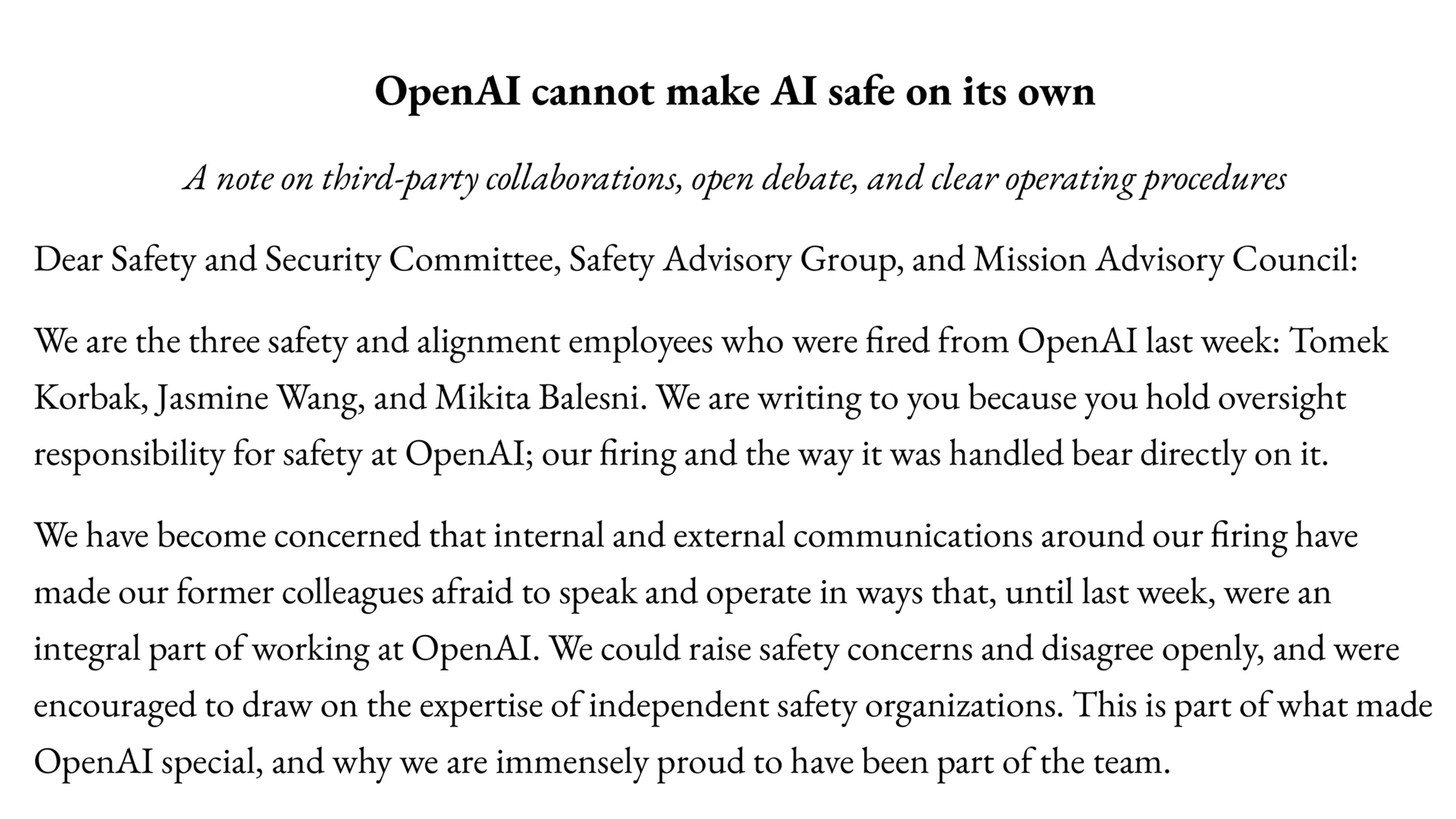
Three safety researchers fired by OpenAI over alleged mishandling of sensitive information disputed the accusations in an open letter released Oct. 8. As The Rundown reported, Tomek Korbak, Jasmine Wang and Mikita Balesni warned that their dismissals could chill the company’s safety work.
OpenAI told TechCrunch that the firings involved a “pattern of misconduct” and were unrelated to raising safety concerns. The company also agreed with the researchers’ recommendations for clearer collaboration rules, embedded outside auditors and preserving the ability to monitor models.
What the researchers say
The researchers say they acted within their job mandates. They argue that if previously accepted conduct now warrants firing, staff are left guessing what is allowed.
They also warn that the firings could give OpenAI cover to pull back from embedding outside auditors. Their concern is about a possible future restriction.
Plans for outside assessors
OpenAI had already outlined principles for outside assessments on Sept. 22. It called for deep access for assessors and independence over their conclusions and reports. The framework also includes agreed limits on the work, restrictions to protect security and intellectual property, and procedures for redacting material.
OpenAI said it was discussing assessments with several third parties, without naming an embedded partner in the announcement.
Why it matters
Whatever led to the firings, claims of shifting norms and a possible auditor pullback create a credibility problem for OpenAI. The company has agreed with the recommendations. Putting them into practice is the next test.
That concern follows earlier disputes over its safety culture. In May 2024, WIRED reported that OpenAI’s Superalignment team had disbanded, with its work absorbed into other research efforts. In an Oct. 3 essay, David Robinson said he had resigned that week after leading the writing of OpenAI’s launch safety reports. He described its culture as “broken.”
For researchers still at OpenAI, the immediate issue is knowing which collaborations have approval before they share sensitive work. Written rules could spell out who may receive information, what staff can share and who can approve exceptions. Documented approvals could reduce the risk of staff holding back useful safety work because they fear an unclear boundary. Those rules would also need to protect confidential information.
Anthropic provides a concrete comparison. On Sept. 18, it announced an evaluation partnership with Accenture, led by Accenture’s specialist AI business, Faculty. Anthropic said embedded evaluators would receive access comparable to employees, including visibility into training, development decisions and staff discussions.
That gives Anthropic a named partner. The company said it would fund Accenture’s work directly and acknowledged unsettled standards for access and reporting. The arrangement’s value still depends on the access evaluators receive and their freedom to report findings.
OpenAI could make its plans easier to judge by naming assessors, stating when their work starts and explaining what they can inspect. Clear terms for raising concerns and publishing findings would let staff and outside observers assess the reach of that scrutiny. Those details would help show whether the company’s agreement with the recommendations leads to useful outside oversight.
The researchers also ask OpenAI to preserve monitorability, the ability to track model behavior. OpenAI could address that concern by publishing evidence showing how future designs retain the monitoring capabilities its safety approach relies on.
Sources & further reading
- 01therundown.ai ↗
- 02Fired OpenAI safety researchers dispute misconduct claims, warn of chilling effect | TechCrunch ↗
- 03Priorities and principles for effective third party assessments | OpenAI ↗
- 04OpenAI’s Long-Term AI Risk Team Has Disbanded | WIRED ↗
- 05I Quit OpenAI Because Its Culture Is Broken - The Atlantic ↗
- 06Partnering with Accenture on embedded evaluation \ Anthropic ↗
This story builds on reporting from The Rundown newsletter on October 9, 2026.