ETH teaches a commercial robot hand to crawl and press keys
ETH Zurich taught a commercial robotic hand to crawl and press keys. The work points toward robots that could send individual parts into tight spaces.
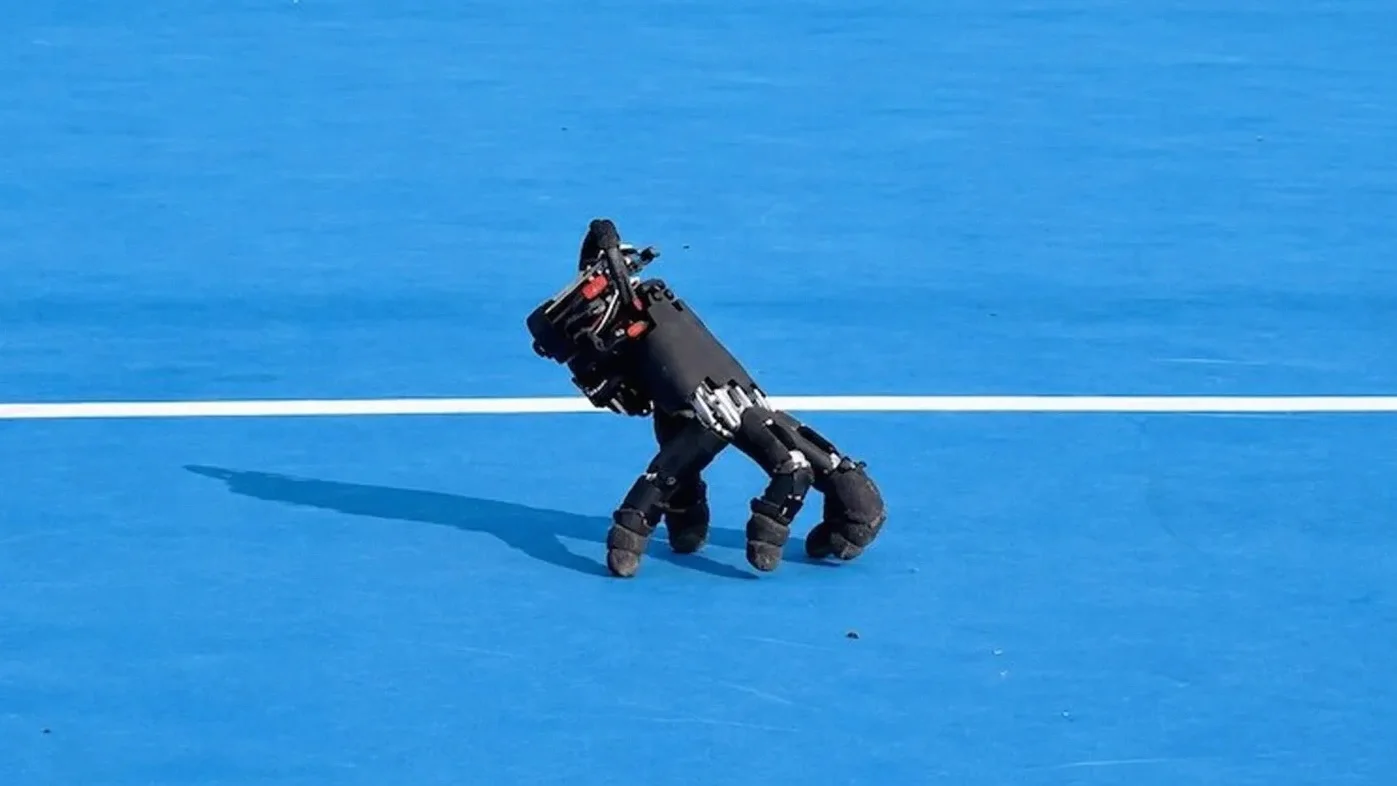
ETH Zurich researchers taught a commercial robotic hand to crawl on its five fingers, balance and press keyboard arrow keys without an arm attached.
The project, featured in The Rundown’s October 1 coverage, comes from ETH’s Soft Robotics Lab. In a September 15 preprint, the team describes adding a Raspberry Pi Zero 2 W, motion sensor and battery to a WUJI right hand. The resulting robot weighs 818 grams, about 1.8 pounds.
Teaching fingers to move
The WUJI hand has 20 powered joints. Researchers trained separate controllers through reinforcement learning in simulation to coordinate its uneven fingers and offset thumb. They set reference positions for each finger and let the controller learn the timing and motion, according to the project description.
During the terrain tests described in the paper, an operator steered the untethered hand by gamepad across 14 indoor and outdoor surfaces, including grass, gravel and metal grating. The researchers present these as qualitative demonstrations, leaving reliability over repeated trips uncertain.
For the keyboard test, an operator first aligned the hand with the keys, then issued commands for the four arrow keys. The hand made 29 correct presses from 32 commands in one sequence, without visual feedback or further realignment.
In a separate task, an overhead camera supplied feedback as the hand approached and pushed a cube toward targets.
Why it matters
EPFL’s detachable crawling hand, described in a January 20 paper, tackles mobility with symmetric, reversible fingers that can grasp from either side. Its team demonstrated detaching the hand from an arm, collecting objects, crawling back and docking again. ETH gives a commercial hand new abilities through learned control.
Together, the projects point toward robots that could send individual parts into spaces their whole bodies cannot reach. EPFL names confined spaces, including under furniture and behind shelves, as possible settings for object retrieval. For developers of industrial robots, a mobile hand could extend an arm’s reach and let a larger machine stay in place while the hand travels to an object.
For robot designers, the work offers two starting points. EPFL builds mobility into the hand’s shape and coordinates which fingers carry an object and which walk. That division brings a practical tradeoff, since both jobs draw on the hand’s available fingers. ETH explores what control can add to a commercial hand’s existing joints. Whether the method transfers well to other hand designs remains open.
A hand sent out from a larger robot would need to reach an object, handle it and return reliably. EPFL’s retrieval experiment included the return and docking steps, but depended on a camera, marker tracking and some grasp motions replayed from human demonstrations. ETH’s tests cover a hand operating separately from an arm, with gamepad steering, manual alignment or an overhead camera depending on the task. Both projects leave open how reliably a hand could complete a retrieval trip through a cluttered space.
Sources & further reading
- 01therundown.ai ↗
- 02[2609.17172] Fingers as Legs: Learning Self-Supported Locomotion and Manipulation with an Anthropomorphic Hand ↗
- 03Fingers as Legs — A hand with places to be. ↗
- 04Fingers as Legs: Learning Self-Supported Locomotion and Manipulation with an Anthropomorphic Hand ↗
- 05A detachable crawling robotic hand | Nature Communications ↗
- 06Reversible, detachable robotic hand redefines dexterity - EPFL ↗
This story builds on reporting from The Rundown newsletter on October 1, 2026.