EPFL’s threadlike motor could put movement into clothing
EPFL’s flexible FiberMotor could spread force through clothing, but strength, durability and power hardware remain hurdles for wearable robots.
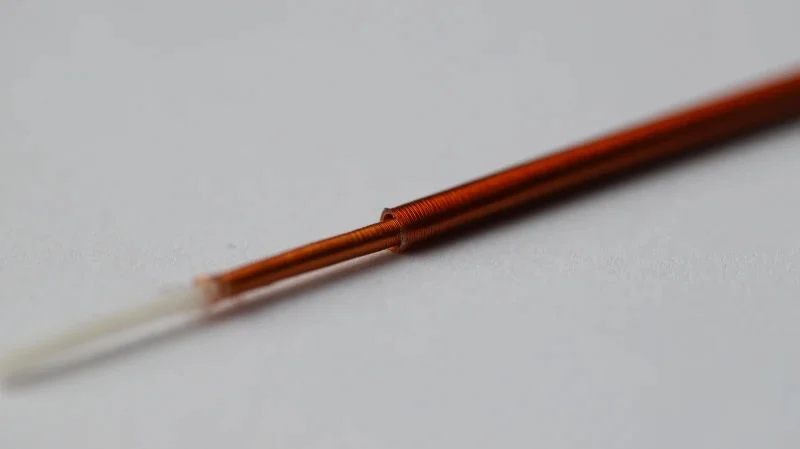
EPFL researchers have built a flexible, threadlike motor that could put movement directly into clothing. FiberMotor, featured in The Rundown, uses sliding fibers to produce motion in a form small enough to stitch into fabric.
EPFL’s Soft Transducers Laboratory announced the work on October 7. The motors measure roughly 1 to 3 millimeters across. Each nests one fiber inside another, with coiled electrodes creating electrostatic attraction that drives movement in either direction.
What the tests show
In tests reported by EPFL, four bundled motors lifted a chocolate bar weighing 46 grams and flexed a robotic finger. In separate tests, individual motors held stationary loads equivalent to 75 grams.
FiberMotor is also backdrivable. If someone pushes against its motion, the fibers can slide past each other.
The researchers stitched the motor into a prototype garment fitted around a knee. Their paper, first published September 27, identifies the knee as a mannequin’s. How much assistance a complete garment could give a person remains an open question.
Why it matters
FiberMotor could distribute force across clothing without the bulky gears and transmissions often used in wearable robotics. Thin motors sewn along fabric could let designers spread their pull around a joint. EPFL sees potential applications in soft exosuits, VR haptics and lightweight prosthetics.
For the wearer, a motor that yields could interfere less with their own movements. Researchers would still need to test the safety and comfort of a complete device.
The motors also need supporting hardware. The paper describes experiments powered by a high voltage supply connected to mains power, with speed tests run at 2 to 3 kilovolts. A wearable’s size and weight would have to account for its battery, voltage conversion, wiring and insulation. The paper leaves efficiency under load for future work, so the battery requirements of a finished garment remain uncertain.
Bending sets another limit. The researchers reported operation at a bend radius of 60 millimeters. Tighter curves stalled the tested configuration, while twisting and stretching were not characterized.
Reported lifetimes typically exceeded 1,000 cycles, and some samples ran continuously for 24 hours. Breakdown of the electrical insulation was the most common failure. How long the motors would last in clothing exposed to sweat, rubbing and washing remains uncertain.
Researcher Sylvain Schaller is pursuing commercialization through his startup, Elecsyor. EPFL says the team is working to make the motors stronger and more durable and to add feedback from the wearer.
An undated EPFL project listing, available on October 15, also calls for work at Elecsyor on manufacturing methods and automated testing. A garment with many motors would depend on parts that deliver consistent force and stand up to repeated movement.
Sources & further reading
This story builds on reporting from The Rundown newsletter on October 12, 2026.