Dyna’s Taku robot takes laundry from washer to shelf
Dyna’s Taku robot handles laundry from washer to shelf in a company demo, testing whether whole workflows can save labor with less human supervision.
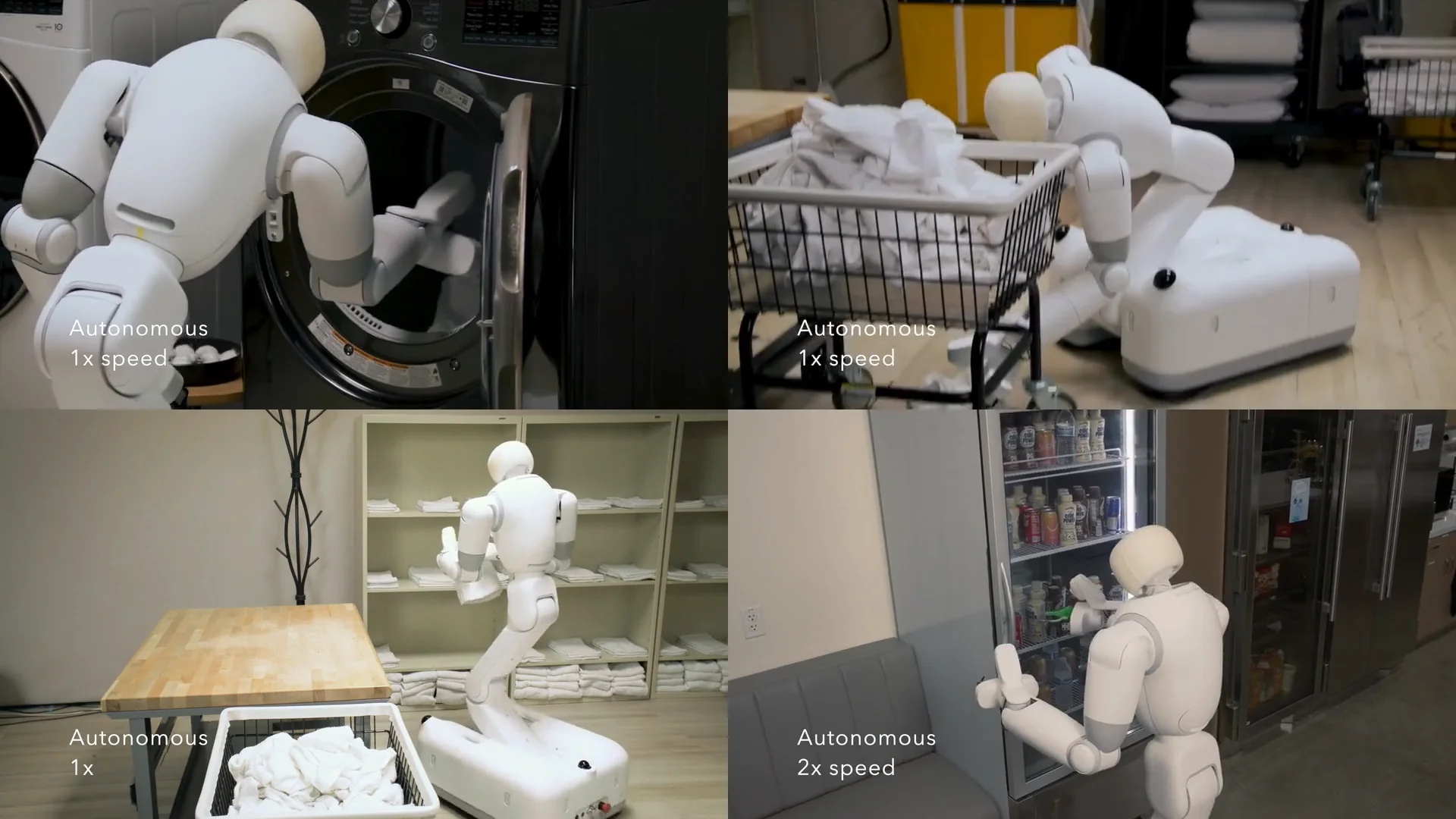
Dyna Robotics unveiled its Taku laundry robot on September 29. The wheeled machine has two arms and took laundry from washer to shelf in a demo lasting an hour. The Redwood City, California, startup describes the run as autonomous and uncut.
The demonstration, featured in The Rundown’s October 1 issue, reflects Dyna’s aim to automate whole workflows. For hotels and other workplaces, the commercial test is how much human work the robot can remove.
How Taku handles the laundry
Taku pairs two arms with four steerable wheels and a folding lower body. The design lets it reach deep into dryers and crouch to stock low shelves.
The company says Taku loads and starts washers and dryers, retrieves towels, folds them, sorts stacks by size and shelves them. It also retries failed grasps without calling for help.
Dyna-2.1, the system running Taku, tracks the room’s changing workload. According to Dyna’s technical report, it can interrupt folding to unload a finished dryer, then resume the earlier task. It stores its progress as text to keep track of unfinished work.
Why it matters
Laundry has become a robotics proving ground because fabric crumples, tangles and changes shape. Figure’s folding research describes towels with no fixed shape or single correct point to grasp. Physical Intelligence’s research also covers folding crumpled clothes and a mobile sequence that combines unloading a dryer, moving a hamper and folding.
Dyna’s goal is to make that skill useful across an entire job. The company says its earlier stationary robot folded napkins for 24 hours, while people replenished supplies and cleared stacks. For a hotel or another workplace, that attention can eat into the hours a robot saves. Completing the workflow could reduce those demands on staff.
In an August report on its earlier napkin system, Dyna said DYNA-2 reached 95 folds per hour, with 93% meeting the quality standard. It also described staff straightening disorganized stacks before improvements to placement. A folded item can still leave work for someone else, so both quality and handling affect the labor calculation.
Scheduling matters for the same reason. Pausing folding to clear a dryer could keep finished loads from waiting while another task continues. A useful trial would measure whether Taku keeps machines supplied and clears them promptly, alongside how many towels it folds.
Recovery has its own tradeoff. Dyna says it prioritizes mean time between interventions, the average time a robot runs before needing human help. Its release provides no measured Taku result for that metric. Retrying a grasp can avoid a call for help, but repeated attempts take time. Buyers would need to weigh that time and staff assistance against acceptable output per shift.
In a September 17 report, Figure described trials of towel folding, tidying and bed making in 30 homes its model had never seen. Taku’s potential customers would likewise need to test unfamiliar textiles, machine controls and layouts before assuming the system can work in their laundry rooms.
Dyna’s customer rollout remains unclear. Its launch release says Dyna-2.1 is being deployed, while its technical report calls customer sites the next milestone. The launch materials leave pricing, reliability across repeated runs, output over a commercial shift and measured labor savings unresolved.
Sources & further reading
- 01therundown.ai ↗
- 02Dyna-2.1: A Physical Agent for End-to-End Workflows — DYNA ↗
- 03DYNA Robotics Launches DYNA 2.1 Physical Agent, a Semi-humanoid Robot that Completes Full Workflows such as a Commercial Laundry Shift ↗
- 04Helix Learns to Fold Laundry ↗
- 05𝜋_0: A Vision-Language-Action Flow Model for General Robot Control ↗
- 06Not Just a Model, But a Product — DYNA ↗
- 07Helix 2.5: Zero-Shot 30-Home Generalization ↗
This story builds on reporting from The Rundown newsletter on October 1, 2026.