DoorDash builds its own drone around restaurant handoffs
DoorDash’s new delivery drone puts restaurant handoffs first. The commercial test is whether that approach cuts costs and makes delivery more dependable.
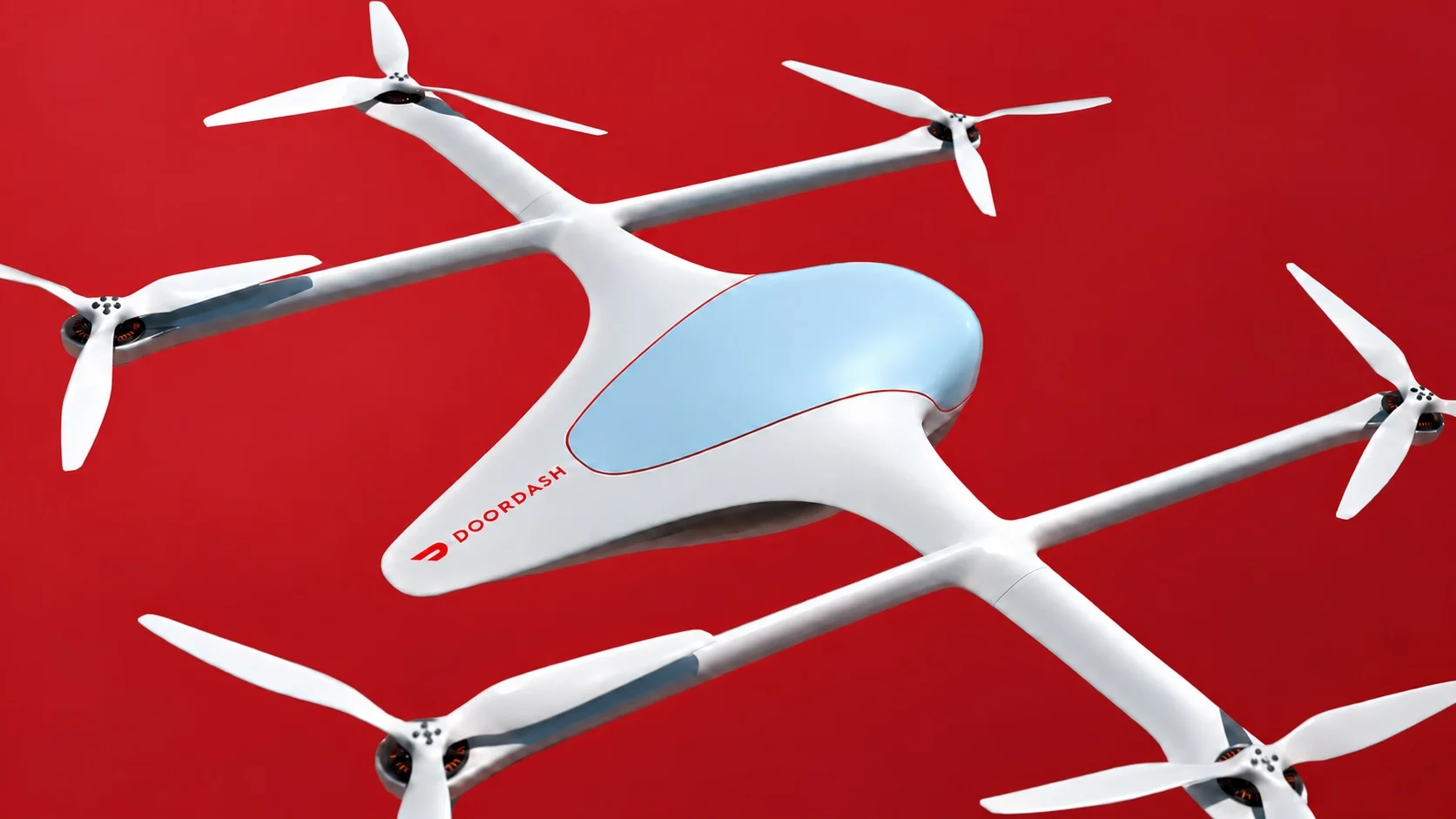
DoorDash unveiled its own aircraft for DoorDash Air on September 30, with six propellers that spin slowly and a winch for collecting and lowering food orders. The company designed loading systems, packaging and kitchen handoffs before the aircraft itself.
The reveal, covered in The Rundown, follows the July 29 announcement of DoorDash’s Air program. The September update described Northern California pilots with Chipotle, Popeyes and Momo N Curry as forthcoming.
What the early tests show
DoorDash estimates that about 80% of typical restaurant orders fit the drone’s size and weight limits. It also reports an average of under five minutes from restaurant to customer in early tests. Both figures draw on limited U.S. samples. Weather and range further restrict eligibility, and the company does not guarantee delivery times.
Its Autonomous Delivery Platform coordinates drones, couriers and ground robots. DoorDash says couriers are needed for larger orders and access to apartment buildings.
Why it matters
DoorDash’s earlier Dot experiment showed how much human work can sit inside an autonomous delivery. Business Insider reported in August that a worker in Mesa drove about two miles, collected and photographed an order, then loaded it into a Dot robot for roughly $5. DoorDash described the arrangement as a limited pilot to help busy merchants.
DoorDash’s drone strategy addresses those handoffs directly. Designing the packaging, loading process and aircraft together could make each transfer simpler and more consistent. The commercial test is whether that control cuts the total cost of a completed delivery and makes the service more dependable. The early results leave those questions open.
For restaurants and workers, the key issue is how much paid time each order requires. A useful comparison would count time spent bagging, checking and loading, plus any courier assistance or remote support. Shifting a task to restaurant staff could reduce one expense while adding work elsewhere. A system that works during a quiet afternoon may also need more help during a dinner rush.
For customers, drones could help with trips that take longer to assign. DoorDash said in July that more than 20% of its 2025 orders traveled three to five miles and took nearly 25% longer than shorter trips, largely because matching them with Dashers took longer. Routing suitable orders to drones could address that delay when size, distance and weather allow.
Reliability needs a broader test than the early average delivery time. A fair comparison would measure the same stages of delivery for similar orders and routes. It would include dispatch waits, unsuccessful attempts and the work needed after failed handoffs.
Wing reported in June that it had completed well over one million commercial deliveries while announcing more Walmart markets. That figure is cumulative. Uber and Zipline announced in August a target of one million drone deliveries daily by the end of 2029, with first deployments expected later in 2026. Neither announcement provides a direct comparison of DoorDash’s costs or reliability.
The full cost of owning more of the delivery process includes equipment, maintenance, packaging and staffing. The planned pilots need to show the cost per successful delivery, how often aircraft are available and how much human help each order needs.
Sources & further reading
- 01therundown.ai ↗
- 02DoorDash Air Unveils Drone Delivery System for Local Businesses | DoorDash ↗
- 03DoorDash Is Cleared for Takeoff: Launches DoorDash Air, Our In-House Drone Delivery Program | DoorDash ↗
- 04DoorDash Pays Workers to Load Dot Robots With Orders - Business Insider ↗
- 05Wing and Walmart name seven new markets for drone delivery service ↗
- 06Uber Technologies, Inc. - Uber and Zipline Partner to Bring Drone Delivery to Millions of Americans ↗
This story builds on reporting from The Rundown newsletter on October 1, 2026.