Caltech’s BrainBots deliver more chemo to mouse brains
Caltech’s BrainBots delivered more chemotherapy to mouse brains when activated by light. Other delivery methods have already reached human trials.
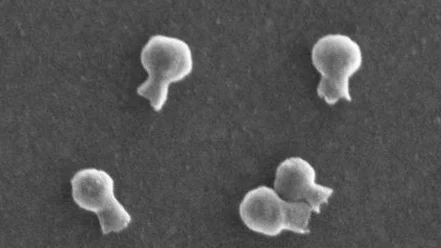
Caltech researchers announced on Nov. 25 that their BrainBots, tiny carriers activated by light, delivered about five times as much chemotherapy to mouse brain tissue as carriers without light activation.
The BrainBots findings featured in The Rundown add to a growing field of experimental systems for getting chemotherapy past the brain’s defenses.
How BrainBots work
Each carrier measures about 250 nanometers across. Light in the near infrared range heats it, opening a gate and triggering gas production that propels it. Attached DNA molecules help the carrier bind to cells that transport it across the blood-brain barrier.
The researchers reported 5.2 times as much doxorubicin, a chemotherapy drug, in brain tissue eight hours after dosing with activated BrainBots as with unactivated carriers. That figure measures drug accumulation at one point in time.
In mice with glioblastoma, a form of brain cancer, the researchers also reported slower tumor growth, longer survival and less toxicity elsewhere in the body compared with doxorubicin given without a carrier. The survival experiment had six mice per group.
The authors acknowledged that they could not quantify how far the carriers had traveled from individual blood vessels. Direct observation of the particles crossing the barrier remains future work.
Why it matters
For people with glioblastoma, the potential benefit is getting more chemotherapy to a tumor while limiting harm elsewhere in the body. BrainBots join several approaches at different stages of testing.
A June 2025 study of “Trojanbots” tested another design in mice with brain tumors. Researchers loaded nanobots carrying doxorubicin into neutrophils, immune cells drawn toward inflammatory signals. Their proposed mechanism has two stages. The cells carry the drug across the barrier, then release nanobots that draw on hydrogen peroxide in the tumor environment to move deeper into the tissue.
That design highlights a further hurdle for brain drug delivery. Researchers need to establish how much drug reaches different parts of a tumor, alongside measuring its concentration in brain tissue. BrainBots’ gaps in anatomical evidence make that question important.
Ultrasound and injected microbubbles have progressed further in testing. A phase 1 trial published in May 2023 tested an ultrasound device implanted in the skull, injected microbubbles and the chemotherapy drug paclitaxel in 17 people whose glioblastoma had returned. Investigators found higher paclitaxel concentrations in brain tissue exposed to ultrasound. The trial focused on safety and drug delivery. It did not establish whether the procedure helps patients live longer.
The trial also showed risks. Two patients developed encephalopathy, a disturbance of brain function, at the highest paclitaxel dose. Both recovered and continued treatment at lower doses.
The procedure adds practical demands for patients and clinicians. In the Northwestern protocol, surgeons implanted the device during tumor removal. Opening the barrier took about four minutes with patients awake, and the barrier largely closed again within 30 to 60 minutes. That short window makes the timing of chemotherapy infusion important.
For BrainBots, Caltech says light delivery needs further work before human studies. The carriers’ stability, how they break down and their safety over time also remain research priorities.
Sources & further reading
- 01therundown.ai ↗
- 02Tiny Robots Deliver Treatments to the Brain - www.caltech.edu ↗
- 03Photothermally gated nanorobots for active blood-brain barrier transcytosis and brain delivery ↗
- 04A self-directed Trojanbot-enzymatic nanobot in neutrobot for active target therapy of glioblastoma | Nature Communications ↗
- 05Repeated blood-brain barrier opening with an implantable ultrasound device for delivery of albumin-bound paclitaxel in patients with recurrent glioblastoma: a phase 1 trial - PubMed ↗
- 06Powerful chemotherapy drug reaches brain tumors using novel ultrasound technology - Northwestern Now ↗
This story builds on reporting from The Rundown newsletter on November 26, 2026.