Caltech’s ASTRA robot builds part of an antenna frame in orbit
Caltech’s ASTRA robot added a section to an antenna frame in orbit, a small test of how machines could build space structures too large to launch whole.
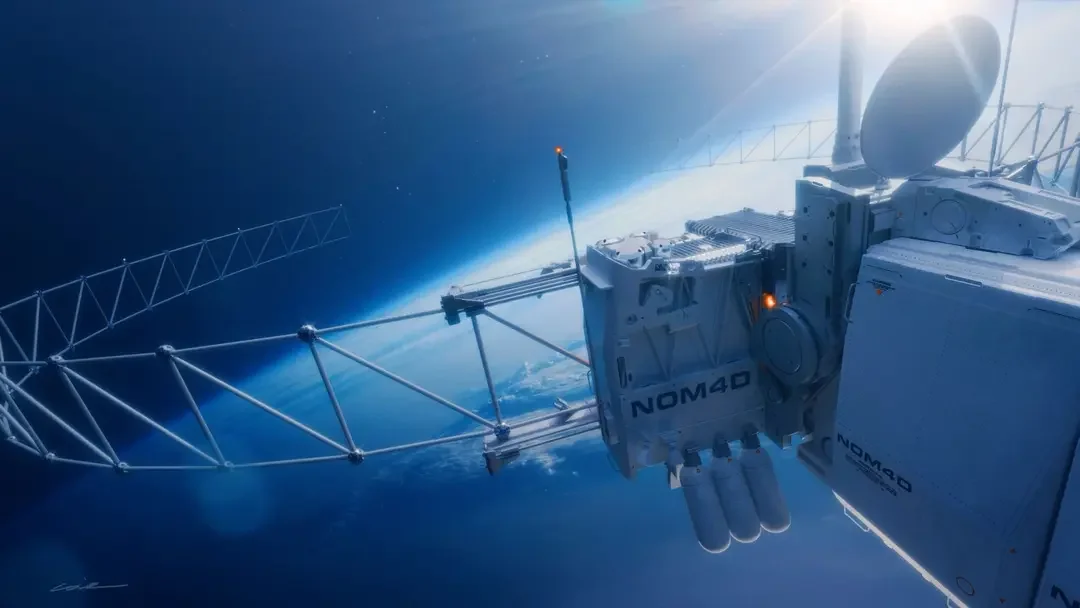
Caltech says its ASTRA robot has assembled one section of an antenna frame in low Earth orbit, adding to two sections built before launch. The project, featured in The Rundown’s November 12 edition, tests a way to build structures too large to launch whole.
In its November 5 announcement, Caltech said the robot carried out the assembly without astronauts. The planned reflector would have 11 sections and measure 1.4 meters. The team said finishing it before the planned December 2026 mission end looked unlikely.
How ASTRA builds in space
Funded by DARPA, ASTRA launched on March 30, 2026, aboard Momentus’ Vigoride 7 spacecraft. DARPA describes a mechanism that moves along three axes, joining lightweight composite rods with metal joints while deploying reflective material. Momentus supplies power, communications and imaging.
The assembly ran automatically, with engineers directing and troubleshooting from Earth. They sent commands, checked photos and tested fixes on a duplicate robot. Caltech describes seven or eight contact windows a day, each lasting about 15 minutes.
Caltech’s team called the result “the first time that a structure has been autonomously constructed in space.” That broad claim needs context. GITAI reported autonomous assembly of structures and panels inside the International Space Station in October 2021. Astronauts had installed its S1 robot before those tasks began.
Why it matters
Robots that build reliably in orbit could help assemble giant telescopes that see deeper into the universe, vast communications antennas and solar power stations above Earth. Rockets would deliver the parts. Machines would build infrastructure too large to launch whole.
For the engineers designing those missions, the change begins with how they pack the hardware. In DARPA’s concept, rockets carry building materials and robots construct sections where the structure will operate. That could give designers more freedom to shape a large, light structure around its job in space, with fewer constraints from folding an entire connected structure for launch.
The tradeoff is the effort needed to keep construction going in orbit. ASTRA’s ground troubleshooting shows the support a small build can require. Scaling up would demand repeatable assembly and ways to recover from faults without a growing burden on operators. The pace and cost of a much larger build remain open questions.
Those projects would also need to prove that their assembled structures work as intended. Telescope imaging, antenna performance and delivered electrical power would each require tests beyond ASTRA’s demonstration of joining parts and deploying reflective material.
Solar power developers also have other ways to build. A 2025 Caltech study proposes folded modules that deploy in space. Its authors chose that approach to avoid complex and costly assembly in orbit. Robotic construction could suit some future stations, while other designs could favor modules that unfold. Which approach proves practical and economical for large solar stations remains open.
Sources & further reading
- 01therundown.ai ↗
- 02Caltech Robotic Space Demo Successfully Builds in Space - www.caltech.edu ↗
- 03NOM4D program demonstrates automated in-space assembly | DARPA ↗
- 04Space robotics start-up GITAI completes successful technology demonstration inside the ISS | GITAI ↗
- 05Space solar power generation: A viable system proposal and technoeconomic analysis ↗
This story builds on reporting from The Rundown newsletter on November 12, 2026.