Atlas’s $499 brain wearable puts everyday EEG tracking to the test
Atlas’s $499 EEG wearable promises daily focus and stress insights. Its potential depends on reliable measurements and how well its scores reflect mental states.
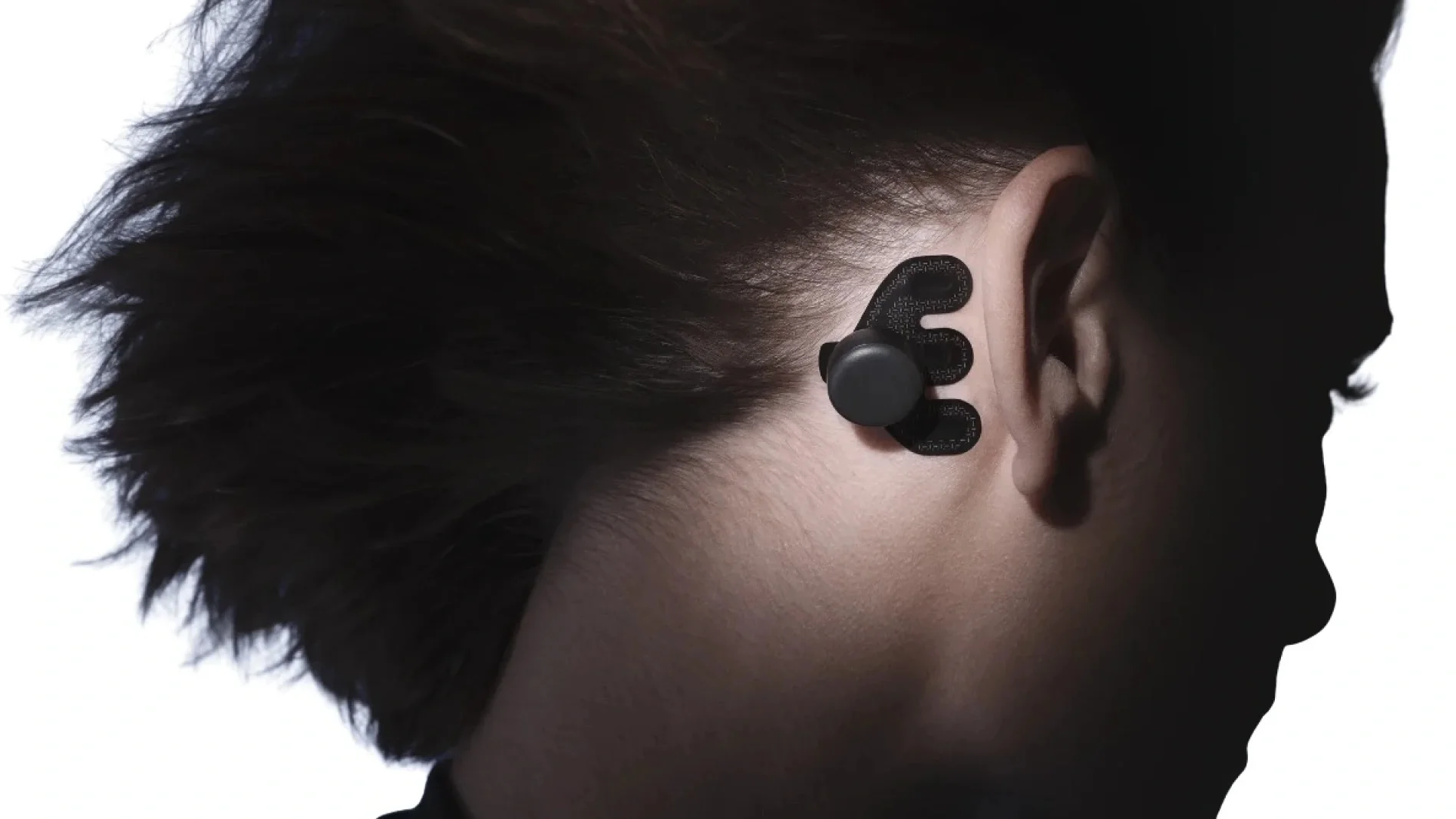
Atlas has opened preorders for a $499 wearable designed to track focus, stress and mental fatigue throughout the day. As The Rundown reported in its September 8 issue, the San Francisco startup is trying to extend continuous consumer tracking from bodily signals to brain activity.
The promise depends on two things holding up in everyday life. Atlas needs to capture usable brain signals while people move, and its software needs to interpret those signals accurately enough to offer useful guidance.
What Atlas is offering
Atlas 1.0 sits behind the ear and combines EEG with motion, skin conductance and voice vibration sensors. In its September 1 announcement, Atlas described three outputs called “Presence,” “Stress” and “Energy Burn.” Its app connects the resulting estimates with context such as sleep, exercise and calendar activity to suggest what may help or hinder focus.
Atlas says it trained its algorithms on more than 500,000 recordings and identifies capturing usable EEG during movement as its central advance. Those are company claims. The announcement does not provide reproducible validation showing how accurately its three scores describe people’s mental states across everyday activities.
The Pioneer Edition costs $499 and requires a $29.99 monthly membership covering sensor and adhesive replenishment, iOS app access and insights. Atlas also says it has raised $24 million. New Atlas reported on September 7 that deliveries were planned for the first quarter of 2027, with three membership months included.
There is an availability update as of September 9. The Atlas shop displays “Sold out,” although the page does not establish when that status changed. It still lists the planned first-quarter shipping window. A compatible iOS device is required.
Why it matters
Wearables have largely focused on heart rate, sleep and movement. Atlas is attempting to add continuous brain tracking to that picture. If its measurements hold up outside controlled settings, consumers could gain another way to examine how their routines relate to focus, stress and fatigue.
The immediate appeal is personal comparison. Someone could look for recurring changes around calendar events, exercise or different sleep patterns. Such associations could help them decide which routines to examine more closely. A score rising around a meeting, however, would not establish that the meeting caused stress. Interpreting a pattern still requires context.
Atlas acknowledges some of that complexity. Its FAQ available September 9 describes the scores as interpretations and cautions against assuming that a higher score is universally better. That qualification matters because a simple number can appear more definitive than the underlying measurement warrants. The same FAQ limits the consumer algorithms to daytime use, so the daily tracking pitch should be understood within that scope.
The central technical question is how well a recorded signal supports a judgment about someone’s mental state. Capturing EEG during movement is one challenge. Reliably interpreting focus, stress or fatigue across different people and activities requires additional validation. Atlas’s public announcement leaves uncertainty about how those scores were tested and what EEG contributes beyond its other sensors.
There is scientific precedent for compact EEG sensing, with meaningful accuracy tradeoffs. A 2024 study of the IDUN Guardian, a different device, found that an EEG headset worn in the ear could classify cognitive workload above chance. On a task distinguishing two workload levels, its accuracy was 68.4%, compared with 92.9% for conventional EEG. Those results support the possibility of convenient cognitive sensing while illustrating why performance needs careful testing. They do not establish Atlas’s accuracy.
The potential extends beyond a dashboard. Atlas’s launch offering includes 12 months of API and MCP access for software integrations. If the signals prove reliable, developers could explore applications such as adjusting notification timing around estimated workload. That remains a possible application, with benefits still to be demonstrated.
For buyers, this also means an ongoing payment commitment and a judgment about whether the insights justify it. Atlas presents the device as a wellness product and says it is not intended to diagnose or treat medical conditions. Its strongest potential lies in helping people identify useful personal patterns. Whether its three scores can do that consistently, and whether acting on them improves daily life, remains unresolved.
Sources & further reading
This story builds on reporting from The Rundown newsletter on September 8, 2026.