Anthropic sets up a biology lab for Claude’s experiments
Anthropic’s Bay Area biology lab adds a place to test Claude’s ideas, alongside tools for controlling instruments and speeding up molecular models.
Anthropic has confirmed it is operating a Bay Area lab for physical biology experiments with Claude, TechCrunch reported on September 18. The company says drug discovery is not the facility’s specific purpose.
The development, covered in The Rundown, came a day after Anthropic published research on speeding up biology models with Claude. It also follows the company’s August launch of an interface that connects AI agents to scientific instruments.
Tools for faster models and lab instruments
Anthropic introduced the Model Hardware Standard on August 27 as a research preview. It connects agents to programmable instruments, including microscopes, liquid handlers, and robotic arms. The standard makes a device’s operations and safety limits available to the agent. It can also support models besides Claude.
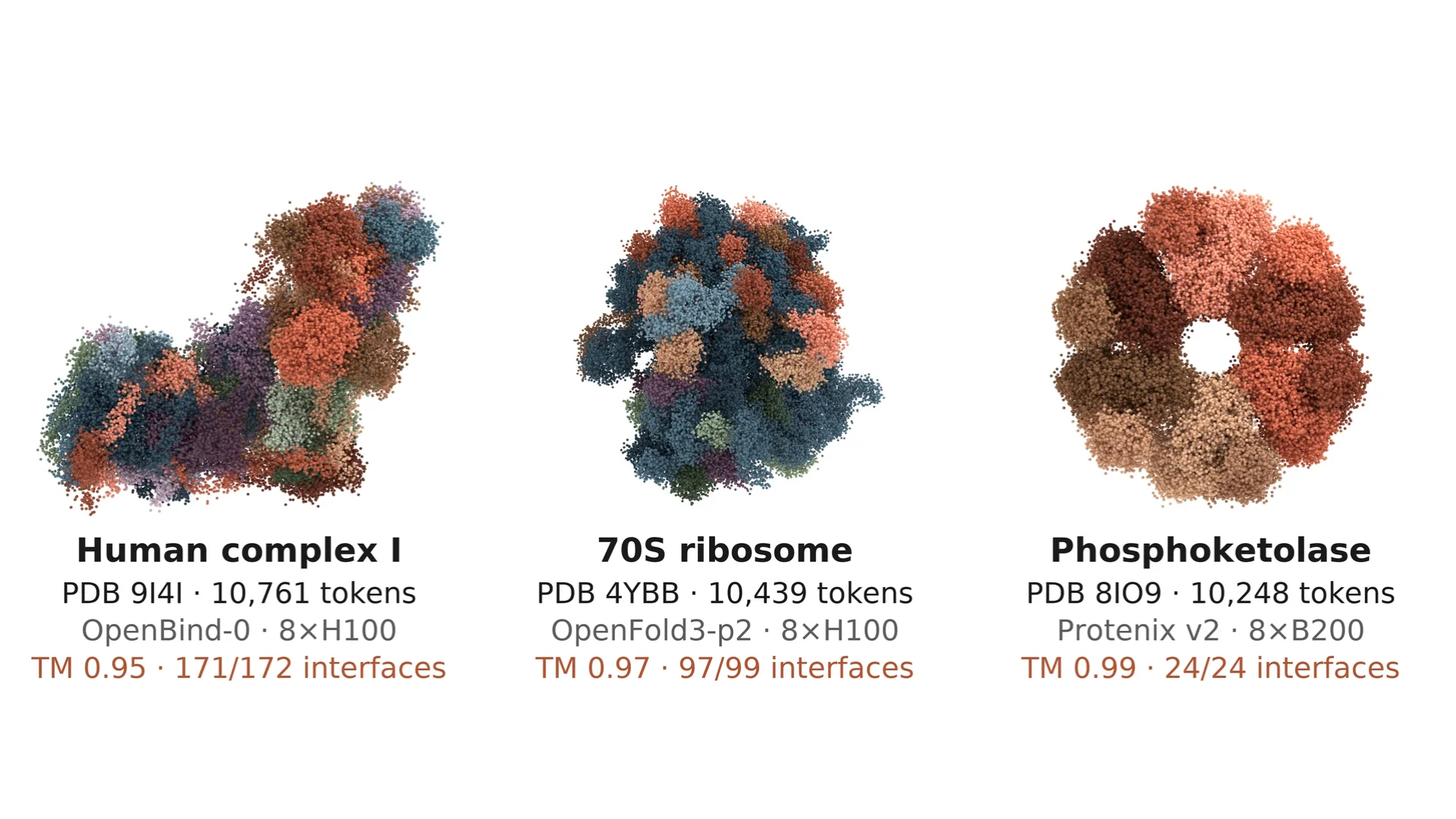
On September 17, Anthropic reported optimizing more than 30 biomolecular models in under four weeks, with two staff members supervising Claude’s work. The company says engineering teams can spend weeks optimizing one model. It released the resulting code on GitHub.
Anthropic reports an average speedup of about 4× when small numerical differences are allowed. Its comparison for structure prediction showed roughly 1.6× faster performance with identical outputs.
In a separate protein design test, Anthropic says about $150 in GPU computing and AI usage yielded predicted binding scores comparable to earlier campaigns allowed up to $10,000 per target.
Why it matters
The promise is a tighter cycle between Claude’s ideas and the experiments that test them. Dario Amodei has spoken of “early glimmers” in biology. A capable model, a way to control instruments, and a physical lab give Anthropic the ingredients to pursue that ambition. Claude could propose an experiment, direct the equipment, interpret the measurements, and revise its next attempt.
Anthropic’s MHS university case study identifies handoffs between research stages as an obstacle to automating the full cycle. Connecting those stages could reduce waiting between a proposed experiment and the results that shape the next one.
For biology teams, cheaper modeling could let them compare more candidate proteins within a fixed budget. The released code gives outside researchers a way to test the reported gains in their own work. They would need to check whether the faster calculations preserve enough accuracy for their experiments. Producing and testing proteins bring separate costs, and Anthropic says lab validation still takes weeks.
Physical measurements can also expose failed predictions. In its August 18 protein design research, Anthropic reported designs that bound to 14 of 15 tested targets. External evaluators Adaptyv Bio and Twist Bioscience made and tested the proteins. For one difficult target, none of 90 designs produced a confirmed binder. Anthropic said more tests were needed to confirm hit rates and binding strengths. A useful experimental cycle would feed those failures into the next round of designs.
How fully Anthropic has connected Claude, MHS, and its own lab remains unclear. The MHS preview also shows why human involvement still matters. In a pilot with QuEra, Claude could not troubleshoot physical hardware failures and sometimes paused overnight for human confirmation.
Sources & further reading
- 01therundown.ai ↗
- 02Anthropic is operating a lab that conducts biology experiments | TechCrunch ↗
- 03Previewing the Model Hardware Standard \ Anthropic ↗
- 04How Claude is uplifting biomolecular modeling \ Anthropic ↗
- 05GitHub - anthropics/uplifting-biomolecular-modeling · GitHub ↗
- 06Dario Amodei says people worry companies or governments look for a 'new way to screw them over' | Fortune ↗
- 07Claude accelerates protein design and analytical chemistry \ Anthropic ↗
This story builds on reporting from The Rundown newsletter on September 21, 2026.