Amazon faces global labor campaign after Canadian union contract
Unions plan Amazon strikes and protests in more than 20 countries as a Canadian contract tests their power over pay, safety and workplace monitoring.
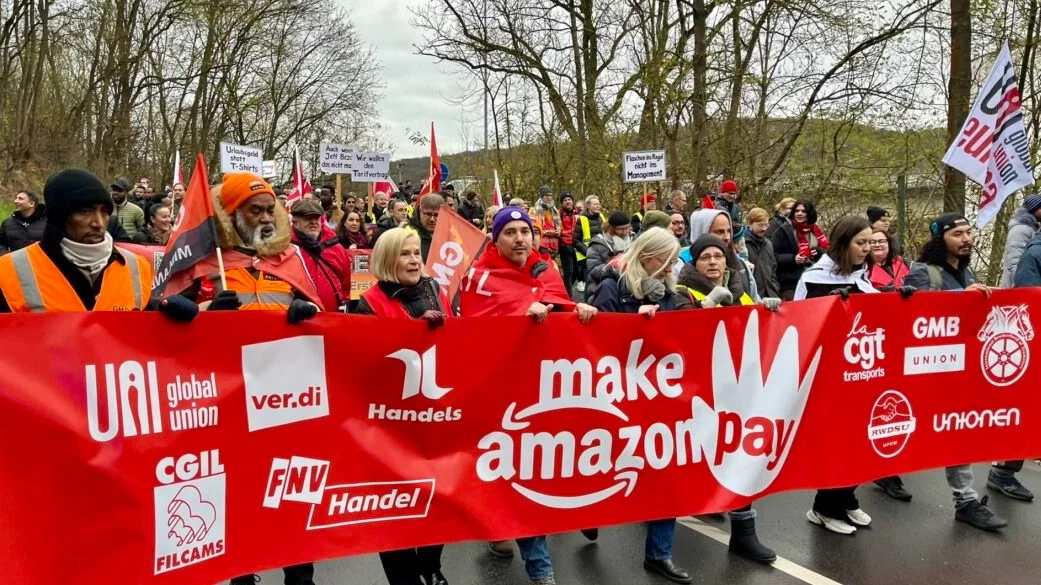
Unions have scheduled strikes and protests against Amazon in more than 20 countries for November 27 through 30, as The Rundown reported. The campaign follows a Canadian arbitration award that gave workers at one warehouse Amazon’s first union contract in North America.
UNI Global Union and Progressive International are coordinating the seventh Make Amazon Pay campaign. The Teamsters have planned demonstrations in Los Angeles and Chicago, Engadget reported. Their demands include safer workplaces, better pay and union recognition.
Pay, safety and monitoring
In Germany, Ver.di called strikes at 11 locations, seeking recognition of collective agreements for the retail sector and an agreement on healthy working conditions. The union says pay often falls short of living costs and accuses Amazon of digitally monitoring about 40,000 employees.
Amazon denied the digital tracking claim and described its technology to dpa as an inventory management system. It also cited annual wage increases and an average starting wage of €16.66 an hour.
The Teamsters’ Chicago rally is scheduled for November 30 at 9 a.m. CST. Its demands include passage of a proposed Delivery Protection Act, which the union says would require facility licensing and direct employment of delivery workers.
A binding contract in Canada
On November 13, an independent arbitrator imposed a binding agreement covering about 800 workers at Amazon’s YVR2 warehouse in Delta, British Columbia. Unifor says the terms include hourly rates reaching C$29 by the agreement’s end, up to 18 weeks of severance and an extra week of vacation for employees with ten years of service.
Amazon confirms the agreement covers only YVR2 and runs for three years. The company disputes the process, saying employees did not ratify the agreement and pointing to a pending effort to end Unifor’s bargaining status. It plans further legal challenges.
Amazon also argues that many terms resemble its existing provisions and that union dues could reduce workers’ net pay. The overall change in compensation remains unclear.
Why it matters
Amazon’s latest labor fight tests whether workers can gain more say over a logistics operation built around technology. For the workers covered in Delta, that means wages and benefits backed by a binding agreement. The award’s value will depend on its terms taking effect and workers’ net gains after dues.
Winning recognition can still leave workers years away from an agreement. Employees at Amazon’s JFK8 warehouse voted to unionize in 2022 and still lacked a contract when AP reported on the Canadian award. The Delta contract came through arbitration before the holiday campaign, giving organizers a concrete example of what binding commitments can look like.
In Germany, Ver.di’s demand for a health agreement puts control over working conditions on the bargaining agenda. A useful test for future deals is whether workers can negotiate work pace or break rules and challenge decisions based on their data. Those rights would give employees a practical say over daily work.
Work stoppages can interrupt operations, and rallies can draw public and political attention to workers’ demands. The campaign’s effect will depend on participation, the shifts affected and any delivery backlogs. Firm bargaining commitments would show whether that pressure gives workers more influence.
Chicago’s proposed direct employment requirement adds a route through local law that could change who bears responsibility for delivery workers. Its passage and effects on working conditions remain uncertain. As of November 29, the wider campaign’s impact on deliveries and Amazon’s bargaining position also remains unclear.
Sources & further reading
- 01therundown.ai ↗
- 02Amazon Workers Around The World Plan Strikes And Protests On Black Friday And Cyber Monday ↗
- 03Amazon workers to go on strike in Germany on Black Friday | dpa international ↗
- 04AMAZON TEAMSTERS RALLY ON CYBER MONDAY TO DEMAND PASSAGE OF CHICAGO DELIVERY PROTECTION ACT ↗
- 05Amazon workers in Delta win first union contract in North America | Unifor ↗
- 06Amazon’s Delta, British Columbia, labor update: ensuring employees are heard ↗
- 07Amazon workers in Canadian warehouse now covered by company’s first North American union contract | AP News ↗
This story builds on reporting from The Rundown newsletter on November 27, 2026.