AI anxiety crosses party lines as data centers become a midterm issue
AI anxiety is reaching the campaign trail through data centers, while polling suggests greater adoption offers no guarantee of public or political trust.
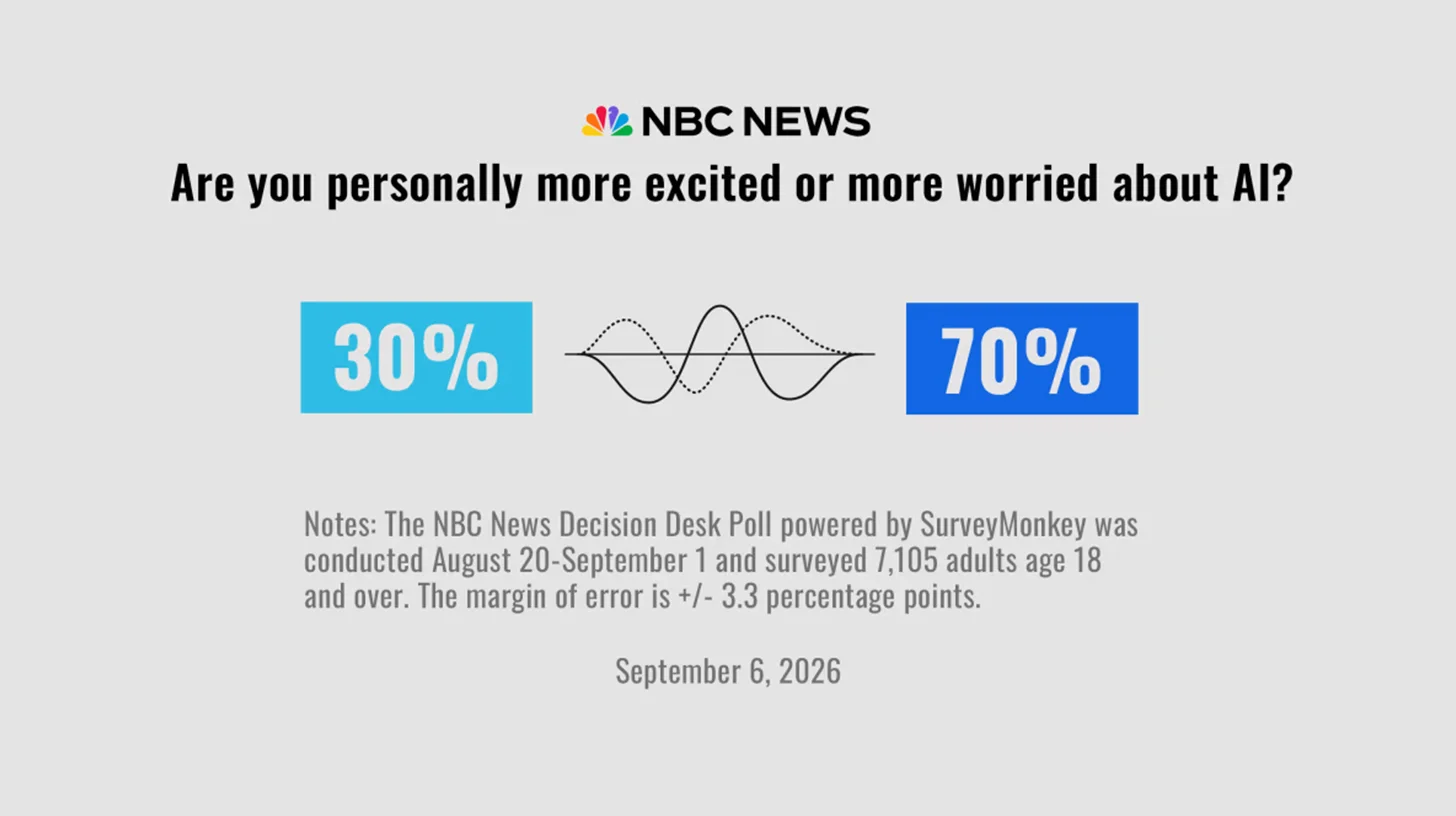
A new NBC News poll points to widespread worry about AI across both major parties, according to The Rundown’s September 8 newsletter. The issue reported that concern coexists with growing adoption, opposition to nearby data centers, and doubts about either party’s ability to handle AI policy.
That combination puts a difficult problem in front of the industry heading into the midterms. People can find AI useful while questioning the costs of its expansion. Data centers give those concerns a physical address, and campaigns are already making them part of their economic message.
Adoption and acceptance can diverge
Separate polling illustrates how comfort with AI can coexist with anxiety. In an August 19 analysis, Navigator Research reported that its December 2025 national survey found 70% concerned about increased AI usage, while 49% used AI at least weekly and 54% felt comfortable using it.
Those figures describe different attitudes within the same survey. Trying an AI tool, or even feeling comfortable with it, leaves room for concern about its broader effects. The survey offers a snapshot of that tension; it cannot establish whether national sentiment has deteriorated since then.
The same Navigator survey found that 34% trusted neither party to tackle AI. That gives the political debate another dimension. Concern about the technology can coexist with doubt about the people offering to manage it.
Infrastructure brings the debate home
Microsoft has explicitly acknowledged the challenge of winning community acceptance. In a January 13 announcement, vice chair and president Brad Smith argued that residents need to believe the benefits of AI infrastructure outweigh its costs.
Microsoft announced commitments to cover electricity costs associated with its infrastructure, minimize and replenish water consumption, create local jobs, and contribute to local services. These are company commitments whose value to residents depends on delivery.
The subjects of those promises help explain the political exposure. Electricity bills, water resources, jobs, and public services give communities concrete terms for judging a project, even when residents have little interest in the AI products it supports.
Why it matters
Microsoft’s acknowledgment shows that the public acceptance problem has reached senior industry leadership. Its response also suggests why better AI products alone may be insufficient to resolve it. A useful tool can earn a customer’s approval while the infrastructure behind it still faces questions about who pays and who benefits.
For residents near a proposed data center, those questions can shape how they judge AI expansion. Microsoft’s announced commitments offer specific standards against which communities could assess development. Residents can ask how electricity costs will be allocated, how water commitments will be measured, and which local benefits will materialize. Acceptance may depend on whether those answers hold up as projects proceed.
That creates a practical tradeoff for developers and public officials. Infrastructure investment can come with promises of jobs and contributions to local services, alongside concerns about electricity and water. Winning support may require enforceable arrangements and visible benefits. An announcement by itself leaves implementation questions open.
Campaigns can turn those questions into a familiar argument about household costs and political responsibility. In an August 22 campaign update, Sherrod Brown’s campaign said it had aired television ads attacking Jon Husted’s support for data centers, connecting the issue to tax arrangements and utility bills. The post documents an active campaign strategy. Its allegations about responsibility for higher bills remain campaign claims.
The other question is whether either party has earned the confidence to manage AI. Navigator’s finding that 34% trusted neither party suggests candidates cannot assume that criticizing an unpopular project will earn broader trust. They may need to explain which safeguards they would require, who would enforce them, and how communities would share in the benefits.
The electoral effect remains uncertain. These findings do not establish whether AI concerns will change turnout or vote choice. With data centers already appearing in campaign advertising, candidates face pressure to turn public anxiety into concrete proposals while earning confidence in their ability to deliver them.
Sources & further reading
This story builds on reporting from The Rundown newsletter on September 8, 2026.