Agilink teaches a robot hand the basics of embroidery
Agilink trains a robot hand to separate silk and stitch. Its embroidery demo shows the challenge of turning fine finger control into reliable work.
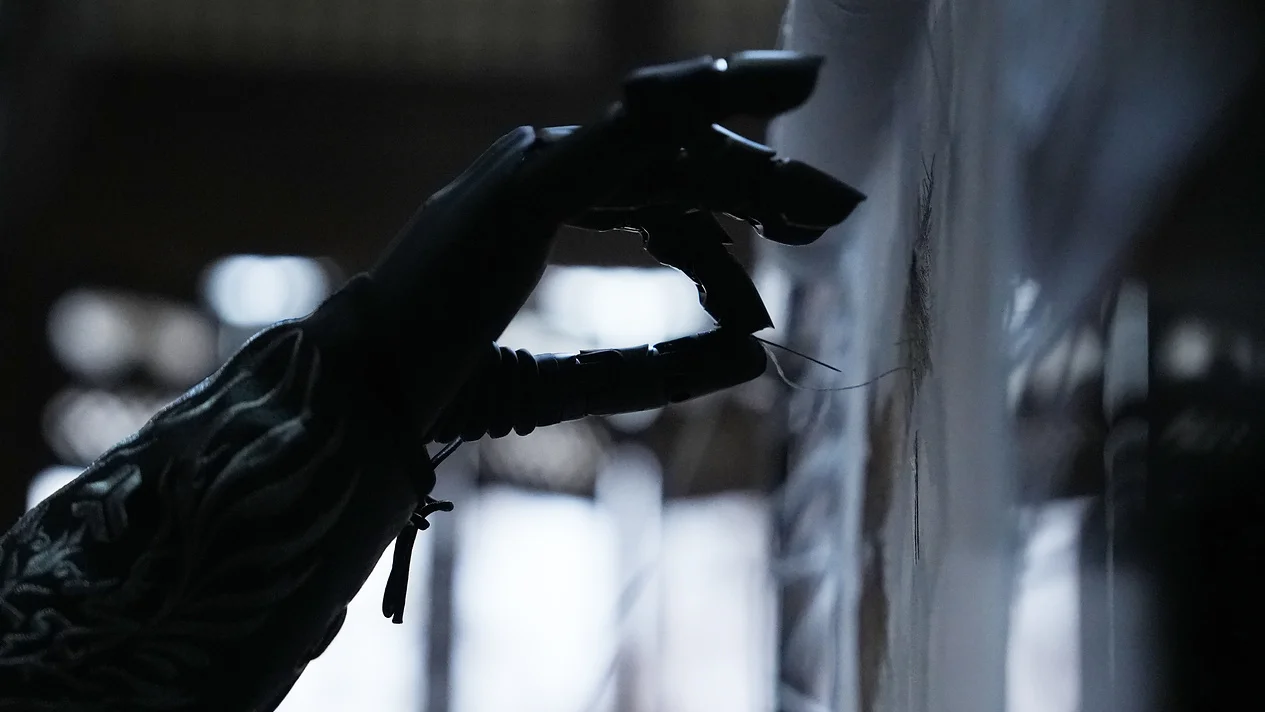
Agilink says its OmniHand 3 Ultra can split silk thread, thread a needle, stretch fabric on a hoop and stitch after training with Suzhou embroidery master Fu Xianghong. The AgiBot spinout announced the demonstration on September 30.
In the demonstration, featured in The Rundown on October 8, one finger separates silk strands while the others hold tension. The fingertips stay in contact as the thread twists.
How the hand learned
Agilink says the hand has 21 active degrees of freedom, or independently controlled movements, and relies on direct drive throughout. Sensors at the fingertips read how the contact surface changes shape, giving the system feedback as it works.
Agilink’s training account describes collecting data while human operators controlled the hand remotely, then refining its behavior through reinforcement learning. The company says the hand independently completed a continuous sequence of twisting and picking up thread, even when the thread landed in different positions. Its claim of independent operation applies to that maneuver.
Agilink says it spun out of AgiBot in January 2026, shipped more than 15,000 dexterous hands by its September 30 announcement and passed a $1 billion valuation in June.
As of October 12, its homepage lists more than 20,000 products shipped. The site does not say when it reached that total or whether it counts the same kinds of products as September’s hand total.
Why it matters
Robot makers are taking different routes toward useful hands. LinkerBot describes its L30 family as driven by tendons and built to mimic human motion. It also says more degrees of freedom and more natural movement do not automatically improve results in practice.
Boston Dynamics tested the value of a fifth finger by asking engineers to spend a day with their ring and pinky fingers taped together. It then left the pinky off Atlas’s new hand, which has four digits, including the thumb, and 13 degrees of freedom. The company says omitting the pinky avoids three extra actuators that would move its joints, along with added bulk, cost and possible failures.
Boston Dynamics still keeps a thumb modeled on human anatomy and values learning from human demonstrations. LinkerBot also develops several hand designs. Teams evaluating these designs need to compare them on the same tasks and conditions, including how often they fail.
Agilink’s silk demo highlights the control problem every design has to solve. Fingers must coordinate their movements, keep tension and respond as the material shifts. Agilink’s reported success with different thread positions is encouraging, because dependable work requires adjusting to variations like those.
For teams building robots to handle cables, assemble flexible materials or manipulate small components, that control could matter in daily work. Agilink names those jobs as potential applications. Moving the skills into those settings would require testing whether the hand can keep its grip and adjust its force across different materials and conditions.
The reliability of a full embroidery sequence remains an open question. A factory evaluating the hand would need to know how many tasks it completes in a row, how often a person steps in and how it recovers after losing its grip. Operating time and maintenance requirements would also shape that decision.
Sources & further reading
- 01therundown.ai ↗
- 02Chinese robot hand learns Suzhou embroidery as AGILINK surpasses 15,000 dexterous hands shipped ↗
- 03Fu Xianghong Teaches OmniHand 3 Ultra Embroidery Techniques | AGILINK posted on the topic | LinkedIn ↗
- 04AGILINK | Make Dexterity Real ↗
- 05ICRA 2026-What Kind of Hand Does Embodied Intelligence Need? Linkerbot Has More Than One Answer. ↗
- 06Robot Hands for Modern AI and Real Work | Boston Dynamics ↗
This story builds on reporting from The Rundown newsletter on October 8, 2026.