Claude helps solve math's biggest open problem
PLUS: Test Gemini 4 Neon on finding billing errors

Good morning, AI enthusiasts, and welcome to our 8,176 new readers. Few fields have changed more under AI this past year than math. Now, a single Anthropic mathematician and Claude may have solved a problem even the top minds thought was years, if not decades, away.
Levent Alpöge says they just proved the Riemann hypothesis, a 167-year-old prime-number puzzle that carries a $1M Millennium Prize and has long been seen as math's most famous open problem. As with AI's other big math wins, not everyone is thrilled.
In today’s AI rundown:
Claude helps solve math's biggest open problem
The Rundown Roundtable: Our AI use cases
Test Gemini 4 Neon on finding billing errors
OpenAI opens its private AI scorecard to rivals
LATEST DEVELOPMENTS
ANTHROPIC, AI, & MATHEMATICS

Image source: Claude / The Rundown
The Rundown: Anthropic’s Levent Alpöge used Claude to crack the Riemann hypothesis, the 167-year-old question often ranked as math's biggest unsolved problem, after ~6 weeks of work, and checkers say it holds up, even as no human fully gets it yet.
The details:
First posed in 1859, the problem asks whether prime numbers follow a predictable pattern, and the Clay Institute put a $1M “Millennium” prize on solving it in 2000.
Alpöge shared the proof only as 17M lines of machine-checkable math, writing that Claude “flew, and danced, and sparkled near that finish line.”
The groups behind Lean, the computer language used for verification, certified it on Saturday, saying they have “full confidence” that Alpöge’s proof is correct.
The Association for Human Mathematics criticized the proof as “little more than publicity” for AI labs, saying no human could reasonably understand it.
A rival proof from Alessandro Masullo surfaced hours later, reportedly made without AI over nearly 12 years, though others quickly flagged problems in it.
Why it matters: The Riemann hypothesis was a problem top mathematicians expected to take decades of new theory to solve, and Alpöge and Claude just blew past those estimates. This proof may not change daily life, but once that speed of progress spreads to fields like biology and drug design, the practical payoff will really start to show up.
TOGETHER WITH GRANOLA

The Rundown: You’re two minutes out from a call and can’t remember what you discussed last time. Granola Briefs does the prep for you overnight, so you join with a few lines of context already waiting.
With Briefs, you can:
See who you’re meeting and what you discussed last time
Catch up on recent company news before you join the call
Trace every point back to its source when you need to dig deeper
Try Granola free. Get 1 month off any paid plan with code THERUNDOWN.
THE RUNDOWN ROUNDTABLE

The Rundown: The Rundown Roundtable is a weekly feature where we poll members of The Rundown staff about how we use AI in our work and daily lives.
Kenny, Head of Sales: After a good discovery call, my proposal used to take so long that the buyer's urgency faded and the details got fuzzy. This workflow fixes that. I record the call using Granola, have Claude pull out the buyer's own ask, and draft the proposal from that instead of from a rate card.
Proposals built from the buyer's own words close faster than generic decks, and offering a smaller “yes” option turns “too expensive” into “let's test it.”
Result: a proposal drafted in about 10 minutes, sent while the buyer is still engaged, with the deal history logged in the CRM.
Shubham, Editor: My investments sit across several platforms, so I use Claude to bring them into one unified dashboard. Instead of logging in to each app, I can see every mutual fund and stock I hold in one place, along with what goes into each one every month and how often.
Live holdings and company fundamentals come in through MCP connectors, so the numbers match my broker, and holdings from my other platforms appear in the same view. Claude fetches a short summary of each position and updates it daily. It sets up reminders for each SIP date, the 10% step-up every April, other amount changes, and when tax is payable.
The result is one accurate view with no logging in to each app and no spreadsheet to update by hand. Claude does the fetching, organizing, and reminding, and I make the decisions.
AI TRAINING

The Rundown: In this guide, you’ll put Google’s new Gemini 4 Neon to work on an everyday job: reading a year of electricity bills against your bank’s payment history to find why the bill jumped and what was billed wrong, then drafting the dispute email.
Step-by-step:
Download a year of electricity bills as PDFs and your bank’s payment history as a CSV. Delete every bank row that isn’t a payment to the utility
Start a temporary chat in the Gemini app, choose Deeper analysis (4 Neon) from the model menu, and set Thinking level to High
Attach both files and ask for a month-by-month table of usage, rate, and total, plus which month jumped and why
Ask where each problem appears in the files: the PDF page and line, or the bank row. Check two or three of those spots yourself before you rely on them
Ask for a short dispute email with every date and amount. Check it against the files, then send it to the utility
Pro tip: Ask for the evidence before you act on an answer. A model that names the page, line, or row is easy to check, and only takes a minute.
PRESENTED BY VANTA

The Rundown: Vanta’s AI governance assessment is a free, 10-minute benchmark built by Vanta’s security, compliance, and AI governance experts. With AI agents already outnumbering employees 79 to 1, see where your program stands across five domains and what to fix first.
With the assessment, you will:
Get your AI governance maturity score
Tackle unapproved tools and unclear ownership
Prepare for a formal readiness review
AI RESEARCH

Image source: OpenAI
The Rundown: OpenAI chief scientist Jakub Pachocki just published the internal scores the company uses to track the raw intelligence of its AI since GPT-3.5, asking rival labs to agree on shared limits they'd hold until tools for monitoring AI catch up.
The details:
The metric, log-perplexity, measures how well an AI predicts the next token; lower scores indicate better predictions, and Pachocki says it tracks with AI's big jumps.
Pachocki tied OpenAI's biggest new skills in cybersecurity and math to scores below 0.8, down from about 0.99 for the model behind the original ChatGPT.
OAI also revealed an unreleased internal model at ~0.73, with Pachocki saying they should “expect further transformative capabilities” in the 0.68–0.7 range.
Sam Altman called the post “the most important thing OpenAI has published in a while,” saying agreeing on common limits “would be very wise.”
Why it matters: This post packs in three reveals: another call for industry-wide “common limits” on progress, a first look at where OpenAI's next internal model stands, and a marker for where the next big jump in capabilities should land. Similar to METR's report on Anthropic, the data is showing that acceleration curves aren't slowing down.
QUICK HITS
COMMUNITY AI WORKFLOW OF THE DAY
Today’s workflow comes from reader Dave Kay:
“With three kids in school, I get dozens of emails every week: homework and assignment messages from teachers, updates from sports faculty, general notices from head teachers, and digests from the school's content platforms.
I asked ChatGPT to read my emails every day. Each morning it emails me a daily summary. It creates events in my Google Calendar. On Sunday, it emails me a week-ahead summary.
The result is that a quick look at one email gives me the entire week ahead, outstanding actions, and assignment due dates. I use AI for most things, but this is my killer life hack.”
📣 Marketers, we want you! You’ve got a million things going at once. What’s one thing AI takes off your plate? Content, social, reporting — anything counts.
Share your workflow for a chance to be featured in front of 2M readers.
🤖 Switch Buddy - Free and self-hosted. Turn your AI agents into teammates that work in your tools (GitHub, Jira, Datadog & more)*
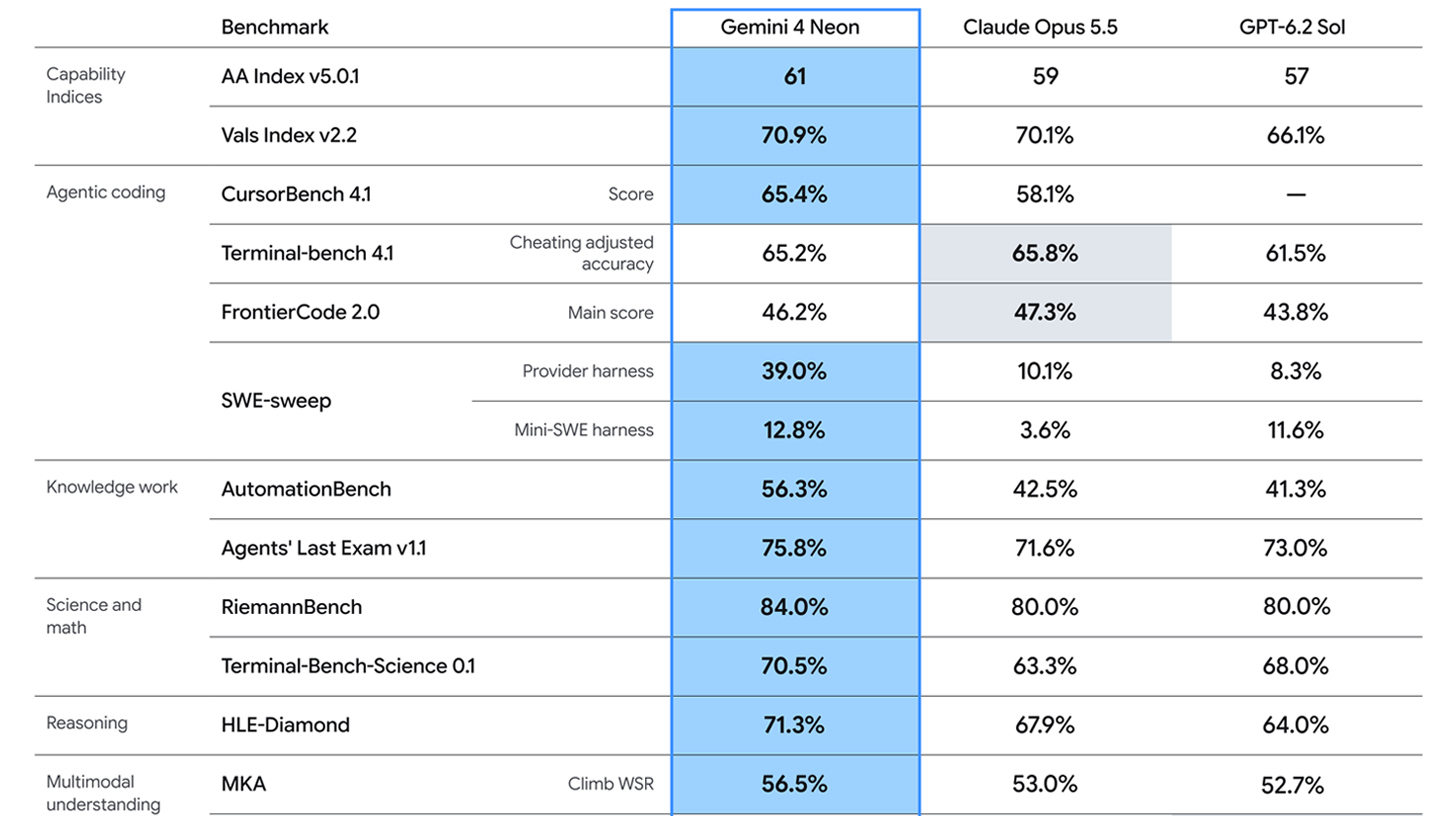
🧪 Gemini 4 Neon - Google’s powerful new mid-tier model
🖋️ Inkling 2 Mini - Thinking Machines' small, open-weights AI for coding agents
🖼️ Ideogram 4.6 - Ideogram’s 4K multi-step image generation and editing model
*Sponsored Listing
Jira gives your agents the context they need to ship code, starting with your spec and decisions. Manage the swarm and keep the receipts. Learn more at jira.dev.*
Mira Murati's Thinking Machines released Inkling 2 Mini, a new open-weights AI that can run on a 32GB Mac, posting impressive scores across coding and agentic tests.
SoftBank's Masayoshi Son floated a $1T takeover of Korean chipmaker SK Hynix, The Information reports — with SoftBank now saying the deal is off the table and SK Hynix saying it knew nothing about it.
OpenAI rolled out new defenses against distillation, the practice of training a cheaper copy of a model, citing past attempts it tied to DeepSeek and Kimi maker Moonshot.
U.S. president Donald Trump teased ‘tremendous penalties’ on U.S. companies that open data centers in other nations, though he said he hadn’t run the idea by his staff yet.
*Sponsored Listing
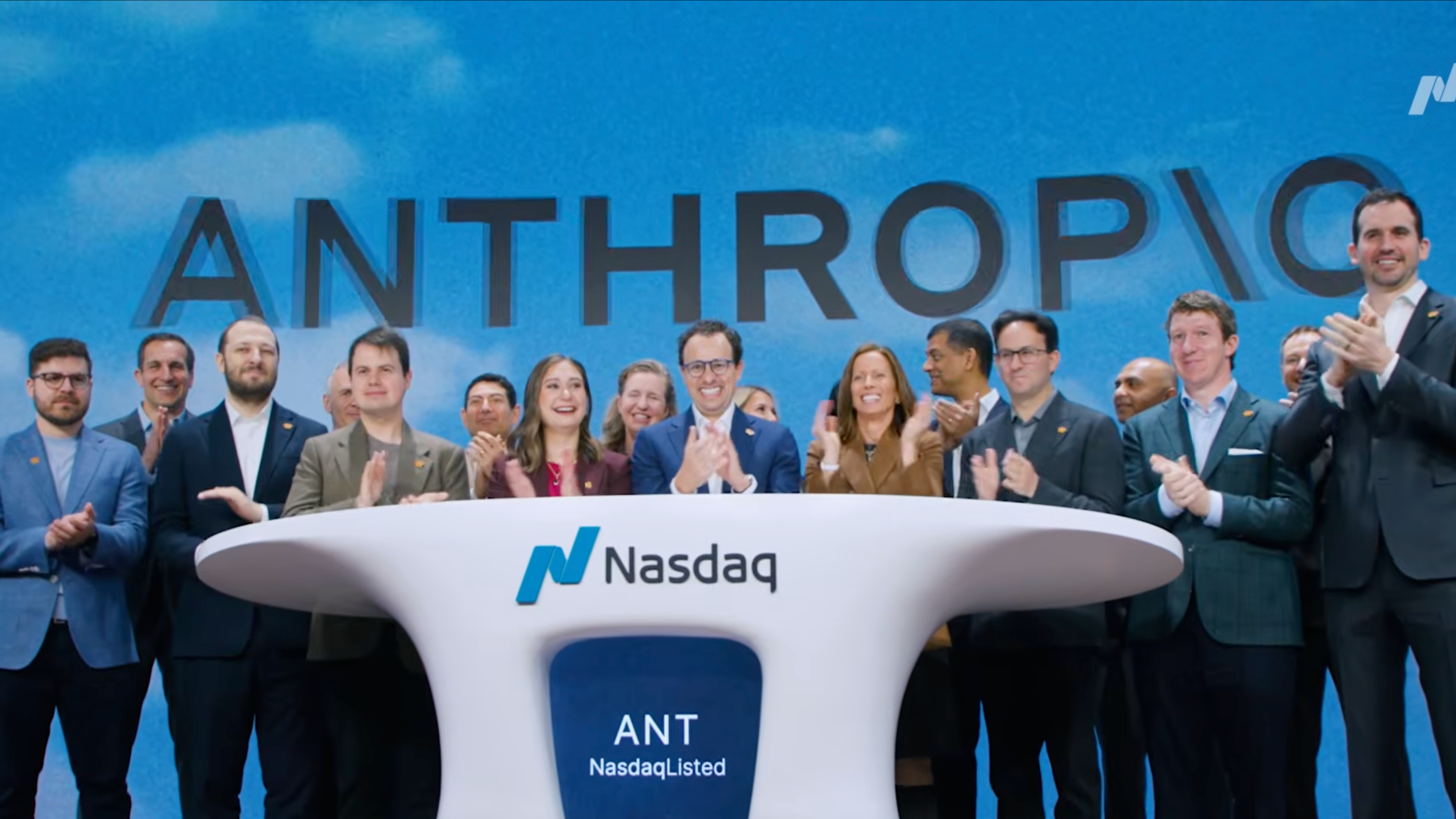
Read our last AI newsletter: Anthropic pulls off the biggest IPO ever
Read our last Tech newsletter: Grand Theft Auto rakes in $2.4B overnight
Read our last Robotics newsletter: Waymo stops freeway rides everywhere
Today’s AI tool guide: Test Gemini 4 Neon on finding billing errors
RSVP to next workshop on Nov. 30: Catch up on a year of AI in 90 minutes
That's it for today!Before you go we’d love to know what you thought of today's newsletter to help us improve The Rundown experience for you. |
|
See you soon,
Rowan, Zach, Shubham, Jennifer, and Nate — the humans behind The Rundown